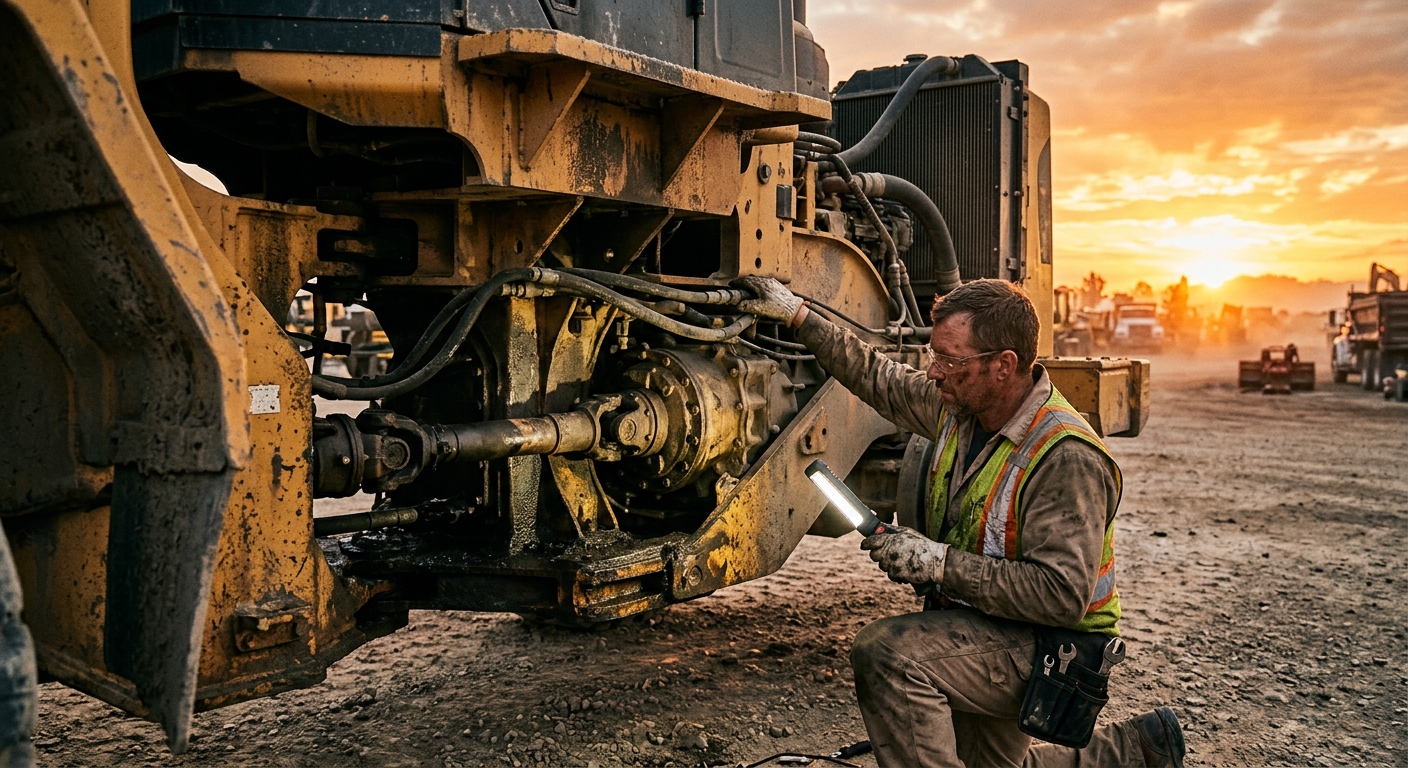
Heavy Equipment Torque Converter Maintenance Guide: Prevent Heat, Slipping, and Drivetrain Downtime
Learn how to inspect, maintain, and troubleshoot heavy equipment torque converters to prevent overheating, slipping, and costly drivetrain downtime.
Key Takeaways:
- Torque converter failures usually start with heat, contaminated oil, or ignored operating symptoms
- Slipping, delayed engagement, and rising transmission temperatures are early warning signs you should not shrug off
- Clean oil, correct fluid level, cooler performance, and operator habits do more to protect the converter than heroic repairs later
- A documented inspection routine can catch expensive drivetrain issues before they take a loader, dozer, or haul truck out of service
- FieldFix helps teams log temperature trends, fluid service, and symptom photos in one place instead of relying on memory
Torque converters do a brutal job in heavy equipment. They take engine power, multiply torque when the machine is pushing into a pile or climbing out of soft ground, and smooth out power transfer to the transmission. When they are healthy, operators barely think about them. When they are not, the whole machine starts feeling lazy, hot, and expensive.
That is the problem: torque converter failures rarely show up as one dramatic event on day one. More often, the machine starts creeping into trouble. Engagement gets softer. Stall speed feels off. Transmission temperatures creep upward. Operators compensate by pushing harder. A maintenance team changes fluid once, shrugs when the warning goes away, and then gets hammered later by a rebuild bill and a machine sitting dead in the yard.
This guide covers the practical side of heavy equipment torque converter maintenance: what to watch, what actually causes damage, how to inspect it, and how to decide whether you are dealing with a service issue or a real teardown problem.
What the Torque Converter Actually Does
A torque converter is a fluid coupling between the engine and the transmission. In simple terms, it lets the engine keep spinning while the machine slows, stops, or pushes under load. That makes it critical on wheel loaders, dozers, articulated dump trucks, and other machines that need smooth torque delivery under changing conditions.
The converter uses three main internal elements:
- Pump/impeller driven by the engine
- Turbine connected to the transmission input
- Stator that redirects oil flow to multiply torque at lower speeds
When oil flow and pressure are correct, the converter transfers power efficiently and helps the machine feel strong off the line. When heat, contamination, or wear disrupt that oil flow, performance drops fast.
Important: Operators often describe a torque converter problem as “it feels weak” or “it won’t pull like it used to.” That vague complaint matters. Weak push power under load, especially with rising transmission heat, is often the first useful clue.
Why Torque Converter Problems Get Expensive Fast
Torque converter issues are rarely isolated. Once the converter starts shedding material, overheating, or slipping excessively, the damage spreads through the transmission oil circuit. That can affect valves, clutch packs, coolers, and bearings downstream.
On a production machine, the real cost is not just the rebuild invoice. It is the lost loading hours, the schedule ripple, the rental replacement, and the risk of damaging a good transmission because a bad converter stayed in service too long.
Warning: If you have both slipping performance and contaminated oil, do not keep “running it to finish the week.” That is how a converter problem graduates into a broader transmission failure.
The Most Common Warning Signs
Most fleets miss torque converter trouble because the symptoms feel subjective at first. Your operators and techs should treat the following changes as reportable, not normal wear.
Performance symptoms
- Delayed engagement when shifting into forward or reverse
- Weak push power into a pile or grade
- Engine revs increase without matching machine movement
- Poor acceleration even though the engine sounds healthy
Heat symptoms
- Transmission temperature running hotter than the machine’s normal pattern
- Temperature spikes during short hard pushes
- Overheat alarms that appear mainly under load, not on road travel
Fluid symptoms
- Burnt smell in transmission oil
- Darkened fluid or visible metallic sheen
- Foamy oil from aeration or improper fluid level
Noise and feel symptoms
- Unusual whining from the bellhousing or transmission area
- Vibration under load that was not there before
- Harsh or inconsistent shift feel
Field Example: Wheel Loader on Stockpile Duty
A loader starts showing high transmission temperatures only during repeated short loading cycles. Engine coolant stays normal. Operators say the machine “needs more throttle than it used to.” The root cause turns out to be a restricted transmission cooler combined with degraded oil. The converter was not dead yet, but it was being cooked alive.
Top Causes of Torque Converter Damage
Torque converters fail for reasons, not vibes. These are the usual suspects.
1. Overheating
Heat is the main killer. Excess temperature thins fluid, reduces lubricity, accelerates oxidation, and bakes seals. Repeated overheating also stresses internal bearings and clutch-related components elsewhere in the circuit.
2. Contaminated or degraded oil
Dirty fluid acts like grinding paste. If the oil is full of clutch material, metal, or water contamination, the converter and the rest of the transmission hydraulic system pay the price.
3. Restricted cooler flow
A partially plugged cooler can look like a mystery driveline issue when it is really a heat-rejection issue. If the oil cannot shed heat, the converter runs hot even when everything else appears fine.
4. Incorrect fluid level
Low oil can cause aeration and poor charge pressure. Overfilled systems can foam and run hot. Neither is harmless.
5. Hard operating habits
Excessive stall operation, aggressive direction changes, prolonged pushing at low speed and high throttle, and “loading by brute force” create huge thermal stress.
Common Diagnostic Trap
What people assume
- The transmission is completely worn out
- The engine is underpowered
- One overheated day is no big deal
What is often actually true
- The converter or cooler circuit is the first failing link
- Oil condition has been deteriorating for weeks
- Operators adapted to declining performance and stopped reporting it
Daily and Weekly Inspection Routine
You cannot inspect the inside of a torque converter during a walk-around, but you can catch the conditions that kill it.
Daily checks
- Review any active transmission or drivetrain warnings on startup
- Look for transmission oil leaks at cooler lines, fittings, housings, and under the machine
- Check fluid level exactly per manufacturer procedure, because hot/cold checks vary
- Smell the fluid if possible during service checks; burnt odor is a clue, not a personality trait
- Ask operators whether engagement or push performance changed since the last shift
Weekly checks
- Inspect transmission cooler fins and surrounding airflow path for packed debris
- Verify line condition, abrasion points, and clamp security
- Pull fluid samples on machines with high heat history or critical production roles
- Compare operating temperatures against the machine’s normal baseline, not just alarm thresholds
- Review recent work patterns that may have increased converter load
Pro Tip: Baseline temperature matters more than generic fear. If one loader normally runs at 185 F and starts living at 205 F doing the same work, that trend deserves attention even if the alarm has not tripped yet.
Fluid, Filters, and Cooling System Priorities
If you only remember one thing from this article, remember this: a torque converter lives and dies by oil condition and cooling performance.
Fluid discipline
- Use the exact transmission fluid spec required by the OEM
- Do not mix questionable leftover oils because the drum was “close enough”
- Sample fluid when heat trends rise or performance changes
- Change oil based on hours, severity, and lab evidence rather than blind optimism
Filter discipline
- Change filters on schedule
- Cut old filters open when diagnosing repeat failures
- Watch for recurring metal or friction material that suggests internal wear
Cooling discipline
- Clean coolers properly, not just the visible outer layer
- Inspect fan function and shrouding
- Confirm there is no restriction in the oil circuit
- Check for stacked-cooler debris if the machine runs in dust, mulch, or sticky fines
Danger: Do not blame the converter first if the cooler is packed solid and the fan system is compromised. Rebuilding a converter without fixing the heat source is a fantastic way to buy the same failure twice.
Operator Habits That Kill Converters
Some converters die young because the machine is abused, not because the component was weak.
The worst habits include:
- Holding the machine at high throttle while stalled against a pile
- Rapid forward-reverse shuttling without a brief pause for engagement
- Using wheel spin and aggression instead of technique
- Ignoring early heat warnings because the machine still moves
- Towing or pushing loads beyond intended operating limits
Field Example: Dozer Working in Mud
An operator keeps high RPM on repeated stuck recoveries and long low-speed pushes. Transmission temps climb daily but never stay high long enough to trigger a shutdown. After several weeks, oil analysis shows elevated wear metals and degraded fluid. The converter did not fail because of one dramatic event. It failed from repeated thermal abuse.
Operator coaching here matters. A five-minute conversation about heat and shuttle habits can save a five-figure repair.
Repair or Rebuild: How to Make the Call
Not every torque converter complaint means immediate teardown. But some do.
Try service-level correction first when:
- Fluid is overdue or obviously degraded
- Cooler airflow is restricted
- Temperatures are elevated but performance loss is still mild
- The issue appeared after a known contamination or maintenance miss
Move toward teardown or rebuild when:
- You have repeated slipping after fluid and cooling corrections
- Metal or friction debris keeps reappearing
- Temperature remains high under normal load
- Engagement delay is worsening
- The machine loses push power in a way operators can reproduce consistently
Service First vs. Rebuild Now
Service first
- ✅ Lower cost
- ✅ Faster return to work if root cause is external
- ✅ Good move when symptoms are early and evidence points to heat or fluid
- ❌ Risky if internal damage is already advanced
Rebuild now
- ✅ Stops debris circulation sooner
- ✅ More reliable when symptoms are severe and repeatable
- ✅ Better choice for critical production machines
- ❌ Higher immediate cost
The smart call depends on evidence. Temperature history, fluid condition, filter findings, operator reports, and machine duty cycle should all be part of the decision.
Sample Maintenance Schedule
Below is a practical template for machines with torque-converter-driven transmissions. Always adjust to the OEM manual and actual duty severity.
| Interval | What to Do | Why It Matters |
|---|---|---|
| Daily | Check for leaks, warnings, fluid-level issues, performance complaints | Catches early failures before debris spreads |
| Weekly | Clean cooler area, inspect lines, review temperature trends | Prevents heat-related damage |
| 250 hours | Inspect fluid condition closely, review operator notes, verify normal shift feel | Flags drift before hard failure |
| 500 hours | Change filters as required, sample oil on severe-duty machines | Reveals contamination early |
| 1,000 hours | Full transmission service per OEM, deeper diagnostics if temperature has trended upward | Resets system health and validates assumptions |
Reality Check: Machines in dusty land clearing, quarry, waste, or constant-load applications often need more aggressive transmission service intervals than the manual’s ideal-condition schedule.
How to Track Converter Health Across a Fleet
The biggest miss in most fleets is not mechanical. It is documentation. Techs know one loader is “running a little warm.” Operators know another machine “feels soft in reverse.” Nobody writes it down in a way that makes patterns obvious.
That is exactly how converter problems survive long enough to get expensive.
Track these fields on every relevant machine:
- Normal operating temperature range
- Any overheat events with date and hours
- Transmission oil service history
- Fluid sample results
- Leak repairs and hose replacements
- Operator complaints about slipping, delayed engagement, or weak push
- Cooler cleanings and debris conditions
Stop Guessing at Drivetrain Problems
FieldFix helps equipment teams log fluid service, keep photos and notes with each service record, and keep drivetrain issues tied to real machine hours. If your torque converter diagnostics currently live in someone’s head or on a greasy note in the cab, that’s not a system. That’s a future repair bill.
See how FieldFix helps you stay ahead of expensive equipment failures
Torque converter maintenance is not glamorous, but it is one of those areas where boring discipline beats expensive heroics. Keep the oil clean, keep the cooler working, listen when operators say the machine feels off, and act on heat before it turns into hard parts. That is how you keep power going to the ground instead of money going out the door.
Related Articles
September 4, 2026
Heavy Equipment Fall Service Planning Guide: How to Prevent Winter Downtime
September 3, 2026
Horizontal Directional Drill Maintenance: The Complete HDD Service Guide for Contractors
September 2, 2026