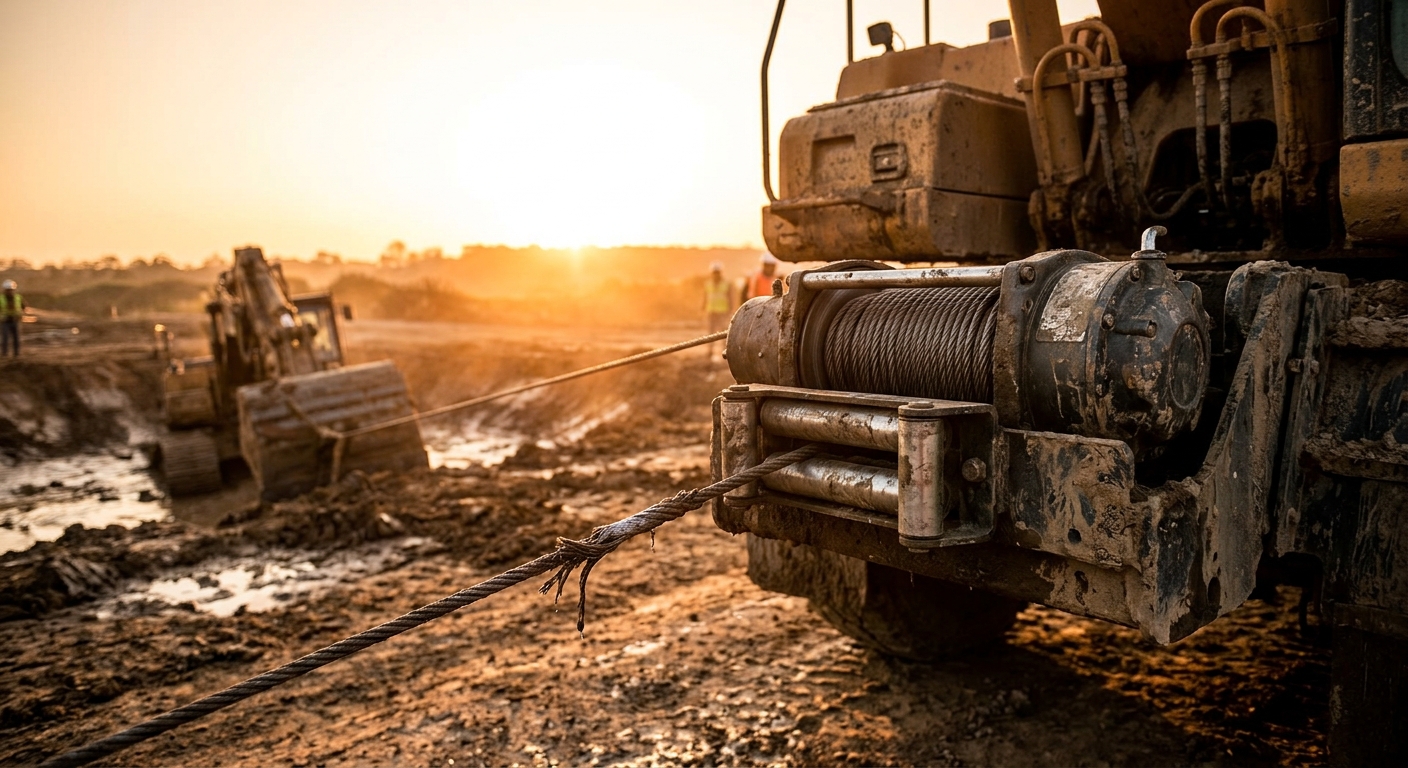
Heavy Equipment Winch Maintenance Guide: Keep Cable Pulling Safe and Reliable
Learn how to inspect heavy equipment winches, wire rope, hooks, drums, and hydraulic drive components before wear turns into downtime or a dangerous pull.
Key Takeaways
- Winch failures are rarely sudden surprises. Most start with ignored cable damage, poor spooling, contamination, or overloaded pulls.
- The wire rope deserves as much attention as the winch itself because a healthy drum with a damaged line is still a dangerous setup.
- Bad spooling ruins rope life fast and creates crushing, binding, and unpredictable pulls.
- A short inspection before use is dramatically cheaper than a snapped line, bent fairlead, or disabled machine in the mud.
- Tracking winch service in FieldFix helps crews spot repeat problems, document rope condition, and plan replacement before failure.
Winches live a rough life. They sit exposed to water, mud, grit, shock loading, side pulls, impatient operators, and the kind of “just one more pull” decisions that chew up equipment. Then people act surprised when the cable birdnests, the hook gets bent, or the winch stops holding load.
That is backward. Winch systems are predictable when you inspect them consistently. Whether the machine is a dozer, recovery truck, lowboy trailer, utility rig, or forestry machine, the same rule applies: if you only think about the winch when you need it badly, you are already late.
This guide covers how to inspect and maintain heavy equipment winches so they pull safely, last longer, and stop creating expensive drama on the worst possible day.
Why Winch Maintenance Gets Neglected
Winches usually get less routine attention than engines, hydraulics, or undercarriages because they are not used every hour. That creates a false sense of security. A component can sit quiet for weeks and still be one bad pull away from failure.
The neglect usually comes from four assumptions:
- The winch “worked last time”
- The cable “still looks decent”
- Grease or oil contamination “is not a big deal”
- Operators will “feel it” before anything dangerous happens
That logic gets people hurt and machines stuck.
Winch systems fail under load, not while parked. That means the consequences show up when tension is highest and the margin for error is smallest.
If your crew uses a winch for recovery, hauling, dragging, mast raising, or machine loading, this is not optional maintenance. It is basic risk control.
What Actually Fails on a Winch System
People say “the winch failed” as if the entire system is one part. It is not. A winch setup includes multiple wear points:
- Wire rope or synthetic line
- Hook, latch, thimble, and termination hardware
- Drum and anchoring point
- Fairlead or roller guides
- Hydraulic motor, gearbox, or brake components
- Control valve, switch, remote, or lever
- Mounting structure and fasteners
That matters because each part fails differently.
Wire rope frays and kinks. Hooks open up and lose latch function. Drums wear grooves or develop sharp damage points. Rollers seize. Hydraulic motors leak or lose power. Brakes slip. Mounting plates crack. Operators often notice the symptom and miss the root cause.
Treat the whole pulling system as one assembly. Replacing only the obvious failed part without checking the rest is how you create repeat failures.
Pre-Use Inspection Checklist
Before any meaningful pull, your crew should slow down and check the setup. A proper inspection does not need to be complicated.
1. Inspect the line end to end
Look for broken strands, flat spots, kinks, crushed areas, unraveling, corrosion, fused sections, or abnormal wear near the hook and drum anchor point.
2. Check the hook and latch
If the hook throat is opening up, the latch is missing, or the hook is twisted, stop there. Do not normalize deformed rigging.
3. Look at the fairlead
Rollers should turn freely. Hawse or roller contact surfaces should be smooth, not grooved or sharp. A damaged fairlead will eat a line in a hurry.
4. Inspect the drum
Look for uneven layers, cross-wraps, crushed lower wraps, loose hardware, or damage at the anchor point. Bad spooling is not cosmetic. It shortens line life and creates erratic load behavior.
5. Verify mounting and controls
Check bolts, brackets, guards, hydraulic hoses, electrical connections, and operator controls. If the control feels sticky or delayed, fix that before the pull starts.
Use photos, not memory. A quick photo of the rope, hook, and drum before service gives you a condition history that helps justify replacement and spot damage trends.
Wire Rope and Hook Damage You Cannot Ignore
Wire rope lies to people because it can look “mostly fine” right up until it is not.
The biggest red flags:
- Multiple broken wires in one lay length
- Kinks that permanently distort the rope
- Birdcaging or strand separation
- Rust scale and pitting
- Flattened or crushed sections
- Heat damage or discoloration
- Hook throat opening or twist
- Missing or non-functioning safety latch
Replace the Rope or Hook
Pros:
- Restores predictable pulling performance
- Reduces injury risk during recovery or loading
- Protects drums, rollers, and anchors from secondary damage
- Makes inspections simpler and more trustworthy
Cons:
- Immediate parts cost
- Requires planned service time
Keep Using “Mostly Fine” Rigging
Pros:
- Saves money for a day
- Avoids short-term interruption
Cons:
- Dangerous under load
- Can damage the winch itself
- Turns routine service into emergency repair
- Makes every operator less confident in the machine
Never “just watch it closely” on a visibly damaged line. If the rope is kinked, badly frayed, crushed, or corroded, the inspection already answered the question.
Synthetic line has its own rules too. Look for abrasion, melted fibers, UV damage, cuts, contamination, and buried grit. It may not rust like wire rope, but it absolutely wears out.
Hydraulic and Mechanical Winch Trouble Signs
If the line is healthy but the winch still acts wrong, focus on the drive side.
Watch for:
- Slow line speed under normal load
- Jerky movement or chatter
- Brake slip when holding tension
- Hydraulic leaks at the motor or hose connections
- Gearbox noise or overheating
- Unusual free-spool resistance
- Control lag or inconsistent engagement
These symptoms usually point to contamination, worn brake components, internal leakage, damaged gears, weak hydraulic supply, or neglected lubrication.
Failure Pattern: “Weak Winch” That Was Not a Weak Winch
A contractor kept blaming the winch motor because recovery pulls felt slow and inconsistent. The real issue was a contaminated fairlead and crushed lower wraps on the drum from repeated bad spooling. The line was binding, the brake was working harder than it should, and the crew was close to ruining the drum. A rope replacement, respool under tension, and fairlead repair fixed the problem without replacing the drive unit.
If your winch gets hot fast, makes grinding noise, or will not hold position consistently, stop using it. Pulling through those symptoms is how “needs service” turns into “needs a rebuild.”
Spooling, Tension, and Pulling Mistakes
Many winch problems are operator-created.
Bad habits include:
- Spooling line back on loose with no tension
- Side-pulling hard enough to stack rope unevenly
- Shock loading instead of applying steady pull
- Using the last wraps on the drum as if they were full-rated working length
- Dragging the line through abrasive mud, rock, or steel edges
- Letting the hook slam into the fairlead
Proper spooling matters because lower wraps carry compressive load from upper wraps. If the base layers are crossed, loose, or damaged, the rope gets crushed when real tension shows up.
Common Crew Rule That Prevents Expensive Damage
Require operators to rewind line under light, consistent tension and guide it evenly across the drum. That single habit reduces cross-wraps, buried line, and premature rope replacement more than most fleets expect.
Side pulls deserve special attention. Winches are happiest when the line runs straight through the fairlead. Extreme angles increase roller wear, distort spooling, and load the drum unfairly. If the pull setup is ugly, rerig it instead of forcing it.
When to Repair vs Replace Components
Not everything demands a full replacement, but you need a clean line between repairable and unsafe.
Usually repairable
- Hose leaks at fittings
- Fairlead roller bearings or hardware
- Control switches, remotes, or valve issues
- Minor mounting fastener issues caught early
- Planned gearbox service if damage has not spread
Usually replacement territory
- Kinked or birdcaged wire rope
- Hook deformation or cracked rigging hardware
- Drum damage with sharp edges or structural distortion
- Brake components that cannot reliably hold load
- Repeated rope damage caused by worn guides or misalignment
Planned Repair Program
Pros:
- Lower total ownership cost
- Better safety record
- Fewer field failures
- Easier operator accountability
Cons:
- Requires tracking hours and inspections
- Requires parts discipline
Run It Until It Quits
Pros:
- Feels simple
- Looks cheaper on paper for a while
Cons:
- Creates higher downtime volatility
- Raises safety exposure
- Usually damages more than one part
- Makes budgets look fake until the failure bill arrives
A Practical Winch Maintenance Schedule
You do not need a perfect spreadsheet to manage this. You need a real routine.
- Before use: inspect line, hook, latch, fairlead, controls, and visible leaks
- Weekly or every active use cycle: clean debris, inspect spooling, verify fasteners, check hose routing, inspect mounting area
- Monthly: lubricate as required by the manufacturer, inspect brake behavior, inspect drum anchor point, check for structural cracks or hardware looseness
- Quarterly or by service hours: deeper rope inspection, gearbox or hydraulic drive checks, control function test, mounting torque verification
- After overload, shock load, or recovery incident: full inspection before returning to service
Event-based maintenance matters. If the winch was used in a nasty recovery, deep mud, salt exposure, or a known overload event, inspect it immediately. Waiting for the next calendar interval is lazy and risky.
Real-World Failure Example
A small sitework contractor used a trailer-mounted winch to load a disabled skid steer after rain. The line had visible flattening and a few broken wires, but the crew figured it would survive “one more use.” The pull angle was bad, the fairlead roller on one side was seized, and the line had been spooled back on loose the week before.
Halfway through loading, the line bound into the lower wraps, jerked hard, and damaged the rope near the crushed section. The machine did get loaded, but the rope, fairlead hardware, and a section of mounting bracket all needed replacement. The bigger cost was the lost half-day and the fact that nobody trusted that setup afterward.
The lesson is not subtle. Visible wear plus bad setup plus rushed use is how small maintenance items become expensive failures.
How FieldFix Helps Crews Stay Ahead
Winch maintenance gets missed because it lives in the gray zone between “used when needed” and “not broken yet.” That is exactly the kind of asset discipline FieldFix is built to support.
With FieldFix, crews can:
- Log winch inspections with photos
- Track rope replacements and service dates
- Document overload or recovery events
- Create recurring maintenance reminders
- Keep operator notes tied to the machine record
- Build a history that shows which winches keep causing trouble
Stop Treating Winches Like Emergency-Only Equipment
If a winch matters when the job goes sideways, it deserves routine maintenance before the job goes sideways. FieldFix helps your team track inspections, log damage, attach photos, and stay ahead of preventable failures.
Start using FieldFix to turn scattered maintenance knowledge into a system your whole crew can actually follow.
Related Articles
September 4, 2026
Heavy Equipment Fall Service Planning Guide: How to Prevent Winter Downtime

September 3, 2026
Horizontal Directional Drill Maintenance: The Complete HDD Service Guide for Contractors
September 2, 2026