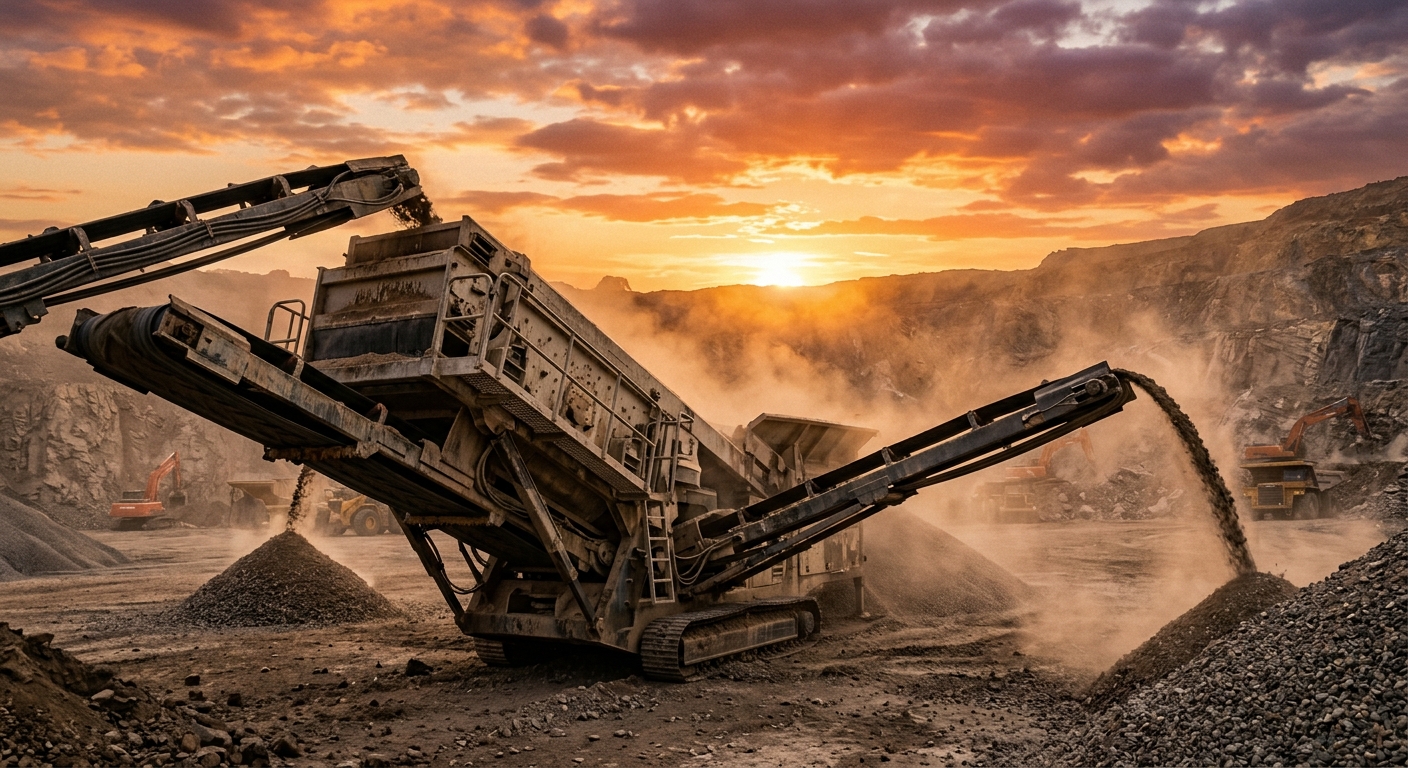
Portable Screening Plant Maintenance Guide: Keep Your Screener Producing Without Surprise Downtime
Learn how to maintain a portable screening plant with practical checks for media, conveyors, bearings, hydraulics, and daily production reliability.
Portable screening plants live in a weird middle ground. They are not always the star of the fleet like an excavator or crusher, but when they stop producing, the whole material flow gets ugly fast. Crews start stacking unscreened material, loaders sit waiting for product, customers get inconsistent spec, and everybody suddenly remembers that the screener mattered a lot more than they treated it.
That is the trap. Screening plants often look simple from the outside. Material goes in, vibration happens, product comes out. So operators and owners tend to give them less structured attention than engines, hydraulics, or undercarriages. Meanwhile the machine is being hammered by abrasive aggregate, mud, oversized feed, vibration, weather, and rushed cleanouts.
The result is predictable: small wear issues turn into low production, poor separation, belt damage, bearing failures, and expensive downtime at exactly the wrong point in the job. This guide breaks down how to maintain a portable screening plant so it keeps making salable material instead of excuses.
Why screening plants get neglected
Portable screeners usually fail in slow motion. That is what makes them dangerous to your schedule.
Unlike a no-start machine, a screener often keeps running while performance degrades. The crew sees lower output, more carryover, dirtier product, plugged decks, or material spilling where it should not. Because the machine still “works,” teams normalize the drop in performance and keep feeding it.
The best maintenance mindset is simple: do not judge a screening plant only by whether it powers up. Judge it by whether it still produces the right material at the right rate without beating itself to death.
Systems that drive screening performance
A good screening plant maintenance program starts with the systems that actually control output and wear.
1. Screening media and deck condition
This is the heart of the machine. Woven wire, punch plate, finger decks, harp screens, polyurethane panels, and other media types all wear differently, but the maintenance principle is the same: inspect for tears, broken wires, loose tension, blinding, pegging, and uneven wear patterns.
If the wrong media is installed for the material, no amount of wrenching elsewhere will fix poor performance. Wet sticky feed will blind panels. Sharp angular stone will eat wire. Contaminated demolition material will destroy decks faster than clean aggregate. Match the media to the job, then inspect it like it matters, because it does.
2. Vibrator, shafts, and bearings
Screeners live on controlled vibration. When that vibration changes, the machine starts telling on itself. Loose hardware, bad bearings, worn shaft components, and cracked supports can all show up as unusual noise, hotter housings, reduced separation, or visible shake where it should not exist.
Bearing failure is one of the fastest ways to turn routine service into a major rebuild. Watch temperature trends, grease condition, sound changes, and any shift in how the deck runs under load.
3. Conveyors, belts, and rollers
A screening plant is only as productive as its ability to move material cleanly. Inspect feed belts, fines conveyors, transfer points, discharge belts, rollers, scrapers, and skirting. Mis-tracking belts, seized rollers, torn splices, and packed carryback material can quietly slash production while increasing wear everywhere else.
4. Hydraulic and electrical systems
Many portable screeners rely on hydraulics for folding conveyors, variable speed controls, and auxiliary functions. That means hose inspection, leak control, filter condition, fluid cleanliness, and cylinder rod protection matter. Electrical systems matter too, especially on plants with sensors, remote functions, or control panels exposed to washdowns and dust.
5. Structure, chutes, and wear surfaces
Feed hoppers, chutes, impact points, liners, guards, and support frames take a beating. Cracked welds, worn liners, and loose guards rarely stay small problems. Once material starts cutting into structural steel or spilling where it should not, cleanup time and repair cost both jump.
Daily, weekly, and hour-based maintenance
The best screener maintenance routines are boring on purpose. They create repeatability before the shift gets chaotic.
Before startup every day
- Walk the full plant and look for torn media, missing clamps, loose guards, cracked welds, and spilled material buildup
- Inspect belts for tracking, frayed edges, bad splices, and seized rollers
- Check grease points and follow the manufacturer schedule instead of guessing
- Look for hydraulic leaks, rubbed hoses, loose fittings, and damaged cylinder rods
- Verify tension and condition on screen media and belt drives where applicable
- Remove packed material from under conveyors, around pulleys, and near moving parts
- Listen to yesterday’s operator complaints instead of treating them like background noise
Weekly
- Inspect bearing temperatures and compare side to side
- Check chute liners, skirting, scraper wear, and feed boot condition
- Tighten loose hardware on guards, supports, access panels, and media retention systems
- Inspect springs, rubber mounts, and vibration isolators for cracking or collapse
- Clean electrical boxes, cooling surfaces, and sensor areas exposed to dust
- Review production notes for lower throughput, dirty product, or repeated plugging
Hour-based or scheduled service
- Change hydraulic filters and fluids per manufacturer intervals
- Inspect and service exciter assemblies or vibration components as specified
- Replace worn media before it wrecks product quality or downstream components
- Check pulley lagging, belt tension, shaft condition, and critical fastener torque
- Inspect structural welds and high-impact wear areas during planned downtime
The most common screening plant failures
Most screening plant downtime comes from a short list of repeat offenders.
- Torn or blinded screen media
- Dry or failing bearings
- Mis-tracking or damaged conveyors
- Loose hardware and cracked structural supports
- Hydraulic hose wear and contamination
- Material buildup at chutes, pulleys, and transfer points
- Dirty product and reduced throughput
- Heat, vibration changes, and major shaft damage
- Belt failure, material spillage, and cleanup labor
- Escalating structural repairs and unsafe operation
- Folding or drive-function failures
- Plugging, carryback, and operator frustration
One of the biggest mistakes crews make is blaming the machine for a process problem or blaming the process for a machine problem.
If feed suddenly gets wetter, dirtier, or more oversized than normal, performance may fall even if the plant is healthy. But if the same screener keeps struggling under normal feed conditions, overheating one bearing, or throwing material in weird directions, the machine likely needs attention.
There is also a production trap here: operators often overfeed a slowing machine to “push through” reduced output. That usually makes blinding worse, increases spillage, and accelerates wear. When the screener falls behind, back up and inspect before you muscle it into failure.
Repair vs. replace decisions
Not every screening problem deserves a major teardown, but not every temporary fix is smart either.
Repair usually makes sense when:
- The structure is sound and cracks are isolated
- Bearings, belts, media, liners, or hoses are the primary wear items
- Production returns to normal after proper service
- The machine still matches your material size, moisture, and throughput needs
Replacement or major rebuild usually makes more sense when:
- Structural cracking keeps returning in the same high-stress areas
- Shaft or exciter damage is stacking onto chronic neglect
- Belt and media wear stay excessive because the plant is undersized or mismatched
- Downtime keeps hitting production hard enough that rentals and delays erase the value of patching it
The right question is not “Can we keep it running one more week?” The right question is “What is this machine costing us in output, cleanup, parts, and crew time every week we avoid the real repair?”
Tracking screening plant maintenance in FieldFix
Screening plants are perfect candidates for maintenance tracking because their problems repeat in patterns. The same discharge conveyor starts wandering. The same deck position tears panels early. The same bearing housing runs hot during long summer shifts. If you do not log those patterns, you will keep paying for them like they are random.
In FieldFix, track:
- Plant make, model, serial number, deck setup, and screen media type
- Bearing service dates, grease intervals, and temperature notes
- Belt replacements, splice repairs, and tracking issues by conveyor position
- Hydraulic hose replacements and leak history
- Structural repairs, cracked areas, and liner replacement intervals
- Throughput complaints, material-quality issues, and operator observations
When your team can see service history and recurring failures in one place, you stop guessing. You can tell whether a screener needs a simple deck refresh, a belt alignment correction, a bearing inspection, or a more serious rebuild plan.
Portable screening plants make money when they stay boring: steady feed, clean separation, predictable output, no drama. That is the goal. Build a routine, log what fails, and stop letting a machine that sits quietly in the corner become the reason the whole operation slows down.
Related Articles
September 4, 2026
Heavy Equipment Fall Service Planning Guide: How to Prevent Winter Downtime
September 3, 2026
Horizontal Directional Drill Maintenance: The Complete HDD Service Guide for Contractors
September 2, 2026