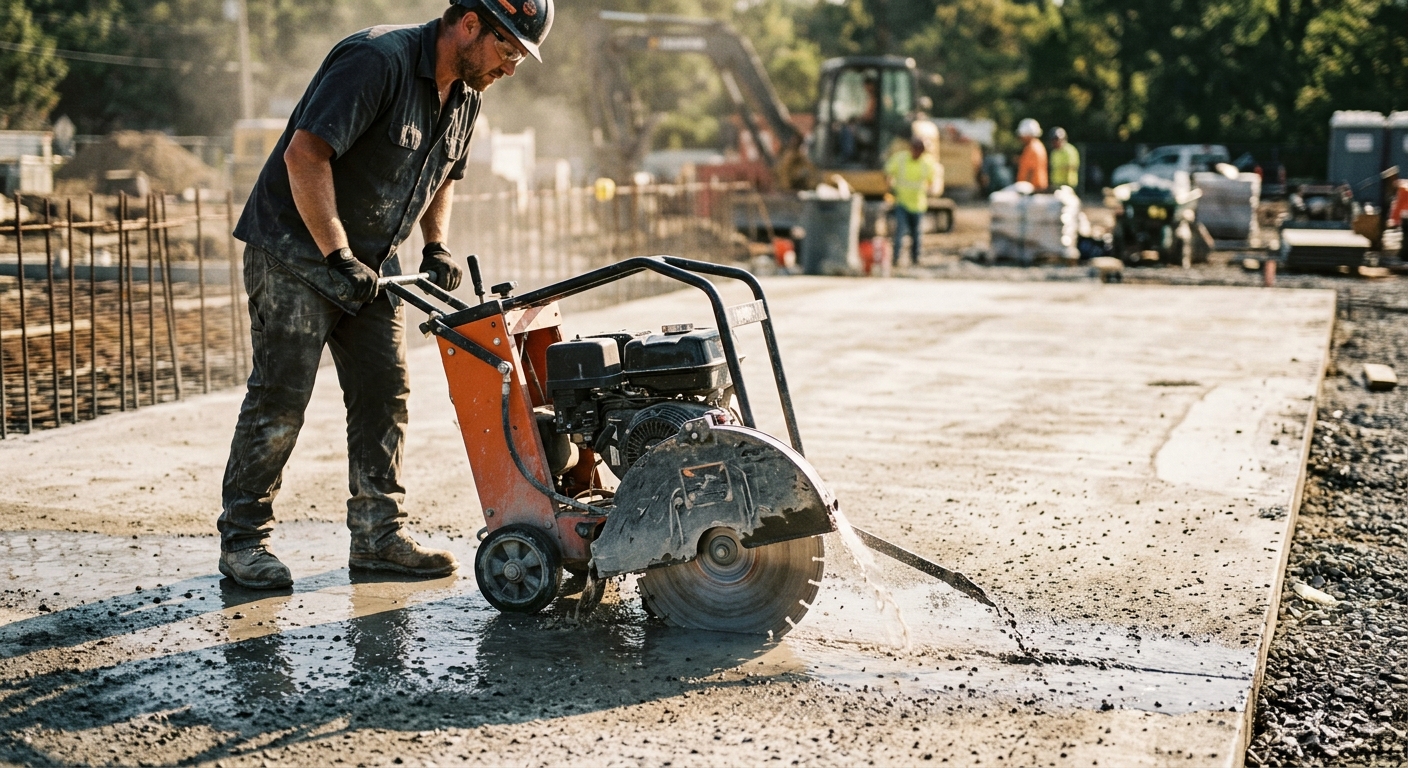
Walk-Behind Concrete Saw Maintenance Guide: How to Prevent Blade Wear, Engine Trouble, and Costly Downtime
Learn walk-behind concrete saw maintenance best practices, from blade care and belt tension to water systems and engine checks that prevent downtime.
Key Takeaways
- Walk-behind concrete saws fail fast when small issues get ignored because blade wear, poor cooling, and belt problems compound quickly
- Daily checks only take 10 to 15 minutes and usually catch the problems that cause bad cuts, engine strain, and unsafe operation
- Water delivery matters as much as the blade itself because poor flow overheats segments, creates excess dust, and shortens blade life
- Tracking blade hours, belt adjustments, and filter service makes it easier to predict downtime before a saw quits on a job
- A simple maintenance system beats reactive repairs especially when multiple crews share the same cutting equipment
Walk-behind concrete saws look simple, which is exactly why crews abuse them. They get parked dirty, run with worn blades, dragged onto trailers, and handed to the next operator with no note about what happened yesterday. Then someone wonders why the saw starts wandering in the cut, bogging under load, or eating belts every other week.
That pattern gets expensive fast. Concrete saws live in brutal conditions: abrasive slurry, vibration, heat, dust, water, and operators trying to push production. A machine that seems “basically fine” can turn into a jobsite problem in a single morning if the blade is glazed, the arbor is loose, the water system is partially blocked, or the belt has already started slipping.
The good news is that concrete saw maintenance is not complicated. It just needs consistency. If you build a repeatable inspection and service routine, you can extend blade life, protect bearings and belts, improve cut quality, and keep crews from losing half a day to a machine that should have been ready to work.
Why Concrete Saw Maintenance Gets Expensive Fast
Most contractors underestimate the real cost of a poorly maintained concrete saw because they only count the repair invoice. That misses the bigger hit: labor standing around, rework from crooked or ragged cuts, damaged blades, silica control issues, and schedule delays when you cannot finish the opening or joint cut on time.
If a crew burns up one blade early, ruins one cut, and loses two hours on a patch or utility job, the maintenance you skipped was never “saving time.” It was just debt with a louder due date.
Concrete saw downtime is sneaky because the machine often keeps running while performance gets worse. Operators compensate by pushing harder, cutting slower, or making multiple passes. That extra strain usually finishes off the blade, belt, bearings, or engine before anyone reports the root problem.
The Components That Fail Most Often
You do not need to overhaul a saw every week. You do need to know where failures usually start.
1. Diamond blade
The blade takes the abuse everyone notices first, but it is often not the real culprit. Blades wear prematurely when the bond is wrong for the material, when operators force the cut, or when water flow is inadequate. A glazed blade can look intact yet cut terribly.
2. Arbor shaft and flanges
If the blade is mounted on dirty, worn, or damaged flanges, it will wobble. That creates vibration, poor tracking, uneven segment wear, and ugly cuts. Loose arbor hardware can also create a serious safety issue in a hurry.
3. Belt and pulleys
Belts suffer when tension is wrong, guards trap slurry, or pulleys fall out of alignment. Slippage wastes power, builds heat, and makes operators think the engine is weak when the drive system is the actual problem.
4. Water delivery system
Clogged nozzles, kinked lines, cracked fittings, and dirty tanks kill cooling performance. That means more dust, more heat, and shorter blade life.
5. Air filtration and engine intake
On gas or diesel walk-behind saws, dust chokes the engine if filters are ignored. Power drops, starting gets harder, and fuel burn goes up. Operators then compensate with throttle and feed pressure, which just adds more stress elsewhere.
6. Bearings, wheels, and depth control hardware
A saw that does not roll straight or hold depth consistently produces bad results even if the engine and blade are fine. Play in the bearings or worn wheel assemblies often shows up as wandering cuts.
The lesson is simple: if cut quality drops, do not blame the blade first. Check blade condition, arbor fit, belt grip, wheel alignment, and water flow together. Concrete saw problems travel in packs.
Daily Inspection Checklist Before You Cut
Daily inspection is where most reliability gains come from. The goal is not a long maintenance meeting. The goal is catching obvious problems before the saw hits concrete.
Use this pre-start checklist every workday:
- Inspect the blade for cracks, missing segments, glazing, and uneven wear
- Confirm the blade matches the material being cut and the saw’s rpm rating
- Check flange surfaces and arbor hardware for dirt, damage, and tightness
- Verify belt condition and tension through the guard inspection points
- Test water flow at the blade on both sides if your setup delivers dual-side cooling
- Check fuel, engine oil, and air filter condition
- Inspect wheels, frame, handle mounts, and depth control hardware for looseness
- Make sure the guard is secure and positioned correctly
- Look for dried slurry buildup around the shaft, guard, and water fittings
- Run the saw briefly at idle and listen for bearing noise, belt squeal, or vibration
Example: The 7 a.m. catch that saves the day
A crew prepping for slab cuts notices weak water flow on the right side of the blade during pre-start. The left nozzle is flowing normally, so the problem is easy to dismiss. Instead, they stop and clear the clogged line.
That five-minute fix prevents one side of the blade from running hotter than the other. Without it, the blade likely would have worn unevenly, started pulling in the cut, and forced a blade replacement before lunch.
The best crews treat this inspection like loading straps on a trailer. Not optional. Just part of the job.
Blade Care and Cutting Performance
Blade management is where money leaks out of most concrete cutting operations. A quality diamond blade can pay for itself when matched correctly and used well. It can also get destroyed shockingly fast.
Match the blade to the material
Soft green concrete, cured concrete, reinforced slabs, asphalt, and abrasive aggregate all behave differently. If the blade bond is too hard for the material, it will glaze and stop cutting efficiently. If the bond is too soft, segments wear away too quickly.
Watch for glazing
A glazed blade cuts slowly, produces excess heat, and tempts operators to shove harder. Sometimes the fix is dressing the blade in an abrasive material to expose fresh diamonds. Sometimes the real issue is wrong blade spec, inadequate water flow, or excessive rpm.
Do not twist the blade in the cut
Walk-behind saws are not forgiving when operators steer aggressively to correct line drift. Twisting the blade under load damages segments, stresses the arbor, and can warp the cut path.
Let the saw do the work
A healthy saw with the right blade should feed steadily without excessive force. Pushing too hard overheats the blade, strains the engine, and accelerates belt wear.
Good Blade Habits
Pros:
- Longer blade life
- Straighter, cleaner cuts
- Lower vibration and safer operation
- Better production speed over the full job
Cons:
- Requires crews to log blade hours and pay attention to material type
- Sometimes means swapping blades instead of forcing one “universal” blade through everything
If one operator says a blade is worn out, verify the blade and the setup before tossing it. Many “bad blades” are really coolant flow problems, wrong bond selection, or a slipping drive belt.
Water System Maintenance and Dust Control
The water system is not just there for cleanup optics. It cools the blade, reduces dust, improves cut quality, and extends component life. When water delivery gets ignored, the whole machine runs hotter and dirtier.
Start with the basics:
- Flush the tank regularly instead of topping off muddy water forever
- Inspect hoses for abrasion, kinks, and soft spots
- Clean nozzles with the correct method so you do not enlarge or damage them
- Check shutoff valves and fittings for leaks
- Make sure flow reaches the blade where it actually matters
Dirty tanks are a common failure point. Sediment settles, lines partially clog, and nozzle performance degrades gradually enough that crews normalize bad flow. Then the blade starts overheating and everyone acts surprised.
Running a wet-cutting setup with poor water delivery creates two problems at once: blade damage and dust-control failure. That is bad for the machine, bad for the cut, and potentially bad for compliance if silica controls are not being met.
If your crews sometimes dry cut, the maintenance stakes go up even more. Dust management, filter cleaning, and blade selection have to be tighter, because heat and airborne debris are no longer being managed by water.
Engine, Belt, and Drive System Checks
Concrete saw engines live hard lives. Fine dust finds every gap. Repeated hot starts, heavy load changes, and long full-throttle runs punish the powertrain. If you want reliable cuts, keep the drive system boring.
Engine checks that matter
- Check oil level before each shift
- Change oil and filters on schedule, not by guesswork
- Inspect and clean or replace air filters before restriction costs you power
- Look for fuel leaks, stale fuel issues, and loose throttle linkages
- Watch for signs of overheating or reduced rpm under normal cutting load
Belt and pulley checks that matter
- Inspect for glazing, cracking, frayed edges, and contamination
- Verify proper tension per manufacturer spec
- Confirm pulleys are aligned and not packed with slurry
- Listen for squeal on startup or under load
- Replace belts before they shred and damage surrounding components
Example: The “weak engine” that was really a belt issue
An operator reports that the saw has lost power and bogs halfway through each pass. The engine starts fine and idles cleanly, so the crew assumes it needs carburetor work.
Inspection shows a polished, slipping drive belt and slurry-packed pulley housing. The engine was fine. The belt was turning horsepower into heat. Replacing the belt and cleaning the drive area restored cutting performance immediately.
If you only remember one thing here, remember this: low cutting performance does not always mean engine trouble. Concrete saws often feel underpowered when the drive system is wasting energy before it ever reaches the blade.
When to Repair vs. Replace Parts
Some parts deserve a quick field fix. Others are false economy.
Usually Worth Repairing or Cleaning
Pros:
- Nozzle blockages
- Minor hose replacements
- Guard fasteners and bracket tightening
- Belt adjustments when the belt is still in good condition
- Tank flushing and fitting cleanup
Cons:
- Easy to over-trust a part that already has hidden wear if inspection is lazy
Usually Better to Replace
Pros:
- Cracked or missing blade segments
- Heavily glazed or wrong-spec blade after repeated poor performance
- Belts with cracking, chunking, or heat glazing
- Worn bearings with play or noise
- Bent flanges or damaged arbor hardware
Cons:
- Higher immediate parts cost
- Temptation to “get one more day” out of bad components
Trying to squeeze one more shift from a suspect blade or noisy bearing is how you create bigger failures. Concrete saw parts are cheap compared with rework, injuries, or a missed schedule on a cut that gates the rest of the job.
A Simple Maintenance Schedule by Hours
Most crews do better with a simple schedule than a perfect one nobody follows.
| Interval | What to Do |
|---|---|
| Before each shift | Inspect blade, arbor, guard, wheels, water flow, oil level, and visible belt condition |
| Every 25 hours | Clean saw thoroughly, inspect pulley area, check air filter, verify fastener tightness, inspect hoses and fittings |
| Every 50 hours | Check belt tension and alignment, inspect bearings for play, inspect throttle and depth controls, clean water tank fully |
| Every 100 hours | Change engine oil if required by manufacturer, replace worn belts, inspect flanges closely, review blade usage data |
| Every 250 hours | Replace filters as required, inspect wheel assemblies and frame wear, evaluate bearing condition, refresh worn safety decals |
If the saw is rented internally across crews, track maintenance by engine hours and blade hours, not by who “used it last.” Shared equipment dies fastest when responsibility gets fuzzy.
Common Operator Mistakes That Kill Concrete Saws
Maintenance is not just a shop issue. A lot of damage starts with how the saw is run.
The usual mistakes:
- Forcing the saw instead of letting blade speed and weight do the work
- Using the wrong blade for the material because “it will probably be fine”
- Running with weak or uneven water flow
- Loading and unloading the saw roughly, bending guards or controls
- Parking the machine covered in slurry and letting it harden overnight
- Ignoring new vibration, squeal, or line drift because the saw still technically runs
The most expensive operator habit is pretending a performance change is normal. If a saw suddenly cuts slower, drifts more, or vibrates harder, that is not personality. Something changed mechanically.
This is where training matters. Operators do not need to become mechanics, but they do need to know what “normal” feels like, what early problems sound like, and when to stop before they turn a maintenance issue into a failure.
How to Track Concrete Saw Maintenance Across Crews
Concrete saw maintenance falls apart when notes live in people’s heads. One crew swaps a blade. Another notices weak water flow. A third hears a bearing start growling. Nobody writes it down, so the machine keeps circulating with missing context until it finally quits.
That is exactly the kind of mess a maintenance system should eliminate.
Track at least these data points for every saw:
- Engine hours
- Blade installed, blade type, and blade hours
- Last oil change
- Last belt inspection or replacement
- Water system issues or line cleanouts
- Vibration, tracking, or cut-quality complaints
- Open repair items and who reported them
What good tracking looks like
Crew A logs that the saw got a new blade on Tuesday and notes slightly weak water flow on the left nozzle. Crew B uses the same saw Wednesday, sees the note, clears the nozzle fully, and logs normal flow restored. On Friday, Crew C records early belt squeal and schedules a belt replacement before the Monday job.
That is how you prevent small friction from becoming downtime.
FieldFix-style maintenance tracking is not about creating paperwork for its own sake. It is about making equipment condition visible so crews can act early instead of guessing late.
Concrete saws may not be the most expensive machines on your roster, but they often sit right in the middle of time-sensitive work. When one goes down, the ripple effect can be bigger than the repair bill suggests.
If you want straighter cuts, longer blade life, fewer surprise breakdowns, and less finger-pointing between crews, tighten up your routine. Clean the saw. Watch the blade. Protect the water system. Inspect the drive components. Log what changed. Repeat.
Keep Small Equipment from Creating Big Delays
FieldFix helps contractors track maintenance, repairs, and equipment issues before they turn into downtime. If your crew shares saws, compact equipment, trailers, or attachments, a simple digital maintenance log makes it easier to spot patterns and stay ahead of failures.
Related Articles
September 4, 2026
Heavy Equipment Fall Service Planning Guide: How to Prevent Winter Downtime

September 3, 2026
Horizontal Directional Drill Maintenance: The Complete HDD Service Guide for Contractors
September 2, 2026