5 Warning Signs Your Skid Steer Needs Maintenance Now
Don't ignore these critical warning signs. Learn to spot maintenance issues before they become expensive repairs—and keep your skid steer running strong.
Quick Answer: When Does Your Skid Steer Need Attention?
Watch for these 5 critical warning signs — catching them early means the difference between a $200 fix and a $5,000 catastrophic failure.
| Warning Sign | Urgency | Typical Cost if Ignored |
|---|---|---|
| Unusual sounds | High | $2,000-8,000 |
| Hydraulic changes | Medium-High | $1,500-5,000 |
| Excessive vibration | Medium | $800-3,000 |
| Fluid leaks | Varies | $500-4,000 |
| Warning lights | Depends | $200-10,000+ |
Bottom line: Your machine talks to you. Start listening.
Your skid steer talks to you. Not literally, but through sounds, smells, and performance changes that signal something’s wrong. The question is: are you listening?
1. Unusual Sounds
What to Listen For
Metal-on-metal grinding = stop work now. This indicates severe wear that can cause catastrophic damage within minutes of continued operation.
Grinding or squealing when operating the boom or bucket typically indicates:
- Worn pivot pins or bushings
- Low grease in critical joints
- Damaged bearings
Knocking or clunking during travel usually means:
- Loose undercarriage components
- Track tension issues
- Worn drive motor or final drive
High-pitched whine from the hydraulic system suggests:
- Low hydraulic fluid
- Air in the hydraulic system
- Failing hydraulic pump
Note when sounds occur: startup, under load, at certain RPMs, or only when hot/cold. This information is diagnostic gold for your mechanic.
2. Hydraulic Performance Changes
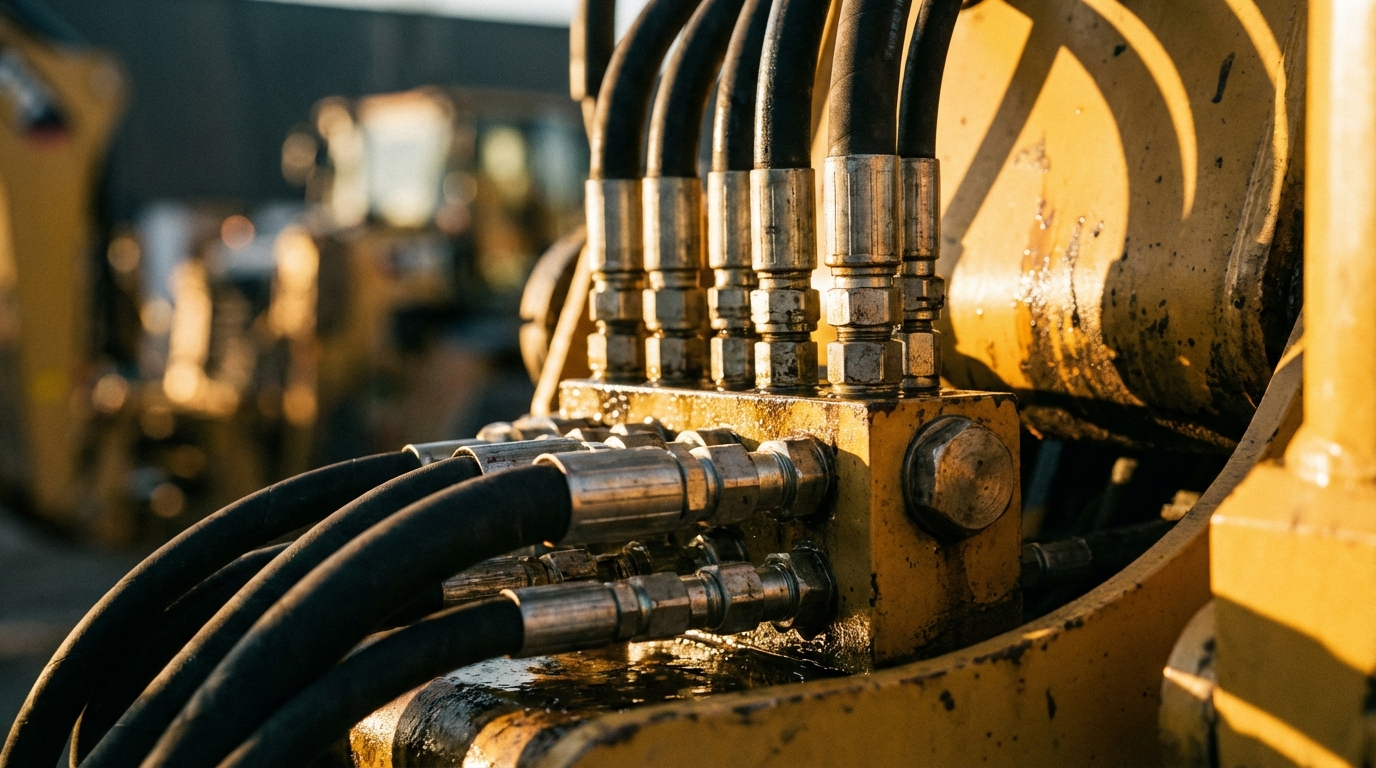
The hydraulic system is your skid steer’s circulatory system. When it’s compromised, everything suffers.
Warning Signs
- Slow bucket or boom response – Could be low fluid, clogged filter, or internal leak
- Jerky or inconsistent movement – Air in the system or failing control valve
- Boom drift – Cylinder seals failing; bucket slowly drops when holding position
- Hot hydraulic oil – System is working too hard; possible restriction or pump wear
Quick Diagnostic
Check your hydraulic fluid: Level should be within sight glass range. Color should be clear amber—not milky (water) or dark (overheated). Smell should be normal—any burnt odor = immediate service.
3. Excessive Vibration
Some vibration is normal. Excessive or new vibration is not.
Common Causes
Engine Vibration Sources
- Worn motor mounts
- Misfiring cylinder
- Damaged fan or pulleys
Drive Vibration Sources
- Uneven track tension
- Worn sprockets or idlers
- Damaged drive motor
The Isolation Test
- Idle Test Run the machine at idle with no load. Is the vibration present? If yes, likely engine-related.
- Throttle Test Increase to full throttle. Does it get worse? Confirms engine or hydraulic pump issue.
- Function Test Engage bucket function without moving. Still there? Helps isolate hydraulic vs. drive components.
4. Fluid Leaks
“It’s a skid steer, they all leak” is the excuse that leads to major failures. Take leaks seriously.
Leak Types and Severity
| Fluid Type | Color | Small Seepage | Steady Drip | Active Leak |
|---|---|---|---|---|
| Hydraulic | Amber/Red | Reseal soon | Service this week | STOP NOW |
| Engine Oil | Black/Brown | Low urgency | Schedule service | Check level daily |
| Coolant | Green/Orange/Pink | Pressure test needed | Serious | Potential head gasket |
Place cardboard under your machine overnight. In the morning, you’ll see exactly where leaks are coming from and how severe they are.
5. Warning Lights and Error Codes
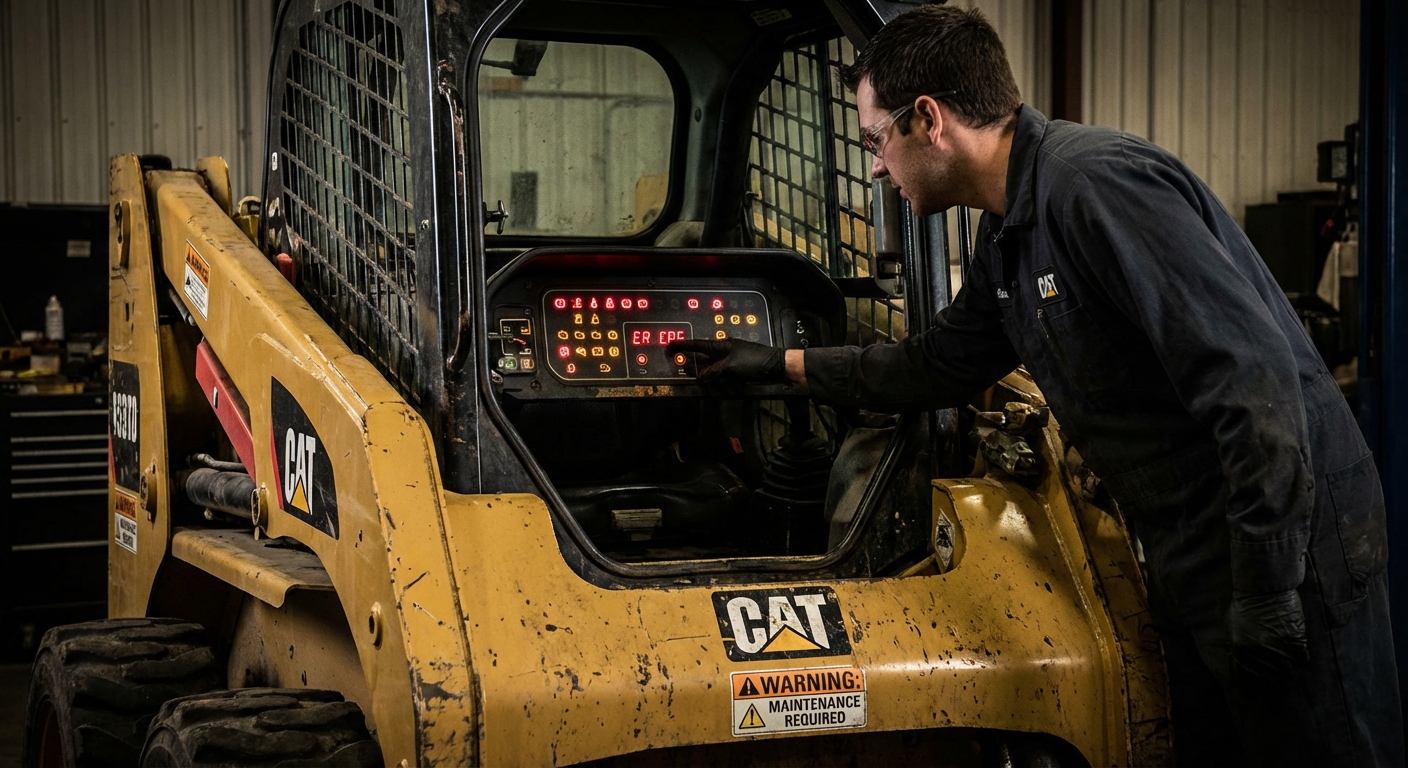
Modern skid steers have sophisticated diagnostic systems. When a light comes on, it’s telling you something specific.
Critical Lights (Stop Immediately)
- Engine oil pressure – Catastrophic damage possible within minutes
- Coolant temperature – Engine can warp if run hot
- Hydraulic temperature – System damage and seal failure risk
Service Soon Lights
- Air filter restriction – Replace within 10-20 hours
- Hydraulic filter – Service within 50 hours
- Engine service due – Follow manufacturer intervals
Error Codes
Most machines store error codes even after the light clears. These codes are diagnostic gold:
- Note the code exactly as displayed
- Check your operator’s manual for meaning
- If you can’t clear it, or it returns, professional diagnosis is needed
Building a Maintenance Routine
The best way to catch problems early is systematic inspection:
Daily Checklist
2 minutes before starting work
- Walk-around visual check
- Check fluid levels
- Listen during startup
- Test all functions briefly
Weekly Checklist
15 minutes end of week
- Grease all points
- Check track tension
- Inspect undercarriage
- Clean radiator screen
Monthly Checklist
1 hour detailed inspection
- Detailed fluid checks
- Belt inspection
- Battery terminals
- Full function test under load
Track Everything
The patterns in your maintenance data tell the real story. A machine that suddenly needs greasing twice as often is telling you something’s wearing. Hydraulic fluid that darkens faster than usual signals heat issues.
Never Miss a Warning Sign
FieldFix helps you log maintenance, set reminders, track patterns, and get AI-powered diagnostics when issues arise.
Try Free for 3 Machines →No credit card required.
Every catastrophic equipment failure started as a small, fixable problem. Trust your instincts—if something feels off, it probably is.