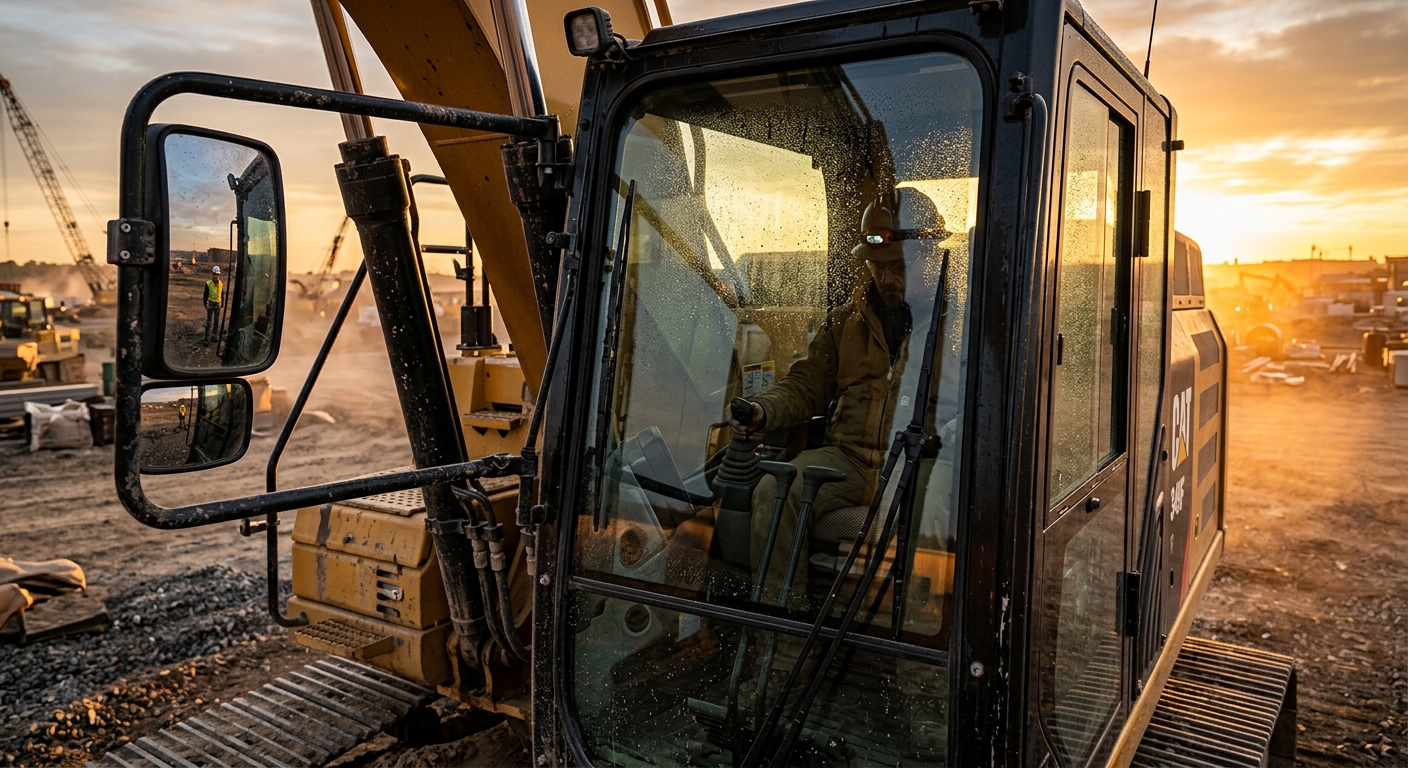
Heavy Equipment Attachment Maintenance Guide: Protect Buckets, Grapples, Hammers, and More
Learn how to maintain heavy equipment attachments, prevent premature wear, reduce downtime, and extend the life of buckets, grapples, hammers, augers, and forks.
Key Takeaways
- Attachments fail early when crews maintain the carrier but ignore the tool doing the abuse.
- Daily inspection of pins, edges, hoses, welds, and mounting points catches most attachment problems before they become downtime.
- Wear parts are cheaper than structural repairs, so replacing teeth, blades, bushings, and seals on time is the smart move.
- Tracking attachment-specific maintenance by hours and job type helps fleets spot the tools that are quietly draining margin.
- A clean attachment yard, clear labeling, and operator accountability dramatically extend service life.
Most fleets are decent at maintaining the machine and terrible at maintaining the attachments.
That is backwards.
Buckets, grapples, breakers, augers, forks, mulchers, and trenchers take the direct beating. They hit rock, concrete, roots, scrap, mud, and operators having a rough Monday. When an attachment goes down, the machine may still run perfectly, but the job stops anyway.
If you want less downtime and better margins, attachment maintenance needs to be treated like core fleet maintenance, not an afterthought.
Why attachment maintenance gets ignored
Attachments fall into an annoying middle ground. They are expensive enough to hurt, but small enough to get neglected. Most shops have a maintenance process for the carrier and almost nothing for the tool hanging off the front.
Typical cost of avoidable attachment repairs that start as small wear issues
Daily inspection time that prevents most surprise failures
Higher repair cost when worn parts are ignored until structural damage starts
Can sideline a machine faster than a major engine issue
The usual excuses are predictable: “It looked fine yesterday,” “we only use that tool sometimes,” or “we’ll weld it when it gets worse.” That logic burns money. Attachments fail in ugly ways because wear compounds fast once tolerances open up.
Warning: If an attachment has hydraulic leaks, cracked welds near load points, loose pins, or excessive coupler slop, it is already in the danger zone. That is not a “keep an eye on it” issue. That is a “pull it out of service” issue.
The attachments that usually eat your profit first
Not all attachments fail the same way. Some wear gradually. Others look fine until they suddenly become a miserable repair bill.
High-abuse attachments that need tight maintenance discipline
Buckets and grapples
- ✅ Simple to inspect
- ✅ Wear parts are usually affordable
- ❌ Often abused daily
- ❌ Ignored until cutting edges, teeth, or pivot points are cooked
Hydraulic breakers and hammers
- ✅ Huge productivity gain when healthy
- ✅ Strong rental alternative if usage is occasional
- ❌ Sensitive to bushing wear, tool retention parts, and grease habits
- ❌ Extremely expensive when operators run them dry or out of spec
Augers and trenchers
- ✅ Easy to service if caught early
- ✅ Wear trends are visible
- ❌ Gearbox and drive issues get expensive fast
- ❌ Teeth and flighting damage can snowball into vibration and bearing failure
Forks and material handling attachments
- ✅ Lower maintenance burden overall
- ✅ Long service life with proper storage
- ❌ Damage is often hidden in bends, heel wear, and locking mechanisms
- ❌ Small defects become major safety problems
Daily inspection routine for every attachment
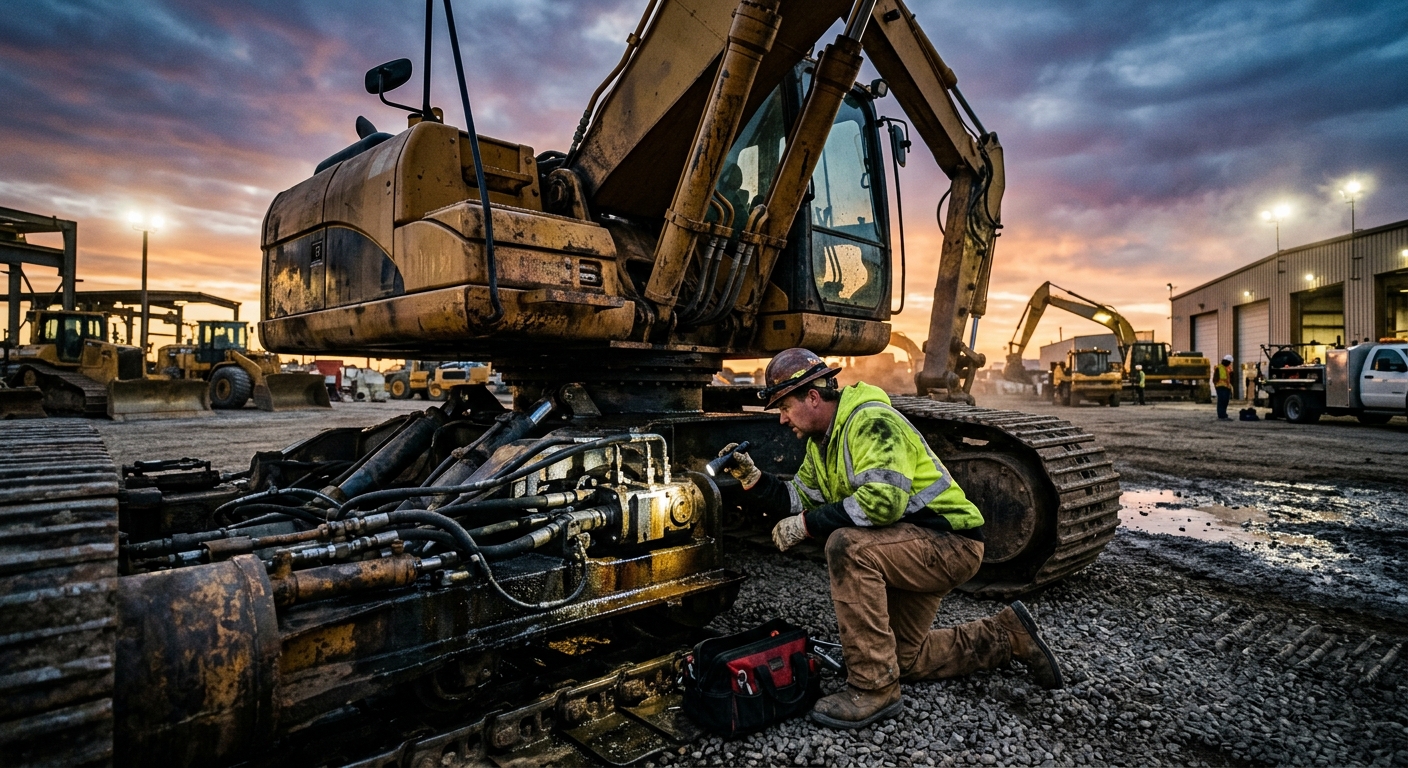
The daily routine should be brutally simple so crews actually do it.
- Check mounting and coupler engagement for full lock, proper pin engagement, and visible slop.
- Inspect pins, bushings, and pivot points for movement, scoring, or metal dust.
- Look for cracks and weld separation around ears, corners, hinge points, and high-stress seams.
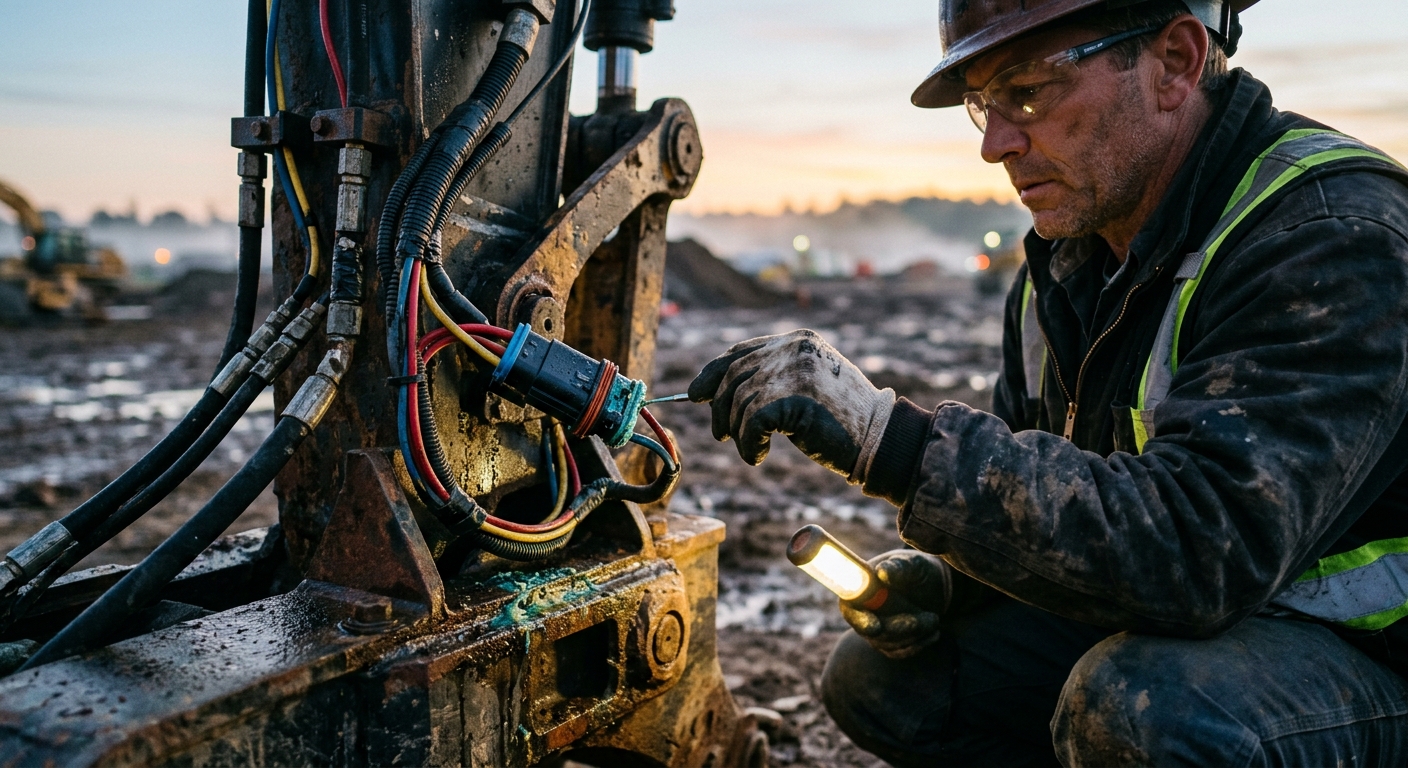
- Inspect hoses and fittings for abrasion, seepage, swelling, or exposed braid.
- Check wear parts like bucket teeth, side cutters, blades, breaker tools, forks, and auger bits.
- Clear packed debris from pivots, couplers, guards, and moving sections.
- Verify lubrication points were actually serviced.
- Test function before work instead of discovering a problem in the middle of a production run.
Pro tip: Make operators take one photo of the attachment during the morning walk-around. That single habit creates a visual wear trail, improves accountability, and gives the shop proof when damage appeared.
What to check by attachment type
Generic inspection is good. Attachment-specific inspection is better.
Buckets
Watch the cutting edge, side cutters, weld seams, tooth adapters, and pin bores. Running a bucket with badly worn teeth increases stress on the bucket shell and linkage. Cheap wear parts are there to die first. Let them.
A contractor ignores worn bucket teeth because “the bucket still digs.” Two weeks later the adapters are damaged, the edge rounds over, production slows, and the bucket needs line boring plus welding instead of a basic tooth change.
Grapples
Inspect cylinder pins, tine straightness, hose routing, and frame twist. Grapples live hard lives in brush, demo, and scrap, so bent tines and cracked welds are common. If one side starts closing unevenly, stop. Something is already moving that should not be moving.
Hydraulic breakers
Check tool bushings, retaining pins, accumulator condition if applicable, and daily lubrication. Running a breaker with excessive bushing wear destroys the tool, the lower housing, and eventually the breaker body.
Danger: Breakers are not “run it till it gets loud” tools. Heat, poor grease habits, and wrong operating angle can turn a profitable attachment into a five-figure repair very quickly.
Augers and trenchers
Inspect bits, teeth, chain condition, drive units, bearings, and seals. Pay attention to vibration. Vibration is not a personality trait. It is a warning.
Forks
Check for bent tines, heel wear, locking pin function, and frame cracks. Material handling attachments are safety-critical. A fork that is slightly damaged can still lift something right up until it cannot.
Repair now vs wait: the expensive decision
Most bad attachment decisions come from trying to save money in the wrong month.
Here is the rule: if the issue affects safety, alignment, coupler engagement, hydraulic integrity, or structural load paths, repair it now. If it is cosmetic paint loss, surface rust, or minor non-structural scuffing, schedule it later.
Repair Now
- Cracked structural welds
- Loose or egged-out pin bores
- Hydraulic leaks at active fittings or cylinders
- Missing retainers, lock pins, or keeper hardware
- Bent forks, broken teeth, warped cutting edges, severe coupler wear
Can Be Scheduled
- Cosmetic rust
- Paint damage
- Minor surface abrasion on guards
- Decals, labeling, and non-structural covers
- Light wear that is still within service limits
Best practice: Put service limits in writing for your most-used attachments. “Looks bad” is vague. “Replace breaker bushing at X wear” or “swap cutting edge when thickness reaches Y” actually works.
Storage and handling mistakes that shorten life
A lot of attachment damage happens when the tool is not even working.
Leaving attachments buried in mud, stored on uneven ground, dropped hard with a forklift, or stacked like scrap is a fantastic way to create avoidable damage. Hydraulic couplers fill with dirt. Pins disappear. Hoses get sun-baked. Fork frames get twisted by bad storage. Then everyone acts surprised later.
Better storage rules:
- Store attachments on level ground or proper stands.
- Cap hydraulic lines and couplers.
- Label each attachment clearly with ID, fitment, and service notes.
- Keep high-value tools under cover if possible.
- Separate ready-to-use attachments from needs-repair attachments.
- Do not let damaged attachments drift around the yard with no owner.
One small fleet color-coded attachment status with tags: green for ready, yellow for service due, red for out of service. Downtime dropped because operators stopped grabbing broken tools and “making it work.”
How to build an attachment maintenance schedule
You do not need a 40-page SOP. You need a schedule people will follow.
Start with three layers:
Daily
- Walk-around inspection
- Grease required points
- Check couplers, pins, hoses, and visible cracks
- Remove packed material and debris
Every 50 to 100 hours
- Measure wear parts
- Check torque on serviceable hardware
- Inspect bushings and pin fit
- Review photos and notes for developing damage
Every 250 to 500 hours or seasonally
- Pull detailed shop inspection
- Replace predictable wear components
- Pressure test hydraulic attachments if needed
- Repaint, label, and document major repairs
The smart move is tracking attachment maintenance separately from the machine. A skid steer may be healthy while its trencher is one ugly day away from failure. If the records live only under the carrier, you miss the pattern.
Should you own every attachment or rent some
No. Owning every attachment is how yards turn into expensive graveyards.
If an attachment is used weekly, affects job profitability, and can be maintained well in-house, ownership makes sense. If it is specialized, lightly used, expensive to rebuild, or easy to rent locally, renting is often smarter.
Own It When:
- It is used constantly
- Downtime would hurt revenue immediately
- Wear is predictable and manageable
- Your shop can inspect and maintain it properly
Rent It When:
- Usage is occasional or seasonal
- Repair risk is high
- Purchase price is hard to justify
- Newer rental units reduce maintenance headaches
A lot of contractors think they have an equipment problem when they really have a utilization problem. The attachment is not making money often enough to deserve permanent shelf space.
How FieldFix helps track attachment history
Attachment maintenance gets easier the moment you stop relying on memory.
FieldFix gives fleets a cleaner way to log inspections, photos, service history, and recurring maintenance tasks so attachment issues do not vanish between jobs. That matters when one operator notices “a little slop” and another operator gets the full failure two weeks later.
Stop Losing Money to Neglected Attachments
Buckets, grapples, breakers, forks, and augers deserve the same maintenance discipline as the machine carrying them. Track inspections, log repairs, store photos, and build service history in one place with FieldFix.
The short version is simple: attachments are not accessories. They are production tools. Maintain them like they matter, because they do.