Heavy Equipment Blind Spots & Spotter Safety: Complete Guide for Safer Jobsites
Learn how to manage heavy equipment blind spots, train spotters, and prevent backing accidents with practical jobsite safety systems that actually work.
Key Takeaways
- Blind spot incidents are predictable because they usually happen during backing, turning, loading, or working near crews on foot.
- A spotter system only works when it is standardized — one set of hand signals, one clear communication method, one person in charge.
- Most close calls start before the machine moves with poor walkarounds, rushed staging, and no exclusion zone.
- Cameras and alarms help, but they do not replace discipline. Operators still need clean mirrors, clear lines of sight, and confirmed communication.
- Documenting near misses and traffic plans is the fastest way to reduce repeat incidents across a fleet.
A machine does not need to be moving fast to ruin someone’s life. Most blind spot incidents happen at low speed, in familiar conditions, on jobsites where everyone thinks they already know the routine. That is what makes them so dangerous.
Excavators, loaders, dozers, compact track loaders, haul trucks, and telehandlers all have zones where the operator simply cannot see a worker, a pickup, a trench edge, or a stack of material. Add noise, dust, glare, poor mirror adjustment, and rushed communication, and the problem gets worse fast.
This guide breaks down how to control blind spot risk with a real system — not just a sticker in the cab or a beeper on the back of the machine.
Why Blind Spot Incidents Keep Happening
Blind spot accidents are rarely random. They happen when several small failures stack up.
Most crews do not have a machine problem. They have a system problem. No traffic plan. No designated spotter. No consistent signals. No rule for what happens when visual contact is lost.
If the operator loses sight of the spotter, the machine stops. Not slows down. Not “just another two feet.” Stops.
That one rule prevents a shocking number of incidents.
Where the Worst Blind Spots Are
Every machine has its own ugly angles, but the same problem areas keep showing up.
Rear blind zones
Compact equipment, wheel loaders, rollers, and haul trucks are notorious here. Rear cameras help, but mud, vibration, rain, and glare make them less reliable than people think.
Right-side visibility gaps
On many machines, the right side is worse than the left. The operator sits offset, attachments block the lower view, and crew members naturally drift into that side while handling grade stakes, tools, or material.
Attachment-created blind spots
Buckets, forks, grapples, trenchers, and specialty attachments change visibility dramatically. A machine that was manageable in one configuration may become dangerous in another.
Swing radius and counterweight zones
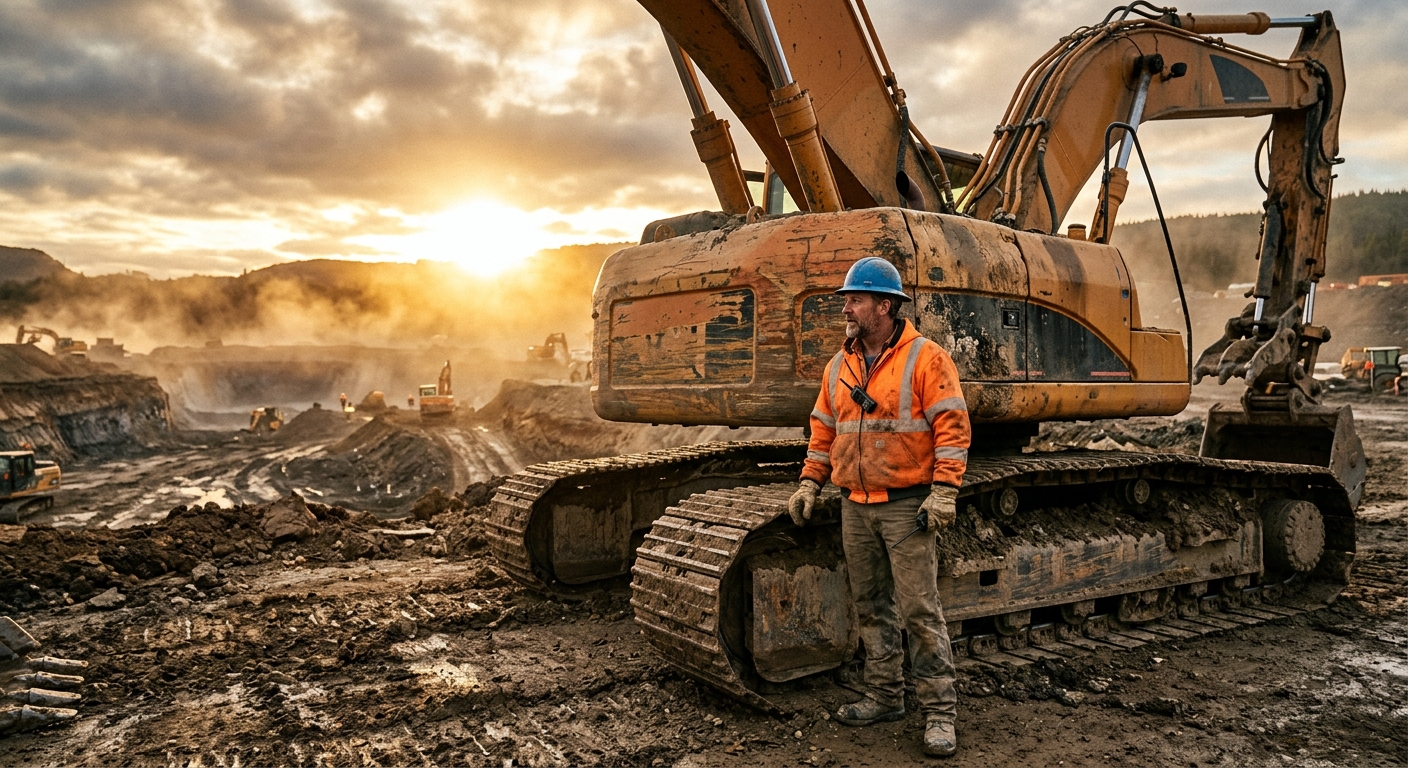
Excavators and some cranes create danger without even traveling. Ground workers focus on the bucket and forget that the rear of the machine is swinging into them.
Do not trust yesterday’s visibility. A different attachment, muddy glass, a parked pickup, or a pile of spoil can completely change today’s sight lines.
The Non-Negotiable Spotter Rules
A spotter is not just “whoever is nearby.” If you wing this part, the whole safety plan falls apart.
Rule 1: One machine, one primary spotter
Too many voices creates hesitation. The operator should know exactly who has movement authority.
Rule 2: The spotter stays visible
If the spotter has to move through a blind zone, the machine stops until they re-establish position.
Rule 3: The spotter never walks backward into danger
This sounds obvious until someone is guiding a loader and staring at the machine instead of the trench, spoil pile, or another vehicle behind them.
Rule 4: No mixed signals
If your crew uses different hand signals from job to job, you are begging for confusion. Standardize them and train them.
Rule 5: The operator has veto power
If a signal is unclear, radio audio cuts out, mirrors are dirty, or pedestrians crowd the path, the operator shuts it down.
Good Spotter System
- ✅ One designated person directing movement
- ✅ High-visibility gear and clear positioning
- ✅ Agreed stop signal understood by everyone
- ✅ Radio plus hand signals as backup
- ✅ Exclusion zone enforced before movement starts
Bad Spotter System
- ❌ Two or three people yelling directions
- ❌ Spotter standing directly behind the machine
- ❌ No plan for lost visual contact
- ❌ Workers cutting through the movement path
- ❌ “We’ve always done it this way” as the whole process
Building a Safer Equipment Movement Plan
The safest crews do the boring stuff before they need it.
1. Set a travel path
Mark where the machine is expected to move. This matters most on tight sites, utility work, demolition, pipe jobs, and busy commercial projects.
2. Create an exclusion zone
Nobody on foot enters the zone unless the operator and spotter know about it. Cones, paint, barriers, or simple verbal callouts are better than nothing. A real barrier is better than a hopeful assumption.
3. Separate pedestrian and machine traffic
If pickups, laborers, subs, and equipment all use the same path, the site is sloppy. Split those flows whenever possible.
4. Handle loading zones intentionally
Trucks backing into excavator loading zones create the same problem every day: both drivers think the other guy sees everything. Establish where the truck stops, where the spotter stands, and when the loader operator can swing.
5. Review the plan at the morning huddle
A two-minute reset beats an injury report.
Best practice: Sketch the travel path and danger zones on a whiteboard during the tailgate meeting. Crews remember what they can picture.
Hand Signals and Radio Protocols
Hand signals need to be dead simple. Fancy is useless.
Use a core set every operator and laborer can recognize:
- Stop — both hands up, clear and aggressive
- Move forward — controlled arm motion forward
- Back up — controlled arm motion backward
- Swing left / right — one direction at a time, not frantic windmilling
- Slow — palms down, small downward motions
- Emergency stop — same as stop, but immediate and non-negotiable
Radio rules matter just as much.
- Keep commands short
- Repeat critical instructions back
- Use machine ID if several units are active
- Do not stack instructions in one sentence
- If the channel gets noisy, pause movement until it is clear
A bad radio habit is saying, “Come on back, you’re good, keep coming, little more, little more…” That is garbage communication. Say one thing at a time.
Operator Checklist Before Moving
Operators carry the last clear chance to prevent the accident. Before moving any machine, run this quick mental checklist:
- Walk around the machine and verify the area is clear.
- Clean mirrors, camera lens, and glass if visibility is compromised.
- Confirm the spotter and communication method.
- Check alarm, horn, and lights if the machine uses them.
- Identify soft ground, trench edges, spoil piles, utilities, and traffic.
- Know where the tail swing or rear drift will go.
- Move slow enough to stop immediately.
A filthy backup camera is worse than no camera if it gives the operator fake confidence. Clean it during the pre-start walkaround or do not rely on it.
Common Failure Points That Get People Hurt
These are the repeat offenders on real jobsites.
Rushing the last five minutes
End-of-day cleanup, one last truck, one last reposition. That is when crews skip the spotter and assume everyone is paying attention.
Laborers cutting through active zones
People on foot always look for the shortest path. If you do not physically and verbally control machine zones, somebody will drift through one.
Spotter standing in the pinch point
A spotter should guide from a safe angle, not stand exactly where the machine is heading.
No near-miss tracking
If your crew keeps having close calls with the same loader in the same stockpile area, that is not bad luck. That is a known pattern you failed to fix.
Technology complacency
Cameras, alarms, and proximity alerts are support tools. They are not permission to get lazy.
Technology That Helps — And What It Cannot Do
You should use safety tech. You just should not worship it.
The right move is layered protection:
- trained operators
- designated spotters
- consistent signals
- cameras and alarms
- documented incidents and follow-up
Remove one layer and the rest have to work harder.
Real-World Near-Miss Example
Case Study: Compact Track Loader Backing Into a Material Staging Lane
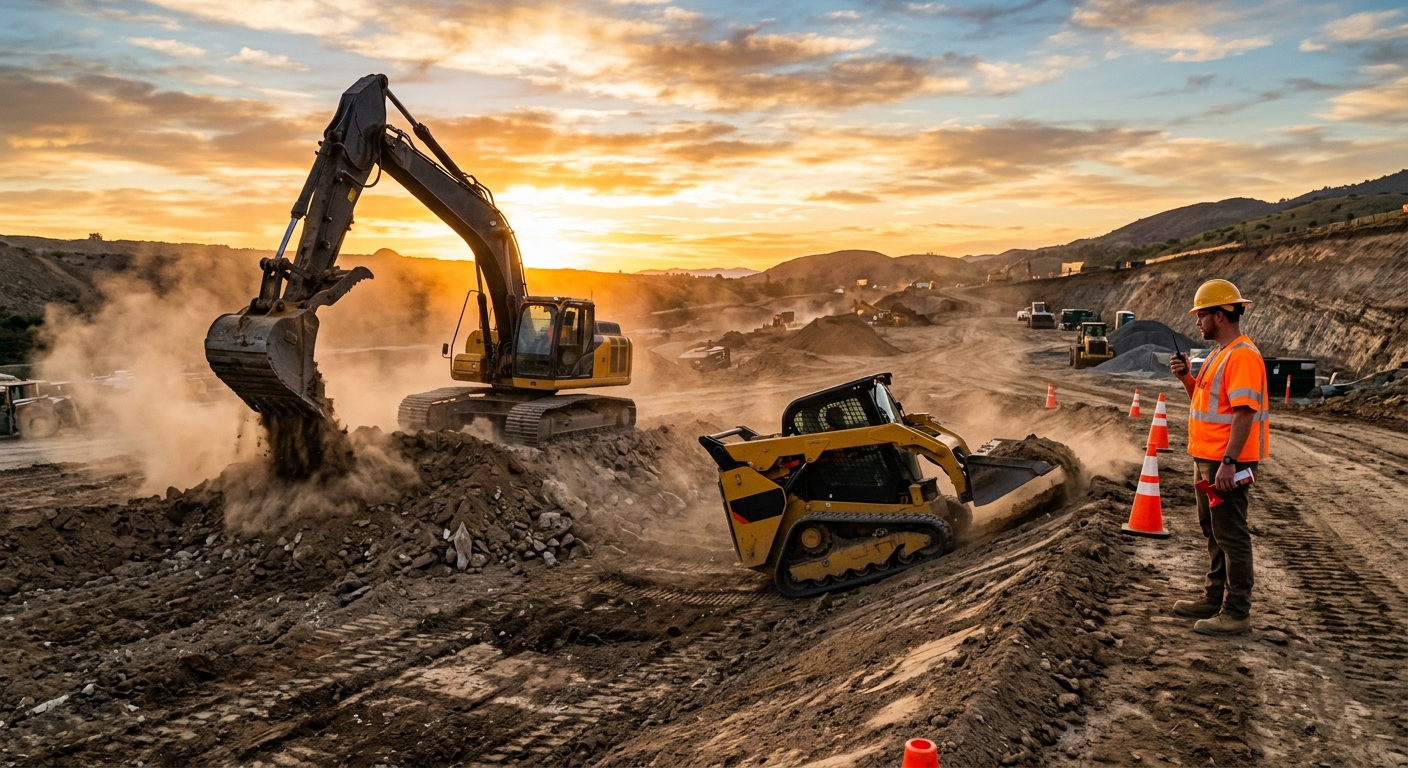
A contractor had a compact track loader shuttling material between a pile and a trench crew. The operator backed out of the pile area repeatedly without a spotter because the route was short and familiar. A laborer carrying stakes cut behind the machine from the loader’s right rear corner — completely out of the operator’s view.
The backup alarm was working, but the site was loud and the laborer assumed the loader was stopping. It did not. The operator caught a glimpse in the mirror and stopped in time, missing the worker by inches.
What changed after the near miss:
- A fixed pedestrian path was marked away from the loader lane
- One laborer became the designated spotter during active loading cycles
- The team added a quick near-miss log entry and reviewed it the next morning
- Mirrors and camera cleaning were added to the loader’s daily checklist
That is how good crews improve: not with speeches, with systems.
How FieldFix Helps Reduce Repeat Safety Mistakes
Blind spot safety is not just a training problem. It is a consistency problem.
If your operators, mechanics, and supervisors cannot document near misses, assign follow-ups, and keep machine-specific checklists attached to the equipment, the same mistakes will keep showing up on different jobs.
FieldFix helps crews:
- track inspections and safety checks by machine
- document visibility issues, damaged mirrors, broken alarms, and camera problems
- log near misses so supervisors can spot patterns early
- keep service history tied to the machine instead of trapped in somebody’s head
- build a cleaner handoff between operators, mechanics, and managers
Want fewer repeat safety mistakes across your fleet?
FieldFix gives you one place to track machine inspections, maintenance issues, safety notes, and recurring problems before they turn into downtime or injuries.
Start free at fieldfix.ai and put your safety process where the whole crew can actually use it.
Blind spots are part of heavy equipment. Blind spot incidents do not have to be. If you want fewer close calls, stop treating machine movement like an informal routine. Build a real process, train it, document it, and enforce it every single day.