Heavy Equipment Brake System Maintenance Guide: Prevent Downtime and Keep Operators Safe
Learn how to inspect, maintain, and troubleshoot heavy equipment brake systems to prevent failures, reduce downtime, and improve jobsite safety.
Heavy equipment brake maintenance does not get the same attention as engines, hydraulics, or undercarriages. That is a mistake. A weak brake system is not just a repair issue. It is a safety issue, a liability issue, and a productivity killer.
When a loader, haul truck, telehandler, crane, or compact machine cannot stop consistently, everything around it gets riskier. Operators lose confidence. Spotters compensate. Jobs slow down. Small issues turn into expensive emergency repairs. In the worst cases, brake neglect leads to collisions, rollaways, damaged structures, or injuries.
The good news is that brake problems are usually predictable. They leave clues before they turn into failures. If your team knows what to inspect, what to document, and when to act, brake maintenance becomes straightforward instead of chaotic.
Why brake maintenance matters
A lot of fleet owners treat brakes like a passive system. If the machine stops, they assume everything is fine. That logic falls apart fast on real jobsites.
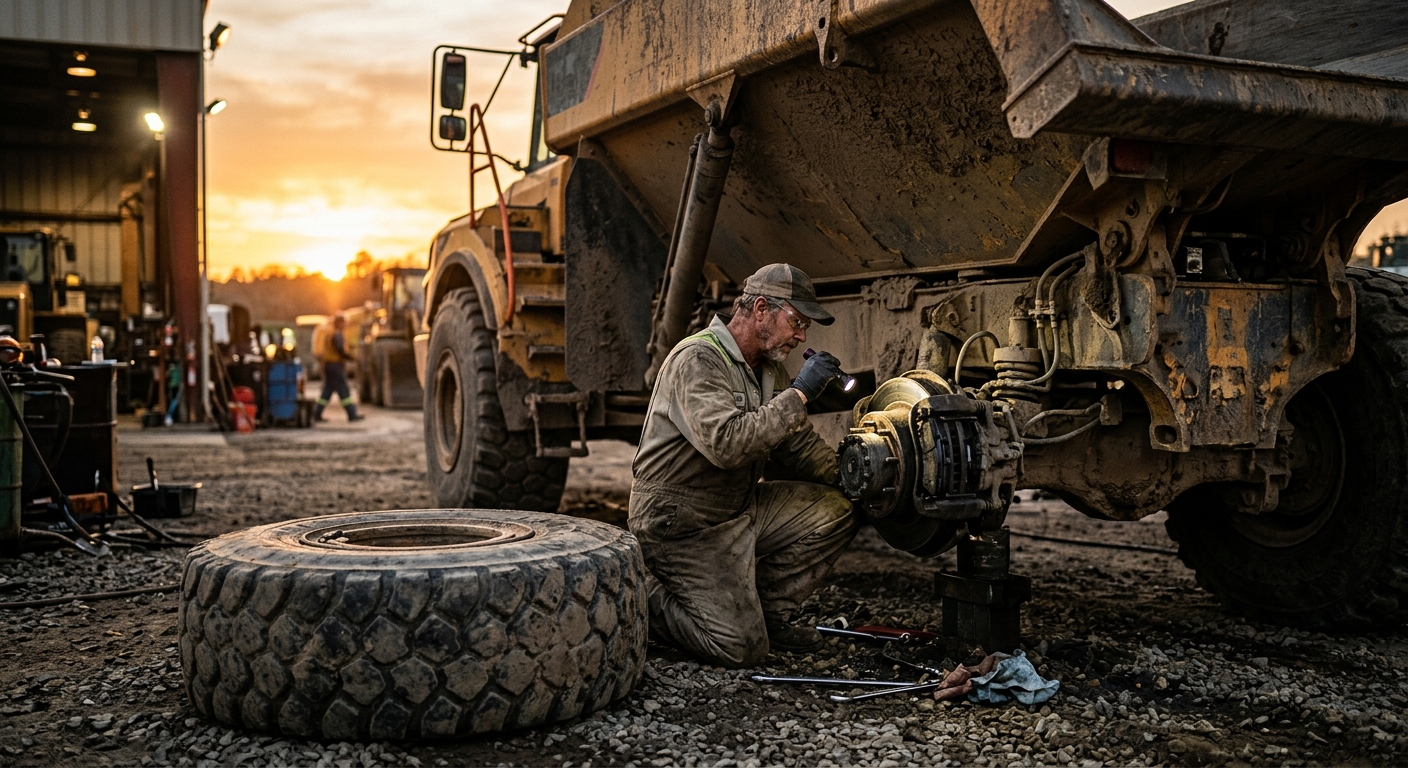
Brakes in heavy equipment operate under nasty conditions. They deal with mud, water, abrasive dust, heat cycles, heavy loads, steep grades, repeated starts and stops, and operators with very different habits. On some machines, braking performance is also tied into the hydraulic system, driveline, wet disc assemblies, parking brake components, or electronic controls. That means one overlooked issue can ripple through multiple systems.
A leaking seal, worn pad, or contaminated fluid can compromise the whole braking system.
Brake failures create downtime, safety exposure, and expensive secondary damage.
Most brake failures show warning signs long before the machine becomes unsafe.
Well-maintained brakes deliver three things every fleet wants: predictable stopping, safer operation, and fewer unplanned repairs. That alone makes brake inspections worth the time.
Brake systems you’ll find in heavy equipment
Not every machine uses the same type of brake setup, so your inspection routine has to match the equipment.
Here are the most common systems you will see in heavy equipment fleets.
1. Hydraulic service brakes
These are common on compact machines, backhoes, wheel loaders, telehandlers, and some other mobile equipment. Force is transferred through brake fluid to calipers, wheel cylinders, or brake packs.
What to watch:
- Fluid level and condition
- Leaks at lines, hoses, fittings, cylinders, and master components
- Pedal feel and response
- Pad, shoe, rotor, or drum wear
2. Air brake systems
More common on on-road heavy trucks and certain larger equipment. These use compressed air instead of hydraulic fluid.
What to watch:
- Air leaks
- Moisture in the system
- Tank drainage practices
- Slack adjuster performance
- Compressor behavior and pressure build time
3. Wet disc brakes
Many heavier machines use sealed wet disc brakes running in oil. They last longer in harsh conditions, but they are not maintenance-free.
What to watch:
- Oil contamination
- Heat buildup
- Internal wear
- Performance fade under load
- Manufacturer-specific service intervals
4. Parking and emergency brake systems
These can be mechanical, hydraulic, spring-applied, or electronically controlled. They are often ignored because they are used less frequently, which is exactly why they catch people off guard.
What to watch:
- Holding power on slope
- Proper engagement and release
- Cable or linkage wear
- Warning lights or control faults
Early warning signs of brake trouble
Brake systems almost always start whispering before they start screaming. The trick is getting operators and mechanics to listen.
Common warning signs include:
- Increased stopping distance
- Machine pulling to one side during braking
- Spongy or inconsistent pedal feel
- Grinding, squealing, or chattering noises
- Burnt smell after operating on slopes or under load
- Brake warning lights or fault messages
- Parking brake not holding reliably
- Excessive pedal travel
- Overheated wheel ends or hubs
- Visible fluid leaks or wetness around components
Report it immediately
- Soft pedal after startup
- Brake fade when hot
- Machine rolls slightly after parking
- Grinding noise at low speed
Bad fleet habit
- "It still stops fine enough"
- "We will check it next service"
- "Only happens on hills"
- "That light has been on forever"
That second list is where money goes to die.
Daily, weekly, and hour-based brake checks
A good brake maintenance program is layered. Not everything has to be torn apart every day, but some checks should happen constantly.
Daily checks
Operators should confirm:
- Brake pedal feels normal
- Machine stops smoothly and predictably
- Parking brake engages and holds
- No active warning lights or alarms
- No visible leaks beneath the machine
- No obvious damage to brake lines, hoses, or wheel-end components
This takes minutes, not hours.
Weekly checks
A mechanic or lead tech should inspect:
- Brake fluid level and condition where applicable
- Brake line routing, abrasion, and leaks
- Hardware looseness or corrosion
- Parking brake linkage, cable condition, or actuator behavior
- Rotor, drum, or exposed friction component wear where accessible
- Signs of overheating such as discoloration, burnt odor, or glazing
Scheduled service checks
At manufacturer-recommended intervals or specific machine hours, go deeper:
- Measure pad or shoe thickness
- Inspect rotors and drums for scoring, cracks, or heat spots
- Flush and replace fluid if required
- Check wet brake oil condition and contamination indicators
- Test brake pressure, accumulator performance, or air system pressure as applicable
- Verify park brake hold on grade according to safe test procedures
- Review logged brake complaints from operators
If you run a mixed fleet, standardize the inspection workflow even if the components differ. The form should always answer the same basic questions: does it stop correctly, is anything leaking, is anything worn out, is anything getting hot, and is the parking brake trustworthy?
Common causes of brake failure
Brake failure is usually not one dramatic event. It is usually a chain of neglected smaller problems.
Contaminated fluid or oil
Hydraulic systems hate contamination. Water absorption, dirt intrusion, or degraded fluid can reduce braking performance and damage internal components.
Heat
Repeated braking on grades, overloaded operation, dragging brakes, or poor adjustment generates heat. Heat cooks seals, glazes friction material, warps components, and reduces stopping performance.
Worn friction materials
Pads, shoes, discs, and related components wear gradually. Ignore the wear limits and you eventually chew into more expensive parts.
Leaks
Small leaks become pressure loss. Pressure loss becomes weak braking. Weak braking becomes a very bad day.
Corrosion and seized hardware
Machines that sit outside or operate in wet, muddy environments are especially vulnerable. Corroded hardware can keep brakes from releasing correctly or prevent even braking across the axle.
Poor operator habits
Riding the brakes, carrying excessive speed downhill, overloading the machine, or ignoring early symptoms adds stress and heat. Maintenance cannot fix careless operation by itself.
Example: avoidable downtime on a telehandler
A fleet ignored repeated operator complaints that a telehandler felt "soft" after running for an hour. The issue turned out to be a minor hydraulic leak and heat-related fade. Instead of fixing a hose and bleeding the system early, the machine stayed in rotation until braking became unsafe. The result was emergency downtime, contaminated components, and a much larger repair bill than the original leak would have caused.
Wrong parts or poor adjustment
Cheap brake components and rushed installations often create repeat failures. This is one area where cutting corners is especially stupid.
Repair versus replacement
Not every brake issue requires a full system overhaul. But waiting too long makes replacement far more likely.
Here is the practical rule: repair early, replace when wear or damage says you have to, and never gamble on safety-critical components.
Repair makes sense when
- The problem is isolated and caught early
- Wear is still within service limits
- Leaks are minor and components are otherwise healthy
- Adjustment, bleeding, or hardware replacement solves the root cause
Replacement makes sense when
- Friction materials are below spec
- Rotors or drums are cracked, heavily scored, or heat damaged
- Calipers, cylinders, or actuators are seized or badly worn
- Repeat failures show the system is beyond patchwork fixes
A cheap repair that fails again in two weeks was not a cheap repair. It was wasted labor plus more downtime.
How to build a brake maintenance process
If you want better brake reliability, do not rely on memory and vibes. Build a repeatable system.
1. Put brake checks on every inspection form
If it is not on the checklist, it gets skipped. Include service brake feel, parking brake function, visible leaks, warning indicators, and any operator comments.
2. Track complaints by machine
One isolated complaint might be operator preference. Three similar complaints over two weeks is a pattern.
3. Log brake-related repairs with date and hours
You want service history, not guesswork. Knowing when pads were changed, fluid was flushed, or a parking brake was adjusted makes future decisions much easier.
4. Train operators on what matters
Operators do not need to be technicians, but they should know how normal braking feels and which changes need immediate reporting.
5. Review recurring failures
If the same machine keeps overheating brakes or eating components, do not just replace parts. Check application, loading, terrain, operator behavior, and underlying setup.
Operators catch symptoms early when they know what to watch for.
Logged service history makes brake decisions faster and smarter.
Early brake repairs are usually far cheaper than emergency failures.
6. Use software instead of scattered notes
This is the part a lot of fleets still botch. Inspection notes live on paper. Repairs live in text messages. Complaints live in someone’s head. Then everybody acts surprised when the same brake issue returns.
A maintenance platform gives you one place to log inspections, service history, recurring issues, and machine-specific trends. That means your brake program improves over time instead of resetting every time a different operator touches the machine.
What good looks like
A solid fleet process logs a soft-pedal complaint on Monday, schedules inspection that afternoon, finds a leaking wheel cylinder, repairs it before the next shift, and records the fix with machine hours attached. No drama. No incident. No mystery bill later.
Final takeaway
Brake maintenance is not glamorous, but it is one of the highest-leverage things you can do for safety and uptime. The best fleets do not wait for brake failure. They look for the early signs, inspect the right components, train operators to speak up, and document everything.
That is how you stop treating brake repairs like emergencies and start treating them like maintenance.
Want fewer equipment surprises?
FieldFix helps you track inspections, maintenance history, and machine issues in one place, so recurring problems do not slip through the cracks.