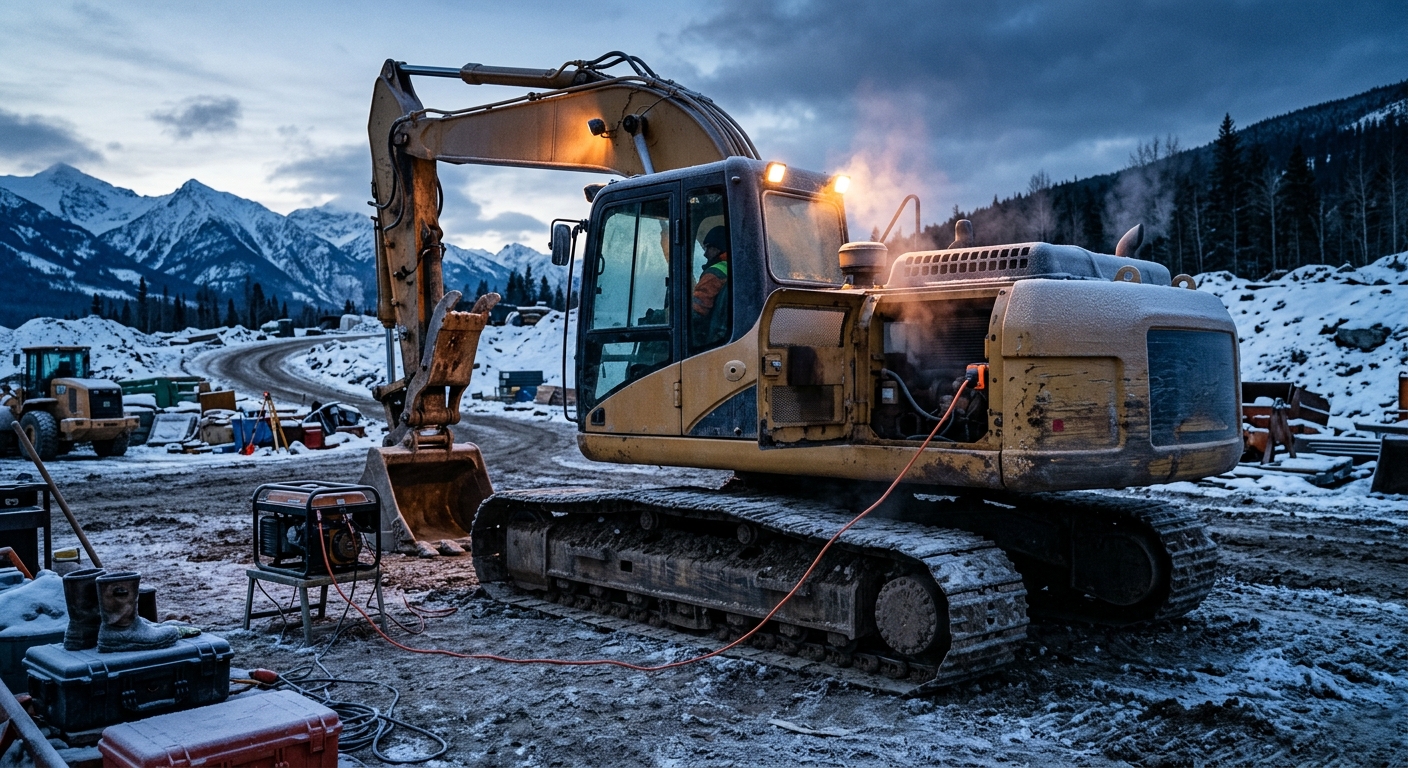
Heavy Equipment Idle Time Reduction Guide: Cut Fuel Burn Without Slowing Production
Learn how to reduce heavy equipment idle time with operator habits, site planning, shutdown rules, and tracking methods that cut fuel burn and engine wear.
Key Takeaways:
- Excessive idle time quietly burns fuel, shortens service intervals, and accelerates engine wear without moving the job forward
- Most fleets can cut idle time 10% to 30% with clear shutdown rules, smarter staging, and operator coaching
- Five minutes here and ten minutes there adds up fast across loaders, excavators, skid steers, dozers, and service trucks
- Tracking idle hours by machine and operator turns a vague frustration into a fixable operating problem
- The goal is not constant shutdowns. The goal is controlled idle time based on weather, safety, and work rhythm
Heavy equipment owners usually notice the big costs first: payments, repairs, breakdowns, and payroll. Idle time slips under the radar because the machine looks busy. The engine is running. The operator is in the seat. The crew is on site. But if iron is sitting still for long stretches, you’re paying for motion without getting any.
That matters more than most fleets admit. A machine that idles too much burns fuel, loads up emissions systems, racks up hours faster, shortens service intervals, and creates a fake picture of utilization. It can make a fleet look productive on paper while margins leak out all season.
This guide breaks down how to reduce idle time without turning your crew into shutdown robots. The best approach is practical: know when idling makes sense, know when it doesn’t, and build habits that trim the waste.
Why Idle Time Is More Expensive Than Most Owners Realize
Many owners think of idling as a fuel issue. It is a fuel issue, but that’s only part of the story.
An excavator that idles one extra hour per day might not feel like a crisis. Spread that across a six-day week and a full season, and you can end up with hundreds of hours that added maintenance cost without producing billable work.
That’s why idle control is not just a fuel conversation. It’s an operations conversation.
What Counts as Bad Idle Time
Not all idle time is waste. Some is necessary. Some is poor planning. Some is pure habit.
Bad idle time usually looks like this:
- Machine running while the operator is on the phone or waiting for instructions
- Loader or skid steer left on during lunch breaks
- Excavator sitting live while trucks are delayed or staging is disorganized
- Service truck running all morning because nobody wants to restart it
- Equipment warming far longer than conditions require
Useful definition: Bad idle time is engine-on time that does not improve safety, protect the machine, or keep the work flowing.
If your crew says, “We always leave it running,” that’s not a policy. That’s inertia.
The Real Cost of Letting Machines Sit and Run
Let’s keep the math simple. Suppose a mid-size machine burns 0.8 gallons per hour at idle and diesel costs $4 per gallon. One idle hour costs about $3.20 in fuel alone. That does not sound awful until you multiply it.
Example:
- 4 machines
- 1 unnecessary idle hour per day each
- 5 days per week
- 40 working weeks
That’s 800 idle hours a year. At $3.20 per hour, you’re at $2,560 in fuel alone.
Now layer in the hidden costs:
- More engine hours before resale
- More frequent oil changes and filters
- More DPF and aftertreatment headaches on diesel machines
- More cooling system load in hot weather
- More carbon buildup from low-load operation
That is the pattern again and again. High idle time often points to workflow problems, not lazy machines.
When Idling Is Actually Necessary
This is where people get stupid about cost cutting. Telling operators to shut everything off every time they pause is a good way to create wear, frustration, and safety problems.
Idling usually makes sense when:
- ✅ You are in a short loading cycle and restarting would interrupt production
- ✅ The machine needs a brief warm-up in cold weather before heavy load
- ✅ The engine needs a short cool-down after hard work, especially turbocharged equipment
- ✅ Safety or site control requires the machine to remain immediately ready
Idling usually does not make sense when:
- ❌ The operator is waiting more than a few minutes for another crew or truck
- ❌ The machine is parked during lunch or extended breaks
- ❌ The equipment is being used as a climate-controlled office
- ❌ The crew simply forgot it was running
Warning: Do not apply a blanket shutdown rule to turbocharged or emissions-equipped machines without checking the manufacturer’s guidance. Some machines need short cool-down periods after sustained load.
The right question is not, “Should this machine ever idle?” The right question is, “Is this idle time serving a purpose?”
Operator Habits That Drive Idle Time Up
Idle time usually comes from habits before it comes from policy.
The big offenders:
-
Long warm-ups by default
Modern equipment usually does not need a fifteen-minute warm-up unless weather is severe. Gentle operation after startup is often better than long parked idling. -
Leaving the seat with the machine running
Fuel gets burned while nobody is even touching the controls. -
Break-time idling
This one is everywhere. One lunch break per day across multiple machines adds up fast. -
Poor handoff communication
If operators don’t know whether trucks are five minutes away or thirty, they keep the engine running “just in case.” -
Treating restarts like a disaster
Some crews overestimate the pain of restart time and underestimate the cost of extended idling.
Pro tip: Write one rule your operators can remember: if the wait will likely exceed 5 minutes and safety or cooldown do not require engine-on time, shut it down.
Simple beats clever. Crews follow rules they can remember under pressure.
Site Planning Changes That Reduce Idle Time Fast
If you only coach operators and never fix site flow, you will hit a ceiling.
Idle reduction gets easier when the day is staged better.
High-impact planning changes:
- Confirm truck order and haul route before excavation starts
- Stage attachments where changeovers happen, not across the site
- Front-load layout, markings, and utility checks before machine start
- Assign one person to material coordination so operators are not waiting blind
- Use radios or group chat updates to call realistic ETAs
- Batch tasks by machine type instead of bouncing one machine between scattered jobs
This is the part owners miss: lower idle time is often a sign of better leadership, not stricter supervision.
Shutdown Rules Your Crew Can Actually Follow
A good idle policy should fit on one page.
Recommended field policy:
- Warm up only as long as conditions and manufacturer guidance require
- Let turbocharged machines cool down briefly after sustained heavy load
- Shut down for lunch, extended staging delays, and waits expected to exceed 5 minutes
- Document exceptions for freezing weather, safety standby, or specialty attachments
- Review idle percent weekly by machine, not once a year when everyone has already forgotten the pattern
Danger: Do not punish operators using raw idle numbers without context. A machine supporting traffic control, crane spotting, vacuum excavation, or intermittent hydraulic demand may have legitimate idle periods. Bad scorekeeping makes crews hide problems instead of solving them.
The goal is accountability, not gotcha management.
Tracking Idle Time by Machine and Operator
You can’t manage what you don’t track. “I think we idle too much” is not a system.
Track these metrics monthly:
- Total engine hours
- Total idle hours
- Idle percentage
- Fuel used per engine hour
- Jobs or operators with recurring high idle patterns
A useful benchmark varies by machine role. An excavator waiting on trucks will behave differently than a compact loader in a tight production loop. What matters is trend and context.
FieldFix-style logging matters here because notes provide the missing context. If idle time spikes, the note might explain that the crew was waiting on locates, dealing with mud access, or holding for traffic control. Numbers alone can mislead. Numbers plus field notes tell the truth.
A Simple Fleet Idle Reduction Plan
If you want a clean rollout, use this 30-day plan.
Week 1: Measure reality
- Pull engine hours and idle hours for each machine
- Identify your three worst offenders
- Ask foremen why those machines idle so much before making rules
Week 2: Set one rule
- Implement the 5-minute shutdown guideline
- Clarify cooldown and cold-start exceptions
- Review it in person, not by buried text message
Week 3: Fix planning bottlenecks
- Look for recurring wait time causes
- Adjust truck timing, staging, and communication
- Make one site-flow change per crew
Week 4: Review and coach
- Compare idle percentage before and after
- Highlight wins publicly
- Coach outliers privately with examples, not vague criticism
Best practice: Start with one crew or one machine class. A pilot is easier to manage than trying to rewire the whole fleet in one shot.
What Better Idle Control Does for Maintenance
Cutting idle time improves more than the fuel bill.
You may also see:
- Longer intervals between PM triggers tied to engine hours
- Less soot loading and fewer emissions-system complaints
- Reduced unnecessary fan, belt, and cooling-system runtime
- Cleaner utilization data when comparing machines
- More honest replacement planning because hours reflect real work more closely
That last one matters. When idle-heavy machines pile on hours, they can look older on paper than they really are in productive output. That muddies replacement timing and resale decisions.
Common Mistakes to Avoid
The worst idle reduction programs fail for predictable reasons.
Mistake 1: Turning it into a fuel-only lecture
Operators care more when you connect idle time to breakdown risk, PM frequency, and smoother job flow.
Mistake 2: Ignoring machine differences
A dozer, crane, CTL, and excavator do not all operate the same way.
Mistake 3: Tracking but never reviewing
Data without follow-up is decoration.
Mistake 4: Using shame as a management tool
Crews tune out fast when reporting becomes punitive.
Mistake 5: Skipping the workflow fixes
If trucks, materials, or layout are constantly late, operators will keep idling because the system trained them to.
The cleanest win is this: reduce waste without slowing the work.
Want to spot idle-time waste before it turns into higher fuel and maintenance costs?
FieldFix helps equipment owners log machine hours, track maintenance, and build a clearer picture of what each asset is actually doing in the field. If your fleet feels busy but margins still feel tight, idle time is one of the first places worth checking.