Heavy Equipment Tire Chain Selection and Maintenance Guide
Learn how to choose, install, inspect, and maintain heavy equipment tire chains for safer winter traction, lower tire damage risk, and less downtime.
Tire chains live in that useful category of equipment that people either love or completely underestimate. When conditions are ugly, they can be the difference between finishing the job and spending the day spinning, sliding, or calling for help. They can also become a fast path to tire damage, broken cross links, and bent bodywork when crews treat them like a one-time install and forget them.
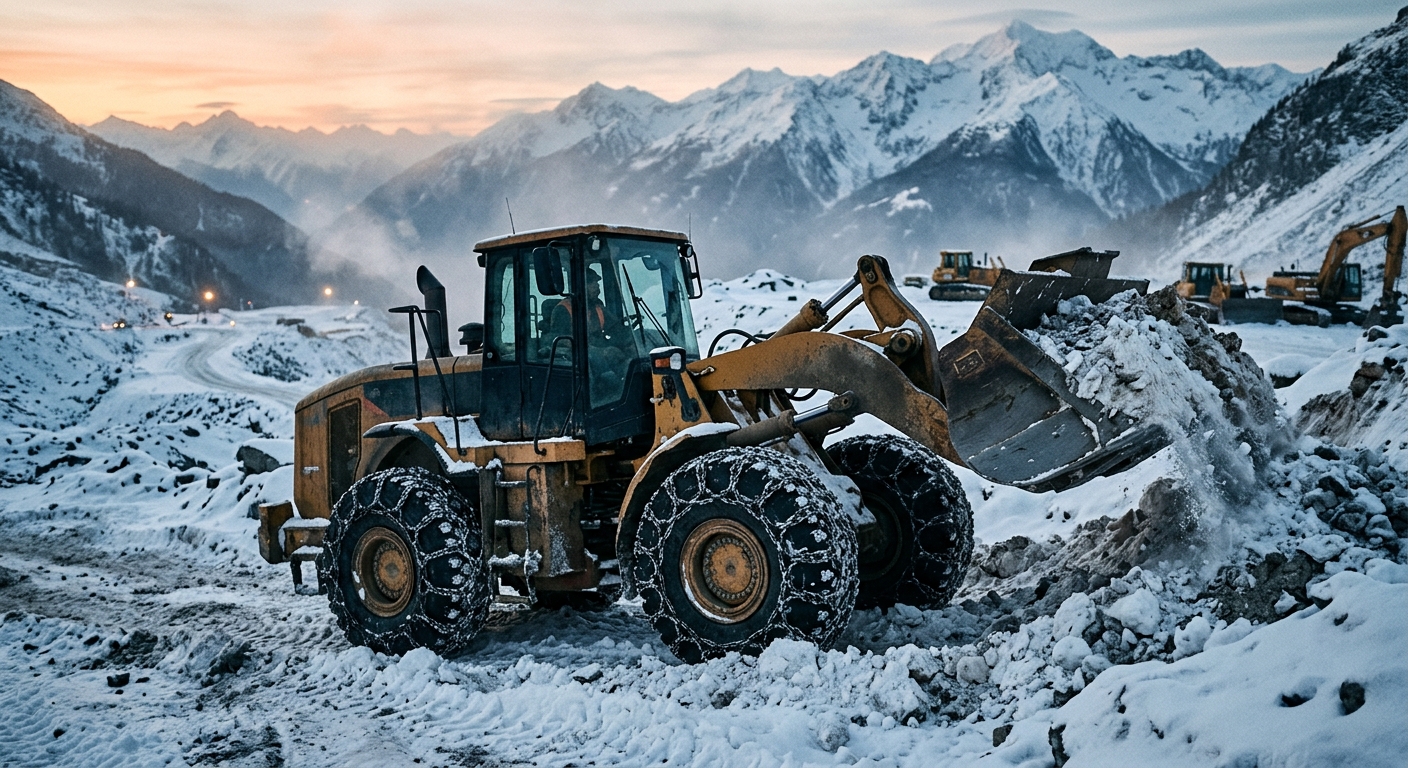
For contractors running wheel loaders, skid steers, backhoes, telehandlers, service trucks, compactors, graders, and support equipment in snow country or muddy seasonal ground, tire chains are not just a winter accessory. They are a traction tool, a safety tool, and in some fleets a revenue-protection tool. The right set keeps a machine moving and predictable. The wrong set turns into vibration, clearance damage, and constant repairs.
The practical goal is simple: match the chain to the machine and conditions, install it correctly, inspect it like it matters, and replace worn parts before they fail under load. Nothing fancy. Just disciplined fleet habits.
The biggest benefit is predictable movement and braking when the ground turns slick.
A badly fitted chain can damage the tire, machine, and nearby components fast.
One loose or cracked link usually becomes a bigger failure if it stays in service.
Why tire chains matter
Snow and ice are the obvious reasons to run chains, but plenty of fleets also use them in muddy woods, freeze-thaw jobsites, steep gravel climbs, and remote access roads where a stuck machine can shut down the day. Chains improve bite by creating additional edges and penetration points between the tire and the surface. That added grip helps with forward motion, steering control, side-hill stability, and braking confidence.
The part people miss is that chains do not magically make a machine safe. They increase available traction, but they also increase load transfer into tires, wheels, axles, driveline parts, and suspension components. That means poor chain choice or poor installation can create a whole new set of maintenance problems.
Use them for the right reasons:
- Getting reliable traction in compacted snow or ice
- Reducing spinning that chews up tires and site surfaces
- Improving control on slopes and rough winter access roads
- Keeping support trucks and loaders productive in seasonal weather
- Protecting uptime when a machine has to work regardless of conditions
How to choose the right chain
The first bad decision usually happens before the chains ever touch the machine. Someone buys “roughly the right size” because it is available quickly, then acts surprised when the chains ride loose, slap the sidewall, or hit machine components on every turn.
Start with the basics:
1. Match the chain to the exact tire size
Tire size is not a suggestion. Chain fit depends on the exact mounted tire size and often the tread condition. A worn tire and a fresh tire of the same stated size may fit differently. If the supplier asks for real machine and tire details, that is a good sign, not a hassle.
2. Match the pattern to the work
Different chain styles exist for a reason.
- Ladder-style chains for general snow traction and lower cost
- Diamond or square patterns for smoother ride and better continuous contact
- Studded or aggressive patterns for severe ice and steep terrain
- Forestry or severe-service chains for rocks, stumps, and harsh off-road work
- Buying only on price
- Ignoring surface type and travel speed
- Using light-duty chains in rock or demolition conditions
- Assuming one pattern fits every axle and every season
3. Check machine clearance
This is where people get humbled. Modern machines often have tight clearances around fenders, steps, brake lines, hydraulic hoses, steering stops, and chassis components. A chain that technically fits the tire can still destroy the machine if there is not enough clearance at full articulation, steering lock, suspension movement, or loaded tire squat.
4. Respect speed and surface
Chains are not happy at high transport speeds. They are a traction tool for controlled operation, not a license to hammer down on pavement. Long hard runs on bare pavement accelerate wear and increase the chance of breakage. If the route alternates constantly between bare asphalt and deep snow, the chain choice and operating plan matter even more.
A contractor installs aggressive chains on a telehandler for icy rural access. Traction improves immediately, but the chains contact a brake hose bracket at full steering lock because nobody checked clearance under articulation. The bracket bends, the hose rubs, and a simple traction upgrade becomes a hydraulic repair plus downtime. The mistake was not using chains. The mistake was skipping the full-motion clearance check.
How to install without causing damage
A correct install is slow for about fifteen minutes and then saves you hours later. A rushed install is the opposite.
Start on level ground. Lay the chains out and inspect them before installation. Twists, cracked hooks, frozen adjusters, and worn cross links should be obvious now, not after the machine is already working in bad weather.
Then follow a disciplined sequence:
- Position the chain evenly on the tire with no twists.
- Connect the inside fasteners first where applicable.
- Connect the outside fasteners and center the chain pattern.
- Use approved tensioners or adjusters only if the chain system calls for them.
- Move the machine slowly a short distance.
- Recheck fit, centering, and tension immediately.
Chains should sit snugly without being over-tightened into distortion. Too loose and they slap, shift, and break. Too tight and they stress links and can create clearance issues as the tire flexes.
Operators should also know the first few minutes with fresh chains are a test period. Listen for contact, clanking beyond normal chain noise, or rhythmic impacts that suggest the chain is not seated properly.
Inspection and maintenance routine
Tire chains are one of those components that reward short, frequent checks. You do not need a giant maintenance event. You need consistent eyeballs.
Daily or pre-shift inspection should include:
- Broken or cracked cross links
- Worn side chains
- Missing hooks, cams, or fasteners
- Uneven chain position on the tire
- Clearance damage to fenders, hoses, valve stems, or steps
- Tire cuts or abnormal sidewall scuffing
- Loose tension after recent install
After the first shift on a fresh install, inspect again. After any hard spin event, inspect again. After pavement-heavy travel, inspect again. Chains tell you a lot if anyone bothers to look.
Catch broken links, slack, and contact damage before the machine moves.
Fresh installs often need repositioning after the first short run.
Clean, dry storage adds life and makes the next install way less miserable.
Maintenance is mostly boring mechanical discipline:
- Tighten or adjust according to the chain maker’s guidance
- Replace damaged repair sections before they fail completely
- Clean off packed mud, ice, and road salt when practical
- Lubricate adjustable hardware if the system uses cams or threaded parts
- Store chains clean and dry at the end of the season
Road salt deserves special hate here. Corrosion sneaks up fast on chains that get tossed wet into a pile and forgotten until next winter.
Common mistakes that wreck chains and tires
Most chain failures are not bad luck. They are repeated, very human mistakes.
The biggest ones:
- Running loose chains because “they’ll settle in”
- Ignoring sidewall rubbing and hoping it stays minor
- Using damaged chains one more shift
- Installing chains on worn-out or damaged tires
- Driving too fast on bare hard surfaces
- Mixing unmatched chain sets side to side
- Failing to retrain crews at the start of winter
One especially dumb but common move is installing chains on a tire that already has cuts, exposed cords, bead damage, or major pressure issues. The chain then becomes the thing everybody blames, when the tire was already halfway to failure.
A municipal fleet keeps chains installed on a loader through a thaw because another storm is “probably coming.” The machine runs several long shifts on bare pavement, cross links wear rapidly, and one side breaks during transport between sites. The broken section damages the fender and shreds a valve stem. A simple remove-and-store decision would have avoided the repair.
When to repair versus replace
Not every problem means the whole set is done. But not every damaged chain deserves another repair either.
Repair makes sense when:
- One or two components are damaged and the rest of the set is in strong condition
- Wear is localized rather than widespread
- Replacement repair links or sections match the original system correctly
- The chain still fits and tracks properly after repair
Replacement is the smarter call when:
- Multiple cross links are worn thin or cracked
- Side chains are stretched or badly deformed
- Fit has become consistently poor
- Corrosion is widespread
- Repeated repairs have created a patchwork chain nobody trusts
- Minor isolated damage
- Good overall fit and condition
- Correct repair parts available
- Machine urgently needs the chain set back in service
- Widespread wear or stretch
- Recurring breakage
- Corrosion throughout the set
- Damage risk now outweighs replacement cost
Think about consequence, not just purchase price. A tired chain set may still “work,” but if failure risk is now high enough to threaten a tire or nearby machine components, the cheap move is no longer cheap.
Building a chain program for winter uptime
The fleets that get real value from tire chains do not treat them as emergency hardware buried in the back of the shop. They build a small system around them.
That system should include:
- A current list of which machines need chains and what exact sizes they use
- A record of which chain pattern is assigned to which application
- Pre-season inspection and trial fit before the first storm
- A quick training refresher for operators and mechanics
- Storage locations that are labeled and easy to access
- A replacement plan for worn sets before winter gets fully busy
Field documentation helps more than people expect. If a chain set repeatedly loosens on one machine, breaks in one specific area, or causes the same clearance problem every season, that is not random noise. That is useful fleet data. Track it. Fix the root cause.
FieldFix is built for exactly this kind of maintenance reality: recurring seasonal tasks, photo documentation, asset histories, and service notes that do not disappear into somebody’s memory. Tire chains are simple hardware, but the operational lesson is bigger. When seasonal equipment setup is tracked consistently, downtime drops and surprises get a lot less dramatic.
Keep winter equipment problems from becoming downtime
Use FieldFix to track chain installs, seasonal inspections, repair history, tire condition notes, and operator-reported issues across your fleet. When weather turns bad, organized maintenance beats guesswork every time.
See how FieldFix helps contractors stay ready