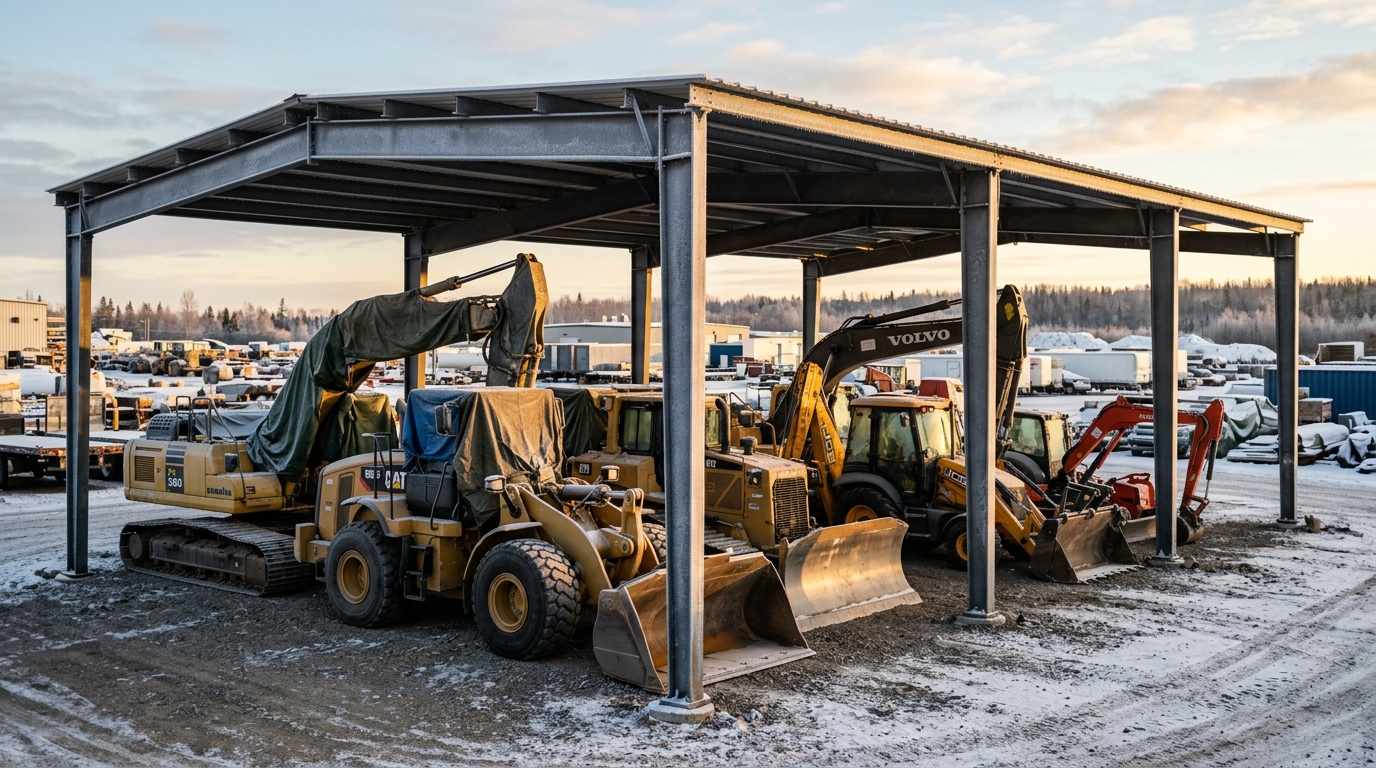
Heavy Equipment Winterization & Long-Term Storage Guide: Protect Your Investment
Complete guide to winterizing heavy equipment and preparing machines for long-term storage. Prevent cold-weather damage and costly spring repairs.
Key Takeaways
- Proper winterization can prevent 80% of cold-weather equipment failures and save thousands in spring repair costs
- Fuel system prep is the #1 overlooked step — untreated diesel gels at 10-15°F and can destroy injectors
- Battery maintenance alone can save $500-1,500 per machine in emergency service calls
- A complete winterization takes 2-4 hours per machine but prevents 20-40 hours of spring troubleshooting
- Long-term storage beyond 90 days requires additional steps like cylinder rod protection and desiccant packs
Every year, contractors lose thousands of dollars to preventable cold-weather damage. Cracked engine blocks, gelled fuel lines, seized hydraulic cylinders, dead batteries — all of it avoidable with a few hours of prep work before the snow flies.
Whether you’re parking machines for a few weeks during a holiday slowdown or storing your fleet for an entire off-season, proper winterization is the difference between a smooth spring startup and a brutal repair bill.
This guide covers everything you need to protect your heavy equipment investment through the cold months.
Why Winterization Matters More Than You Think
Most operators understand they should “do something” before parking machines for winter. Few realize just how expensive skipping that prep can be.
The math is simple: spend a few hours now or spend days (and thousands) fixing preventable damage later. For a fleet of even 3-5 machines, proper winterization can save $5,000-15,000 annually.
Beyond direct repair costs, there’s the lost revenue from delayed spring startups. If your machines aren’t ready to work on day one of the season, you’re leaving money on the table while competitors are already billing hours.
The Pre-Storage Inspection
Before you start the winterization process, do a thorough walk-around. You want to address existing issues before storage — small problems left over winter become big problems by spring.
Check for:
- Fluid leaks (hydraulic, coolant, fuel, engine oil)
- Damaged hoses, belts, or wiring
- Cracked or chipped glass
- Missing or damaged guards and covers
- Worn pins and bushings
- Any fault codes stored in the ECM
Fix what you can now. Anything that needs parts on order, document it clearly so you (or your mechanic) can hit the ground running when it’s time to recommission.
Fuel System Preparation
Fuel is where most winterization failures happen. Diesel fuel is particularly vulnerable to cold weather, and modern ultra-low sulfur diesel (ULSD) is even more susceptible to issues than the old stuff.
Fill the Tank
This is counterintuitive for some operators — why fill the tank if the machine is just sitting? Two reasons:
- Condensation prevention. Empty airspace in the tank collects moisture as temperatures fluctuate. That water settles to the bottom, corrodes tank internals, and feeds microbial growth.
- Fuel stability. A full tank has less oxygen exposure, slowing fuel degradation.
Fill to at least 95% capacity. Leave a small air gap for thermal expansion.
Add Fuel Stabilizer
Diesel fuel begins degrading within 30 days of storage. After 90 days, untreated fuel can develop:
- Gum and varnish deposits
- Microbial contamination (diesel bug)
- Reduced cetane rating
- Clogged filters and injectors
Use a quality diesel fuel stabilizer rated for your expected storage duration. Follow the manufacturer’s dosage — more isn’t better.
Anti-Gel Treatment
If your storage location experiences temperatures below 20°F (-7°C), add an anti-gel additive. Diesel fuel contains paraffin wax that crystallizes in cold temperatures:
Even if you don’t plan to run the machine in winter, a severe cold snap can gel fuel and damage the fuel system.
Run the Engine
After adding stabilizer and anti-gel treatment, run the engine for 10-15 minutes. This circulates treated fuel through the entire system — injectors, return lines, fuel pump, and filters. Just adding treatment to the tank isn’t enough if it never reaches the components you’re trying to protect.
Change Fuel Filters
Install fresh fuel filters before storage. Old filters may contain moisture and contaminants that accelerate corrosion over the winter months.
Engine and Coolant Winterization
Coolant Protection
This is the big one. Coolant that’s degraded or improperly mixed will freeze, expand, and crack your engine block — one of the most expensive repairs in heavy equipment.
Test your coolant with a refractometer or test strips:
- Protection should be rated to at least -34°F (-37°C) for most regions
- Check for proper pH (8.0-10.0 for most heavy-duty coolants)
- Look for contamination (oil, rust, sediment)
If coolant is due for replacement based on hours or time, do it now. Fresh coolant provides better freeze protection and corrosion inhibition during storage.
Engine Oil Change
Change oil and filter before storage, not after. Used oil contains acids, moisture, and combustion byproducts that corrode bearing surfaces over time. Fresh oil provides a clean protective film during storage.
Run the engine for 5-10 minutes after the oil change to circulate fresh oil throughout the system.
Exhaust and Intake Protection
For long-term storage (90+ days), cover the exhaust opening and air intake with weatherproof covers or heavy plastic secured with tape. This prevents:
- Moisture from entering the engine
- Rodents from nesting (a surprisingly common and expensive problem)
- Debris accumulation
Hydraulic System Cold-Weather Prep
Hydraulic systems are less vulnerable to cold damage than engines, but they still need attention.
Cycle All Functions
Before shutdown, cycle every hydraulic function through its full range of motion several times. This redistributes warm oil throughout the system and coats all cylinder walls and seals.
Check Hydraulic Fluid Level and Condition
Top off the hydraulic tank to prevent condensation in the air space (same principle as the fuel tank). If the fluid is due for a change based on hours or oil analysis, do it before storage.
Retract Cylinders When Possible
Exposed chrome cylinder rods are vulnerable to pitting and corrosion. Retract cylinders as much as possible. For cylinders that can’t be fully retracted (boom cylinders, for instance), apply a thin coat of corrosion-inhibiting grease to exposed rod surfaces.
Battery Storage and Maintenance
Batteries are the most common winter casualty. A fully charged battery won’t freeze until approximately -76°F (-60°C). A discharged battery can freeze at 20°F (-7°C). That’s a massive difference.
Option 1: Remove and Store Inside
The best approach for long-term storage:
- Fully charge the battery
- Clean terminals with a baking soda solution
- Apply terminal protectant spray
- Store in a cool, dry location (not on a concrete floor — use a wooden pallet or shelf)
- Connect to a battery maintainer/tender (NOT a trickle charger)
Option 2: Leave Installed with a Maintainer
If removing batteries isn’t practical:
- Fully charge the battery
- Disconnect the negative cable
- Clean and protect terminals
- Connect a solar-powered battery maintainer if the machine is stored outdoors
Check Electrolyte Levels
For flooded lead-acid batteries (still common in heavy equipment), check electrolyte levels and top off with distilled water before storage. Never add water to a discharged battery — charge first, then check levels.
Exterior Protection and Rust Prevention
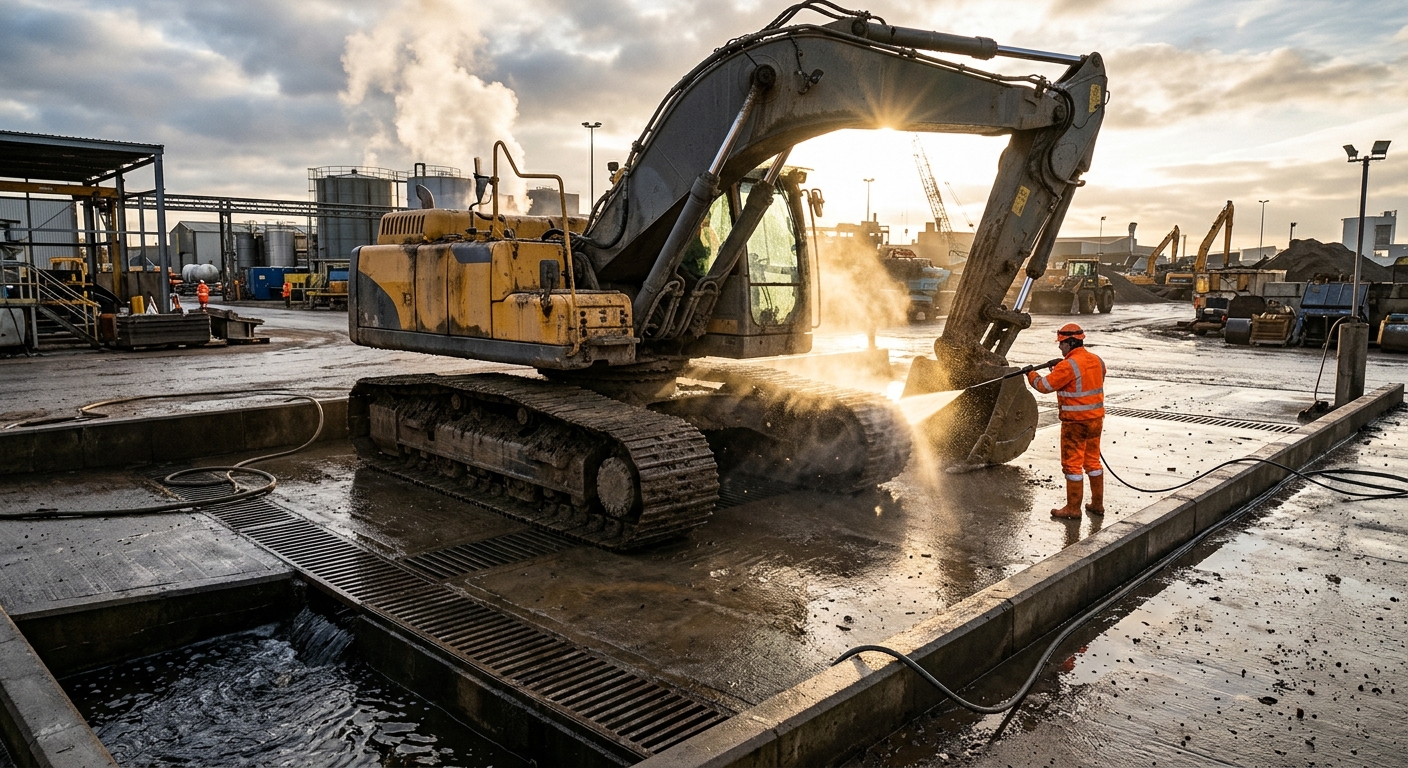
Wash Thoroughly
Remove all dirt, mud, and debris before storage. Packed mud holds moisture against metal surfaces and accelerates corrosion. Pay special attention to:
- Undercarriage components
- Inside track frames
- Around hydraulic fittings
- Cab floor and under floor mats
Lubricate Everything
Hit every grease point. Then hit them again. Fresh grease displaces moisture and protects pivot points, pins, and bushings throughout the storage period. This is the cheapest insurance you can buy.
Touch Up Paint
Bare metal exposed by chips and scratches will rust aggressively over winter. Touch-up paint takes minutes and prevents surface corrosion from becoming structural problems.
Apply Rust Inhibitor
Spray exposed metal surfaces (blade edges, bucket teeth, ripper shanks) with a rust-inhibiting coating. Products like fluid film or lanolin-based protectants work well and are easy to apply.
Cylinder Rod and Seal Protection
For storage beyond 60-90 days, cylinder rods deserve extra attention. Chrome surfaces can pit from moisture exposure, and damaged rods destroy seals when you start operating again.
Real-World Cost of Neglect
A contractor stored three excavators over winter without protecting exposed cylinder rods. Come spring, all three machines had pitted boom cylinder rods. The repair bill:
- 3 boom cylinder reseals: $4,500
- 2 rod replacements (pitting too deep): $6,800
- Downtime: 2 weeks waiting for parts
- Total cost: $11,300 + lost revenue
Preventive cost for all three machines: roughly $50 in corrosion-inhibiting grease and 30 minutes of labor.
Protection steps:
- Retract cylinders as far as possible
- Apply a heavy coat of corrosion-inhibiting grease to any exposed rod surface
- Wrap exposed sections with plastic wrap over the grease layer
- For critical machines, consider cylinder rod covers (available from most parts suppliers)
Tire and Track Storage Best Practices
Rubber Tires
- Inflate to maximum recommended pressure (tires lose pressure over time; starting high prevents going flat)
- Park on wooden planks or plywood — not directly on concrete or asphalt, which leach chemicals that degrade rubber
- If possible, move machines monthly to prevent flat-spotting
- Cover tires to protect from UV exposure if stored outdoors
Steel and Rubber Tracks
- Clean tracks thoroughly — packed debris accelerates wear
- Adjust track tension to the loose end of the spec range (tracks contract in cold weather)
- If parked on gravel or dirt, lay down plywood under the tracks to prevent ground moisture contact
- For rubber tracks, ensure they’re free from petroleum products which degrade the rubber compound
Choosing the Right Storage Location
Indoor Storage
Pros:
- Best protection from weather and temperature extremes
- Reduced theft and vandalism risk
- Minimal condensation issues
- Lower insurance premiums in some cases
Cons:
- Expensive if renting space
- May not be available for large fleets
- Requires adequate ventilation
- Need room for maintenance access
Outdoor Storage (Covered)
Pros:
- More affordable than indoor
- Easier access for monthly checks
- Protection from rain and snow
- Good compromise for most fleets
Cons:
- Still exposed to temperature swings
- Wind-driven moisture
- Requires quality covers or tarps
Outdoor Storage (Open)
Pros:
- Lowest cost
- Maximum flexibility on space
- Easy to move machines
Cons:
- Full weather exposure
- Highest corrosion risk
- Requires more aggressive winterization
- Higher theft/vandalism risk
- May increase insurance costs
Regardless of location, ensure the storage surface is level, well-drained, and solid enough to support machine weight without settling.
Monthly Storage Checks
Winterization isn’t a “set and forget” process. Schedule monthly checks throughout the storage period:
Monthly checklist:
- ✅ Battery voltage (maintain above 12.4V)
- ✅ Visual inspection for leaks
- ✅ Check for rodent activity (nests, chewed wires)
- ✅ Tire/track pressure check
- ✅ Security inspection (locks, GPS tracking active)
- ✅ Tarp/cover condition
- ✅ Ground conditions (drainage, settling)
Spring Recommissioning Preview
When it’s time to bring machines back to life, don’t just turn the key and start billing hours. A proper recommissioning process reverses every winterization step and verifies the machine is safe and ready to work.
Key spring startup steps include:
- Remove all covers and plugs from exhaust and intake
- Reinstall batteries and verify charge
- Check all fluid levels and conditions
- Inspect belts, hoses, and wiring for rodent damage
- Test all safety systems before loading
- Run at idle for an extended warmup before putting under load
A full spring startup guide ensures your machines come back to life smoothly and safely.
Winterization Checklist by Machine Type
While the fundamentals apply across all equipment, different machine types have specific needs:
Excavators
- Retract all cylinders (boom, arm, bucket)
- Position bucket flat on the ground
- Drain swing gear if manufacturer recommends seasonal changes
- Cover cab windows to prevent UV damage to interior
Skid Steers & Track Loaders
- Lower all attachments to the ground
- Engage parking brake and chock tracks/tires
- Remove attachments and store separately if possible
- Protect attachment mounting plate from corrosion
Dozers
- Lower blade to ground
- Retract ripper (if equipped)
- Check final drive oil levels
- Pay extra attention to track frame drainage holes — clear any blockages
Wheel Loaders
- Lower bucket to ground
- Turn tires monthly to prevent flat spots
- Check tire chains for damage and store separately
- Protect loader pins and bushings with heavy grease
Track Winterization with FieldFix
Winterization means tracking multiple machines and multiple maintenance steps across your entire fleet. Log each step as service in FieldFix so you know what’s done on which machine, and let the hour-based service schedule catch what’s due when the machines go back to work. Digital service logs, reminders by hours, and cost tracking, so nothing falls through the cracks.
Final Thoughts
Winterization isn’t glamorous work. Nobody posts “just winterized five machines” on social media. But it’s the kind of unglamorous discipline that separates profitable contractors from the ones constantly fighting preventable breakdowns.
Budget the time. Follow the checklist. Protect your iron. Your spring self — and your accountant — will thank you.
Related Articles

September 4, 2026
Heavy Equipment Fall Service Planning Guide: How to Prevent Winter Downtime

September 3, 2026
Horizontal Directional Drill Maintenance: The Complete HDD Service Guide for Contractors
September 2, 2026