Mini Excavator Size Guide: Which Size Do You Need for Your Project?
Complete guide to mini excavator sizes from 1-ton to 10-ton. Learn which size fits your job, transport requirements, and budget.
Key Takeaways
- Micro excavators (1-2 tons) are perfect for backyard access, interior work, and tight residential jobs
- Mini excavators (3-6 tons) cover 80% of residential and light commercial work
- Midi excavators (7-10 tons) deliver production-level digging for commercial projects
- Transport requirements dramatically affect which size makes sense for your operation
- Dig depth and reach matter more than weight class for most applications
Choosing the right mini excavator size is one of the most important equipment decisions you’ll make. Too small, and you’re fighting the machine all day. Too big, and you can’t access the job site—or you’re paying for transport capacity you don’t need.
This guide breaks down every mini excavator weight class, what they’re actually good for, and how to match machine size to your specific applications.
Understanding Mini Excavator Weight Classes
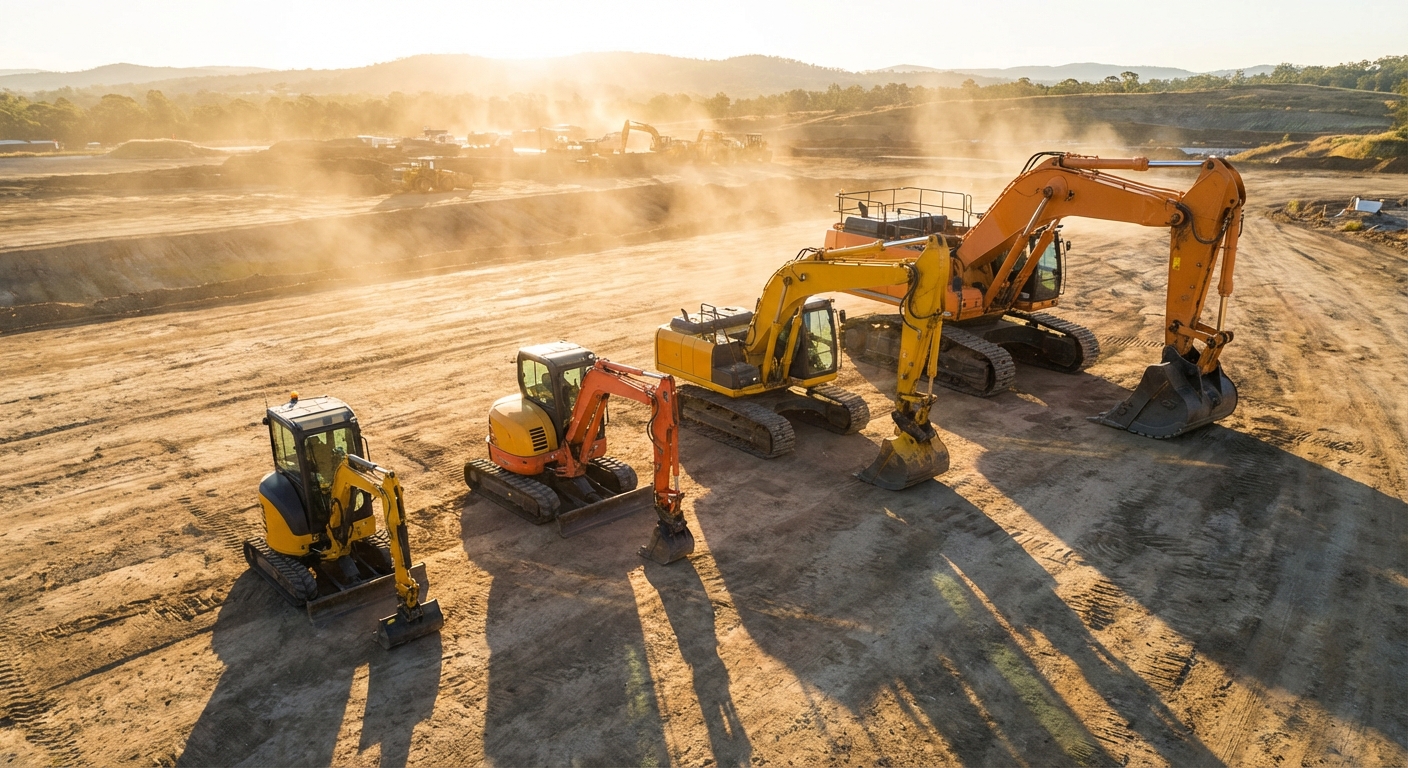
The term “mini excavator” gets thrown around loosely. Technically, it covers everything from 1-ton micro machines to 10-ton midi excavators. Here’s how the industry actually categorizes them:
Operating weight is the standard measurement—that’s the machine with a full tank of fuel, hydraulic oil, and a standard bucket attached. But weight alone doesn’t tell the whole story. Dig depth, reach, and bucket capacity often matter more for actual job performance.
Micro Excavators: 1-2 Ton Class
Micro excavators are the specialists. They go where nothing else fits.
Typical Specifications
| Spec | 1-Ton Class | 2-Ton Class |
|---|---|---|
| Operating Weight | 2,000-2,500 lbs | 4,000-5,000 lbs |
| Dig Depth | 5-6 ft | 7-8 ft |
| Max Reach | 9-10 ft | 11-13 ft |
| Bucket Width | 12-18 in | 18-24 in |
| Width (Retracted) | 28-32 in | 39-45 in |
Best Applications for Micro Excavators
- Backyard landscaping with limited access
- Interior demolition and basement work
- Utility trenching in tight residential areas
- Cemetery and memorial work
- Indoor plumbing and foundation repair
- Greenhouse and conservatory projects
Limitations
Micro excavators aren’t production machines. They excel at access, not volume. Expect to move 3-5 cubic yards per hour maximum in ideal conditions. For serious earthmoving, you need to step up.
Real-World Example
A plumbing contractor runs a 1.7-ton micro excavator exclusively for sewer line replacements in established neighborhoods. The machine fits through 34-inch gates, tracks across finished lawns without major damage, and digs the 4-foot trenches needed for residential sewer work. They keep a larger excavator for new construction but the micro handles 60% of their service calls.Mini Excavators: 3-4 Ton Class
This is the sweet spot for most contractors. The 3-4 ton class offers enough power for real work while maintaining reasonable transport requirements.
Typical Specifications
| Spec | 3-Ton Class | 4-Ton Class |
|---|---|---|
| Operating Weight | 6,500-7,500 lbs | 8,500-10,000 lbs |
| Dig Depth | 9-10 ft | 10-12 ft |
| Max Reach | 15-17 ft | 17-19 ft |
| Bucket Width | 24-30 in | 24-36 in |
| Width | 59-65 in | 65-72 in |
| Engine HP | 20-25 hp | 25-35 hp |
Why 3-4 Ton Machines Dominate
The 3-4 ton class hits multiple sweet spots simultaneously:
- Deep enough for most utility and foundation work (10+ feet)
- Light enough for a standard 10,000-lb trailer
- Powerful enough for real production digging
- Small enough for most residential site access
Best Applications
- Residential foundations and footings
- Utility installation—water, sewer, gas, electric
- Swimming pool excavation
- Landscape grading and drainage
- Light commercial site work
- Septic system installation
Compact Excavators: 5-6 Ton Class
Step up to 5-6 tons and you’re getting into serious capability territory. These machines dig deeper, lift more, and move material significantly faster than their smaller siblings.
Typical Specifications
| Spec | 5-Ton Class | 6-Ton Class |
|---|---|---|
| Operating Weight | 11,000-12,500 lbs | 13,000-15,000 lbs |
| Dig Depth | 12-13 ft | 13-15 ft |
| Max Reach | 19-21 ft | 21-23 ft |
| Bucket Width | 30-42 in | 36-48 in |
| Width | 72-78 in | 77-82 in |
| Engine HP | 35-45 hp | 40-50 hp |
The Transport Transition Point
Here’s where things get interesting. At 5-6 tons (11,000-15,000 lbs), you’re crossing the threshold where trailer choices matter significantly.
Best Applications
- Commercial site preparation
- Deep utility work (12+ feet)
- Pond and retention basin excavation
- Heavy landscaping with large material moves
- Demolition with good breakout force
- Agricultural drainage and land clearing
Zero Tail Swing Considerations
Many 5-6 ton excavators offer zero tail swing (ZTS) or reduced tail swing configurations. This matters when:
- Working against structures
- Operating in traffic
- Digging along property lines
The tradeoff: ZTS machines typically sacrifice some lifting capacity and stability for the reduced swing radius.
Midi Excavators: 7-10 Ton Class
Midi excavators bridge the gap between mini and full-size machines. They deliver legitimate production capacity while still offering the versatility of compact equipment.
Typical Specifications
| Spec | 8-Ton Class | 10-Ton Class |
|---|---|---|
| Operating Weight | 17,000-19,000 lbs | 21,000-24,000 lbs |
| Dig Depth | 14-16 ft | 16-18 ft |
| Max Reach | 23-25 ft | 25-28 ft |
| Bucket Width | 36-54 in | 42-60 in |
| Width | 82-90 in | 90-98 in |
| Engine HP | 50-65 hp | 60-75 hp |
When Midi Makes Sense
The 7-10 ton class shines when you need:
- Production digging on commercial sites
- Deep excavation beyond 14 feet
- Material handling with larger buckets
- Demolition work requiring breakout force
- Road and infrastructure projects
Transport Requirements
Typical transport setup for midi excavators:
- Trailer: 25,000-30,000 lb capacity equipment trailer
- Tow vehicle: Heavy-duty diesel truck (F-350/Ram 3500 class minimum) or semi
- Licensing: CDL often required depending on state and GVWR
- Insurance: Commercial auto policy
Transport and Trailer Requirements
Your excavator is worthless if you can’t get it to the job site. Transport requirements often dictate machine size more than digging needs.
Quick Transport Reference
| Excavator Class | Machine Weight | Min Trailer Capacity | Tow Vehicle Class |
|---|---|---|---|
| 1-2 Ton | 2,000-5,000 lb | 6,000 lb | Half-ton truck |
| 3-4 Ton | 6,500-10,000 lb | 12,000 lb | 3/4-ton truck |
| 5-6 Ton | 11,000-15,000 lb | 18,000 lb | 1-ton truck |
| 7-10 Ton | 17,000-24,000 lb | 28,000 lb | HD truck/semi |
Width Considerations
Don’t forget about width restrictions:
- Standard lane width: 12 feet
- Wide load permit threshold: Usually 8.5 feet
- Residential street access: Often limited to 10 feet
A 10-ton excavator at 98 inches wide (8+ feet) is getting close to wide-load territory. Factor this into job access planning.
Matching Size to Application
Here’s a practical decision framework for common applications:
Residential Utility Work
✓ Recommended: 3-4 Ton
- 10+ ft dig depth covers most utilities
- Fits through standard gates
- Towable with common equipment
- Sufficient bucket capacity
✗ Avoid: 7+ Ton
- Overkill for depth requirements
- Transport costs eat into margins
- Potential yard damage
- Access limitations
Commercial Site Work
✓ Recommended: 5-8 Ton
- Production-level output
- Handles various soil conditions
- Sufficient reach for truck loading
- Can run larger attachments
✗ Avoid: Under 4 Ton
- Too slow for production
- Frequent repositioning needed
- Can’t handle tough digging
- Limited attachment options
Landscaping and Hardscaping
✓ Recommended: 2-4 Ton
- Minimal ground disturbance
- Fits finished sites
- Rubber track options
- Precise control
✗ Avoid: 6+ Ton
- Damages finished surfaces
- Over-digs easily
- Compacts soil excessively
- Can’t access tight areas
Rental vs. Purchase Considerations
Size choice affects the rent-vs-buy calculation significantly.
When to Rent
- You need a size outside your normal range
- Testing before buying
- Seasonal demand spikes
- Specialized one-off jobs
When to Buy
- 60%+ utilization rate possible
- Core size for your business
- Custom configuration needed
- Long-term attachment investments
Cost Comparison: 5-Ton Excavator
| Factor | Rental | Purchase |
|---|---|---|
| Daily Cost | $350-450 | ~$50* |
| Monthly Cost | $5,000-7,000 | ~$1,500* |
| Break-even | N/A | ~200 days/year |
*Based on $80,000 purchase, 5-year depreciation, insurance, and maintenance
The break-even point for purchasing typically falls around 150-200 working days per year for mini excavators. If you’ll use a specific size class more than that, ownership usually wins.
Common Sizing Mistakes to Avoid
Mistake #1: Buying for the Biggest Job
Don’t size your primary machine for your largest occasional job. Buy for your bread-and-butter work and rent the bigger iron when needed.
Mistake #2: Ignoring Transport Limits
That 8-ton excavator is 30% more productive than your 5-ton—but if you need a new truck and trailer to haul it, the math changes dramatically.
Mistake #3: Forgetting About Attachments
A 3-ton machine with a 36-inch bucket might weigh 7,800 lbs. Swap to a hydraulic thumb and 48-inch bucket, and you’re pushing 8,500 lbs. Plan for your working weight, not base weight.
Mistake #4: Underestimating Dig Depth Needs
Utility depths vary by region and code. Know your local requirements before assuming a smaller machine will handle everything. In cold climates, frost lines can push water and sewer depths beyond what micro and mini excavators can reach.
Making Your Decision
Start with these questions:
- What’s your typical dig depth? Add 2 feet for safety margin.
- What’s your site access situation? Measure gates and pathways.
- What can you legally and safely tow? Know your truck and trailer limits.
- What’s your production target? Cubic yards per hour needed.
- What’s your utilization rate? Days per year for each size class.
The “best” excavator is the one that matches your most common jobs while staying within your transport capabilities. Everything else is a compromise or a rental.
Track Every Hour, Every Machine
Whether you run a 2-ton micro or a 10-ton midi, knowing your true cost per hour is essential. FieldFix tracks operating hours, maintenance costs, and calculates real ownership costs across your entire fleet.