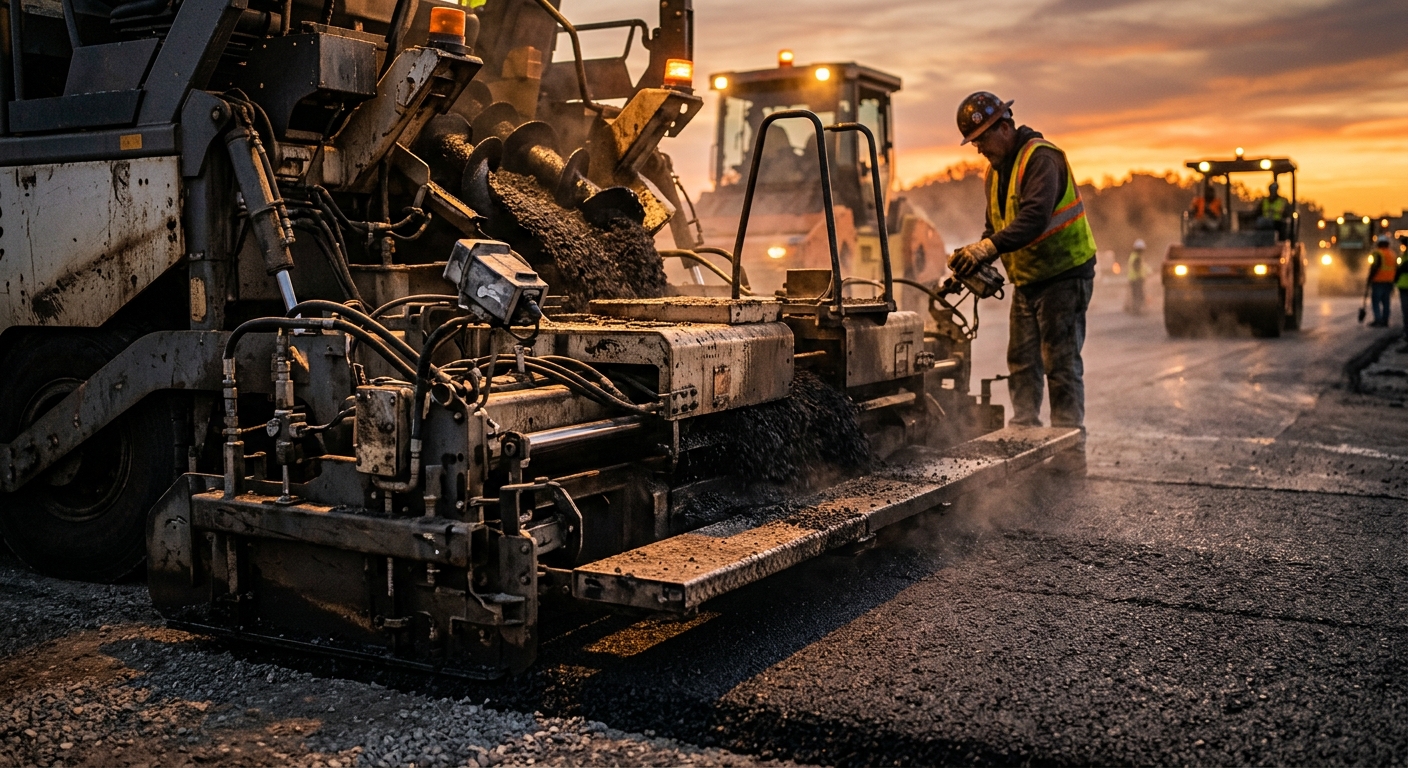
Asphalt Paver Maintenance Guide: Daily Checks, Screed Care, and Downtime Prevention
Learn asphalt paver maintenance best practices, from daily inspections and screed care to conveyor service and PM habits that prevent costly paving downtime.
Asphalt pavers do not fail gracefully. When a skid steer starts acting up, you might limp through the day. When an asphalt paver develops a conveyor issue, a screed heating problem, or a feeder malfunction, the whole paving train can get punched in the mouth at once. Trucks stack up, crews stand around, mix temperature drops, and the finished mat quality suffers fast.
That is why asphalt paver maintenance deserves more discipline than many fleets give it. These machines live in a brutal environment: heat, vibration, sticky material, dust, long duty cycles, and tight production windows. Small issues become expensive in a hurry. A neglected chain does not just wear out. It can throw off material flow. A weak screed plate does not just look rough. It can leave visible defects in the mat. A bad sensor or clogged burner does not just annoy the operator. It can wreck consistency across the lane.
The best paving crews understand something simple: maintenance is quality control. A well-maintained paver lays a smoother mat, holds grade more consistently, keeps trucks moving, and gives the roller crew a fighting chance to hit density without battling machine-induced defects.
Why asphalt paver maintenance matters
Paving work has almost no tolerance for avoidable downtime. On excavation or dirt jobs, crews can sometimes pivot. On paving work, the rhythm matters. Trucks arrive in sequence, the mix has a temperature window, traffic control is already burning money, and the crew behind the paver depends on steady output.
That makes paver maintenance uniquely valuable for three reasons.
First, it protects uptime. If your paver goes down in the middle of a pull, the repair cost is usually not the only cost. You may lose material, labor productivity, truck efficiency, and job momentum.
Second, it protects quality. A paver with worn screed plates, inconsistent heating, sloppy feed controls, or sticky moving parts can create waves, segregation, dragging, or thickness inconsistency. Those defects can turn into callbacks, unhappy owners, or painful milling and patching work later.
Third, it protects component life. Asphalt is hard on steel, chains, bearings, augers, bushings, electrical harnesses, and heating systems. If you wait for a failure, you usually get the most expensive version of the repair.
can stop material flow and back up the entire paving operation.
can leave mat defects that no amount of wishful thinking will roll out.
can hide wear, lock up components, and turn routine PM into a miserable repair.
Daily inspection checklist
Daily paver maintenance is not glamorous, but it is where most expensive problems first wave a little red flag. A solid pre-shift and post-shift routine should cover the hopper, conveyors, augers, screed, undercarriage or running gear, engine, hydraulics, and controls.
1. Clean off yesterday’s sins
Start with cleanup. Hardened mix buildup on the screed, augers, conveyors, tunnel, gates, and end plates creates drag, blocks movement, and hides cracks or wear. Crews who skip cleanup at the end of the day usually pay for it the next morning with torches, profanity, and lost production time.
2. Inspect the screed assembly
Look at screed plates, tamper components if equipped, extensions, end gates, tow points, heating elements or burners, and visible hardware. Watch for uneven wear, cracked plates, loose fasteners, worn edges, and any component that looks like it got introduced to a curb at speed.
If the screed is not square, free-moving, and heating correctly, mat quality is already in danger before the first truck arrives.
3. Check conveyors and feeder chains
Inspect slats, chains, sprockets, floor plates, chain tension, guards, and bearings. A worn or misadjusted conveyor can feed material unevenly, surge under load, or bind when the mix gets sticky. Pay attention to any shiny metal where something is rubbing that should not be rubbing.
4. Inspect augers and feed controls
Check auger flighting, bearings, drive components, height settings, and sensor functionality. Excessive auger wear or poor adjustment can contribute to segregation and uneven head of material in front of the screed.
5. Walk the hydraulic and engine systems
Check fluid levels, hoses, fittings, leaks, belts, cooler condition, fuel system components, and radiator cleanliness. Pavers run hot by nature. Cooling problems do not need much encouragement to become shutdowns.
6. Test controls and automation
Verify steering, propulsion, feeder controls, screed controls, crown or slope functions, and any automation or grade assist systems on the machine. Electrical gremlins are common on paving equipment because everything lives around vibration, heat, and grime.
7. Check tracks, tires, and running gear
For tracked pavers, inspect track condition, tension, bogies, rollers, and drive components. For wheeled units, inspect tires, wheel hardware, and steering response. Poor running gear condition affects more than travel. It can also affect machine stability and tracking.
A crew blamed streaking in the mat on mix variability for two days. The actual cause was hardened buildup and uneven wear on the screed end gate assembly. Thirty minutes of honest inspection would have saved a lot of finger-pointing.
Critical systems that drive mat quality
Not every paver component has the same effect on the finished product. If you want the highest return on your maintenance effort, focus hard on the systems that directly affect material flow and screed performance.
Screed plates and heating systems
Screed plates need to stay smooth, evenly worn, and properly heated. Cold spots, uneven plate wear, or damaged extensions can drag material and leave visible imperfections in the mat. Whether the machine uses electric or propane screed heat, the goal is the same: consistent temperature across the screed width.
Signs of trouble include:
- one side heating slower than the other
- burned or damaged wires
- clogged burners or weak flame
- rough or gouged screed plates
- extension screeds that do not match the main screed cleanly
Conveyors and tunnel components
The conveyor system meters mix from the hopper to the augers. If chain wear, slat damage, or poor adjustment causes surging or starvation, the head of material in front of the screed becomes inconsistent. That leads to thickness swings, texture issues, and operator frustration.
Augers and feed sensors
Augers spread the material head across the screed. Worn flighting, bent sections, sensor issues, or bad height settings can create centerline buildup, segregation near the edges, or a hungry screed condition. The operator can sometimes compensate, but that is not a real fix. It is just papering over the machine’s nonsense.
Hydraulic drives and control valves
Pavers depend on hydraulics for propulsion, conveyors, augers, hopper wings, and many screed functions. Slow response, drift, heat, contamination, or pressure instability can make the machine feel inconsistent even when the rest of it looks fine.
- Waits for visible mat defects or breakdowns
- Creates panic repairs during production
- Shortens chain, bearing, and screed life
- Usually costs more than it “saves”
- Catches wear before quality drops
- Supports steady material flow
- Improves uptime during short paving windows
- Reduces callbacks tied to machine-related defects
Preventive maintenance intervals
Exact service intervals depend on the manufacturer, the model, hours, and the abrasiveness of the mix and environment. But the shape of a strong PM program is pretty universal.
Daily or every shift, crews should clean the machine, inspect wear areas, check fluids, and test key functions. Weekly, a fleet should look deeper at chain tension, bearing condition, electrical connections, screed heat performance, and hardware torque in high-vibration zones. By service-hour intervals, technicians should handle engine maintenance, hydraulic filter changes, lubrication points, conveyor and auger adjustment checks, and any required calibrations.
What matters most is not whether you choose 250-hour or 500-hour examples from memory. What matters is whether your team actually tracks the machine, performs the work on time, and logs what it found.
Cleanup, leaks, heat function, screed wear, conveyors, augers, and control tests.
Chain adjustment, sensor inspection, hardware checks, and deeper wear-point review.
Engine service, hydraulic service, lubrication, and component replacement planning.
One of the dumbest mistakes a fleet can make is treating the paver like a generic heavy machine. It is not. Its maintenance schedule needs to respect paving intensity, seasonal demand, and the quality sensitivity of the work it performs.
A municipal paving contractor started documenting screed heat complaints separately from general repair notes. Within one season they found a repeat pattern tied to connector corrosion and inconsistent end-of-day cleanup. That simple tracking change cut repeat heating issues and improved first-pass mat consistency.
Common paver failures and warning signs
Most ugly breakdowns announce themselves first. The trick is having a crew that recognizes the warning signs before the machine embarrasses everyone on a live pull.
Watch for these red flags:
- conveyor surging or hesitation under load
- auger response that looks lazy or uneven
- screed plates dragging or leaving texture changes
- one side of the screed heating differently
- hydraulic leaks around drives, lines, or tow point circuits
- excessive chain slack or abnormal noise in the tunnel
- temperature alarms or hot-running engine conditions
- control switches that work only when they feel like it
- visible cracking, bent end gates, or loose extension hardware
When crews keep running with those symptoms, the machine often turns a manageable repair into a bigger one. A loose chain becomes sprocket wear. A hot connector becomes a burnt harness. A neglected screed plate becomes a mat defect generator.
Operator habits that help or hurt
Plenty of paver failures are not really maintenance failures. They are behavior failures wearing a maintenance costume.
Good operators warm the machine correctly, avoid abusive contact with curbs and structures, watch the head of material, report issues early, and clean the paver before buildup hardens into a nightmare. Bad operators ignore noises, keep running through alarms, treat controls like they owe them money, and hand the next shift a filthy machine with zero notes.
The same machine can have a very different maintenance life depending on operator habits. That is why training matters. If your crew does not understand how screed heat, material flow, and smooth controls affect the finished surface, they are more likely to hide issues until the evidence is literally paved into the road.
- Skipping cleanup at the end of the shift
- Ignoring weird noises or slow controls
- Using force instead of adjustment
- Reporting problems only after the mat looks bad
- Documenting issues the same day they appear
- Keeping the screed and tunnel clean
- Checking heat and feed response before paving
- Escalating repeat symptoms instead of normalizing them
Building a better paver maintenance program
If your paving maintenance program feels scattered, fix the system in this order.
First, standardize inspections. Every operator should know exactly what to inspect, what good looks like, and how to report issues. Vague walkarounds create vague results.
Second, separate quality-related issues from generic repair notes. If the paver is leaving marks, dragging, starving, or producing inconsistent texture, that should be easy to find in the service history.
Third, make cleanup non-negotiable. End-of-day cleanup is not optional vanity. It is one of the cheapest maintenance actions you have.
Fourth, track recurring failures by machine. If the same screed zone, conveyor side, or electrical circuit keeps causing trouble, stop resetting the symptom and fix the root cause.
Fifth, use a digital system that ties inspections, photos, service history, and machine-specific notes together. That gives your techs context, helps supervisors spot patterns, and keeps seasonal equipment from surprising you after sitting between jobs.
The smartest fleets do not wait until paving season is in full swing to tighten up their maintenance process. They prepare before the schedule is packed and the weather window gets expensive.
FieldFix helps fleets track inspections, service history, recurring problems, and machine-specific notes in one place. If your paver maintenance process still lives on paper, whiteboards, or somebody's memory, that is a fragile system. FieldFix gives your team a cleaner way to stay ahead of downtime.
See how FieldFix worksRelated Articles
September 4, 2026
Heavy Equipment Fall Service Planning Guide: How to Prevent Winter Downtime

September 3, 2026
Horizontal Directional Drill Maintenance: The Complete HDD Service Guide for Contractors
September 2, 2026