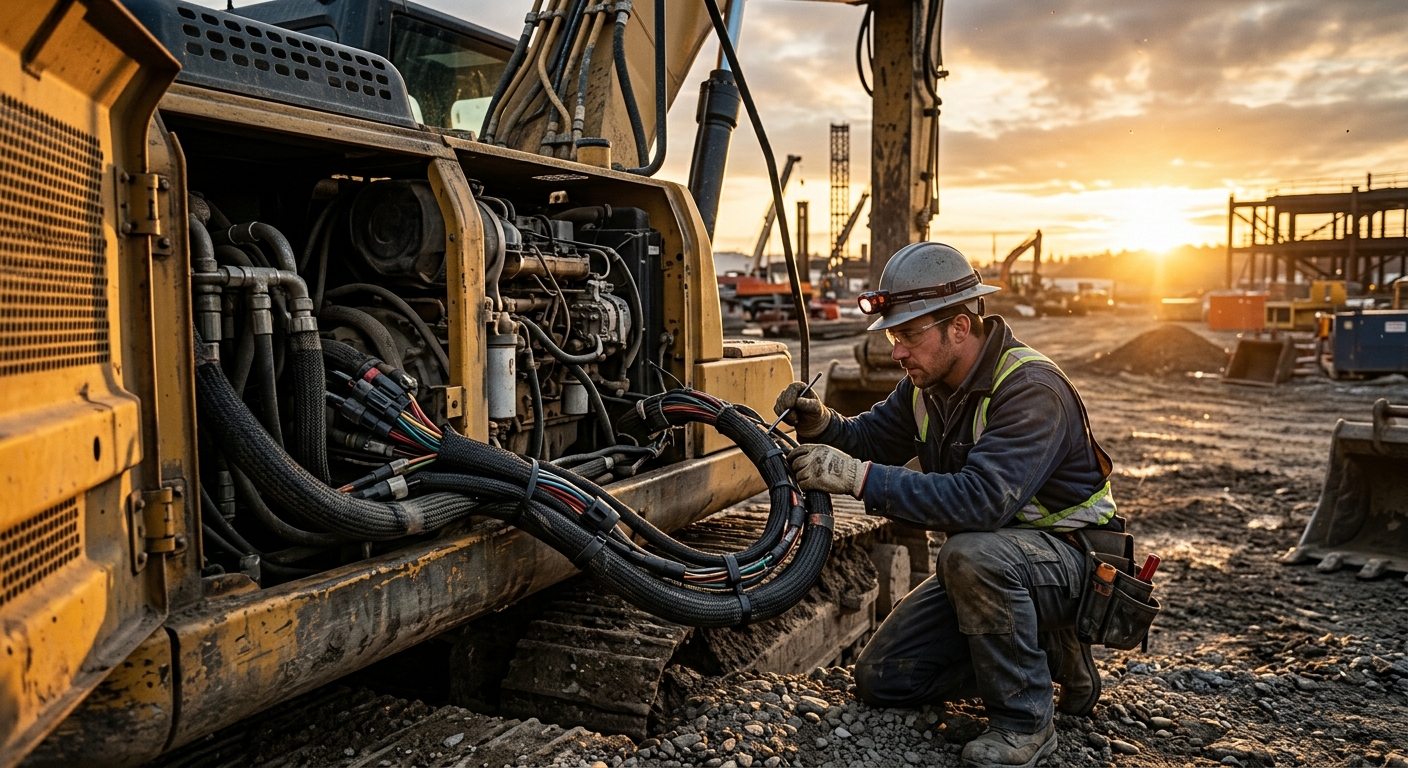
Backhoe Loader Maintenance Guide: Daily Checks, Common Failures, and Service Intervals
Learn how to maintain a backhoe loader with daily inspections, service intervals, and practical tips that reduce downtime, repair bills, and jobsite delays.
Key Takeaways:
- Backhoe loaders wear out faster when crews treat them like two machines without maintaining either side properly
- Daily checks should focus on pins and bushings, hydraulic leaks, tires, loader edges, stabilizers, and cooling performance
- Sloppy stabilization, poor lubrication, and ignored tire pressure are three of the most common causes of avoidable repair bills
- A simple hour-based plan beats reactive maintenance every time, especially for mixed-use municipal, farm, and contractor fleets
Backhoe loaders are weird in the best and worst ways. They dig, lift, trench, load, grade, carry forks, run hammers, move spoils, and then drive down the road to the next task. That versatility is exactly why so many small contractors, utility crews, farms, and municipalities depend on them. It is also why they get abused.
A backhoe is not just a loader with a dig end bolted on. It is a machine that spends its life switching jobs, switching operators, and switching load directions. Front axle stress, rear attachment wear, hydraulic heat, tire damage, frame twist, and stabilizer abuse all show up faster when nobody owns the maintenance process.
If you want a backhoe loader to stay productive past the 6,000 to 8,000 hour mark without turning into a permanent shop resident, the maintenance plan needs to match how the machine actually works. This guide covers the routine.
Why backhoe loaders need their own maintenance strategy
Backhoe loaders suffer from a simple identity problem: crews often maintain the engine and fluids like a tractor, inspect the loader side like a wheel loader, and ignore the backhoe end until there is obvious slop or a blown hose. That approach gets expensive fast.
The machine constantly shifts between:
- loader-side pushing and carrying
- rear-end digging with full stabilizer load
- road travel between sites
- attachment use with changing hydraulic demand
That means more articulation stress, more steering wear, more tire wear, and more opportunity for pin, bushing, and cylinder damage than many single-purpose machines see in similar hours.
Backhoes reward boring discipline. When the machine is greased, stabilized correctly, and inspected before road travel, it usually gives plenty of warning before a major failure. When those basics slip, failures stack on each other.
The systems that usually fail first
You do not need a crystal ball to predict where repair money will go on a working backhoe loader. A few areas take most of the punishment.
1. Pins, bushings, and linkage wear
The loader arms, bucket linkage, swing frame, dipper, boom foot, bucket ears, and stabilizer pivots all live hard lives. If grease intervals slip or operators keep digging with obvious play, round holes become oval holes and simple bushing jobs turn into welding and line boring.
2. Tires and wheels
Backhoes road more than many compact machines, but they still spend time in mud, rock, demolition debris, and rough shoulder work. Underinflation, sidewall cuts, bead leaks, and loose wheel hardware can cost serious money and destroy ride quality.
3. Hydraulic hoses and cylinders
Hose rub points around the loader arms, rear boom routing, and stabilizer circuits are easy to ignore until they fail. Cylinder rods also take damage from dirty wipers, pitting, and sloppy operation at full stroke.
4. Stabilizers and structure
Backhoes are only as stable as the setup. Operators who slam stabilizers into the ground, dig with one side poorly supported, or drag the machine around while partially planted put huge stress into pads, pins, frame welds, and the swing tower.
5. Cooling and charging systems
These machines spend plenty of time idling, crawling, and running attachments in heat and dust. Dirty coolers, weak batteries, and poor belt condition create the kind of no-start and overheat issues that wreck a workday.
If the operator says the machine feels “loose but still usable,” that is usually your cue to inspect it now, not later. Looseness is repair cost trying to introduce itself politely.
Daily inspection checklist
Daily checks should take 10 to 15 minutes. Skipping them is how small defects become outages on the far side of town.
Start with a slow walkaround before startup:
- Look for fresh hydraulic drips under the loader valve area, rear hoe circuits, and stabilizer cylinders
- Inspect tires for cuts, low pressure, sidewall bulges, and punctures
- Check bucket edges, teeth, and attachment pins for obvious damage
- Confirm loader lock, boom transport lock, and safety latches are present and working
- Inspect steps, grab handles, mirrors, lights, glass, and backup alarms
- Look for cracked welds around stabilizer mounts, boom foot, swing frame, and loader towers
Then check fluids and service points:
- Engine oil
- Coolant level
- Hydraulic oil level
- Fuel-water separator if equipped
- Air restriction indicator
- Grease points with special attention to daily-use pivots
Run the machine and pay attention to behavior:
- Does the steering feel normal?
- Does the transmission engage cleanly?
- Are there unusual hydraulic squeals, chatter, or drift?
- Do the stabilizers plant evenly?
- Does the swing function feel smooth in both directions?
- Does the loader bucket self-level and curl correctly?
Field example: the cheap morning check that prevented a bad afternoon
A municipal crew noticed one rear tire looked slightly low during a morning walkaround. Instead of ignoring it, they checked pressure and found a fast leak from sidewall damage that had started the day before. Fixing the tire that morning avoided a road failure, a service call on the shoulder, and a missed trench repair schedule. Ten minutes beat half a day of chaos.
Weekly and monthly maintenance habits
Daily checks keep the machine safe and functional. Weekly and monthly routines are what preserve the expensive stuff.
Weekly priorities
- Pressure-wash heavy mud from the loader frame, rear boom, and stabilizer area
- Inspect hose clamps, guards, and rub points
- Check battery terminals and cable security
- Verify wheel lug torque and look for rim damage
- Inspect all grease points for blocked fittings or dry joints
- Measure visible pin and bushing play in high-load joints
Monthly priorities
- Inspect axle seals, driveshafts, and steering linkage
- Clean the radiator, oil cooler, and screen packs
- Check stabilizer pads and pivot points for deformation or cracking
- Review tire wear patterns for alignment, pressure, or operator issues
- Test heater, AC, lights, and dash warnings
- Audit any repeat complaints from operators before they become accepted “normal”
A smart weekly routine
Do this:
- ✅ Grease on schedule, not when the machine starts squeaking
- ✅ Clean cooling packs before heat becomes an overheating problem
- ✅ Check for movement in pivots while the repair is still a bushing job
- ✅ Fix hose routing and clamp issues before a hose bursts
Avoid this:
- ❌ Power-washing directly into electrical connectors and breathers
- ❌ Assuming tire wear is “just part of owning a backhoe”
- ❌ Letting operators normalize sloppy swing or drifting cylinders
- ❌ Waiting for a PM interval when a defect is already visible now
Service intervals by machine hours
Always follow the OEM manual first, but these practical intervals are a solid working baseline for many backhoe loaders.
Every 10 hours or daily
- Walkaround inspection
- Fluid checks
- Grease critical pivots
- Drain water separators if needed
- Clean glass, lights, and mirrors
Every 50 hours
- Full lubrication pass
- Inspect tire pressures and tread condition closely
- Check battery and charging condition
- Inspect loader and hoe pins for early looseness
Every 250 hours
- Change engine oil and filter if that matches your model interval
- Inspect drive belts
- Check front axle and driveline areas
- Inspect brake function and parking brake hold
Every 500 hours
- Replace fuel filters as required
- Inspect hydraulic return filtration
- Check transmission and axle fluids
- Reinspect boom, tower, and stabilizer structure carefully
Every 1,000 hours
- Hydraulic oil review or replacement per spec
- Cooling system service review
- Valve lash or deeper engine service if required by the model
- Detailed inspection for play in swing, dipper, bucket, and stabilizer joints
Hour-based PM only works if hours are accurate. If the meter is dead or operators do not record usage, your maintenance schedule is fiction.
Mistakes that quietly kill backhoes
Most backhoe failures are not dramatic mistakes. They are repeated habits.
The first killer is digging without proper stabilization. When operators rush setup or work on uneven ground with poor support, the machine twists and the rear structure absorbs loads it was never meant to carry that way.
The second is running loose pins too long. A little clunk becomes a lot of motion. A lot of motion becomes damaged ears, bores, and cracks.
The third is ignoring tire pressure. Backhoes depend on tire condition for road travel, braking, ride quality, and stability. Low rear tires especially make the whole machine feel worse and wear everything around them harder.
The fourth is treating hydraulic leaks like cosmetic problems. Small leaks attract dirt, hide bigger failures, lower fluid level, and eventually turn into line bursts or cylinder contamination.
The fifth is letting too many operators run the machine with no handoff discipline. A backhoe shared across crews needs notes on drift, noise, weak functions, warning lights, and damage. Otherwise each operator assumes the last guy mentioned it.
Repair or replace decisions
Backhoes often stay in service for years because they are so useful, but usefulness is not the same as profitability.
If the machine needs one controlled repair like cylinder resealing, hose replacement, or a planned pin-and-bushing refresh, that is normal fleet work. If it needs repeated structural welding, major transmission work, constant tire replacement from unresolved steering issues, and frequent hydraulic failures, you are probably funding a habit instead of an asset.
Ask these questions:
- Is downtime now more expensive than the monthly payment on a replacement?
- Are parts delays making the machine unreliable for scheduled work?
- Does operator confidence drop every week because something else feels wrong?
- Are repair costs clustered in one isolated system or spread across the whole machine?
Good repair candidate
A 5,200-hour backhoe with a healthy engine and transmission needs resealed stabilizer cylinders, several hoses, new rear tires, and a bucket linkage refresh. That is annoying, but reasonable.
Bad repair candidate
An 8,900-hour machine has structural cracks near the swing tower, steering slop, weak brakes, multiple active hydraulic leaks, and a transmission that hesitates when hot. That machine is trying to retire. Listen to it.
How to organize maintenance records
Backhoe loaders usually sit in the danger zone between “small enough to ignore” and “important enough to wreck the week when down.” That is why record keeping matters.
For each machine, track:
- machine hours
- PM due dates
- grease and fluid history
- tire replacements and pressure issues
- pin, bushing, and cylinder work
- operator complaints
- recurring leaks or repeat repairs
When you track those items over time, patterns show up. Maybe one machine eats rear tires because crews road it too fast. Maybe another keeps blowing the same hose because routing is wrong. Maybe stabilizer wear spikes when a certain attachment is used. Good records turn guessing into decisions.
FieldFix for backhoe fleets
Backhoe maintenance does not need to be complicated, but it does need to be consistent. The machine is too versatile, too shared, and too easy to keep running in mediocre condition for too long.
Keep every backhoe serviceable, not just barely running
FieldFix helps contractors and equipment owners track hours, log inspections, spot repeat failures, and keep maintenance records attached to the machine instead of lost in texts and memory. If your backhoe fleet is doing loader work in the morning and trench work by lunch, you need maintenance history that keeps up.