DEF System Maintenance Guide: Preventing Costly Diesel Exhaust Fluid Problems
Master DEF system maintenance for heavy equipment. Learn proper handling, storage, and troubleshooting to avoid expensive repairs and downtime.
Key Takeaways:
- DEF contamination is the #1 cause of SCR system failures, costing $3,000-$15,000+ to repair
- Proper storage temperature (12°F to 86°F) prevents crystallization and degradation
- DEF has a shelf life of 12-24 months depending on storage conditions
- Never mix DEF with diesel fuel—even trace contamination requires full system replacement
- Quality DEF and proper handling prevent 90% of emissions system problems
Since Tier 4 emissions standards rolled out, Diesel Exhaust Fluid (DEF) has become a daily reality for heavy equipment operators. What started as an EPA mandate has evolved into a maintenance category all its own—one that catches many fleet owners off guard.
The technology is straightforward. The problems? They’re almost always preventable. Yet DEF-related repairs remain one of the most expensive line items in equipment maintenance, with single failures running anywhere from $3,000 to over $15,000.
This guide covers everything you need to know about DEF system maintenance: how the technology works, what causes failures, proper handling procedures, and how to prevent the problems that sideline equipment for days or weeks.
What is DEF and Why Does It Matter?
Diesel Exhaust Fluid is a solution of 32.5% high-purity urea and 67.5% deionized water. It’s injected into the exhaust stream of diesel engines to reduce nitrogen oxide (NOx) emissions—the pollutants that contribute to smog and respiratory problems.
The Chemistry Simplified: When DEF is sprayed into hot exhaust gases, the urea breaks down into ammonia. This ammonia reacts with NOx in the SCR catalyst, converting harmful emissions into harmless nitrogen gas and water vapor.
DEF itself isn’t fuel additive—it never touches your engine. It’s a separate system that treats exhaust gases after combustion. This distinction matters because contaminating your fuel system with DEF (or vice versa) creates catastrophic problems.
Why Equipment Manufacturers Chose DEF
When Tier 4 emissions standards arrived, manufacturers had two main paths to compliance:
- Exhaust Gas Recirculation (EGR) - Recirculates exhaust back into the engine to reduce combustion temperatures
- Selective Catalytic Reduction (SCR) - Uses DEF to treat exhaust after it leaves the engine
Most heavy equipment manufacturers chose SCR because it allows engines to run more efficiently. The engine doesn’t have to work against recirculated exhaust gases, which means:
The tradeoff is that you now have an additional fluid to manage and an additional system that can fail.
How SCR Systems Work
Understanding the basic components helps you recognize problems early and maintain the system correctly.
Key Components
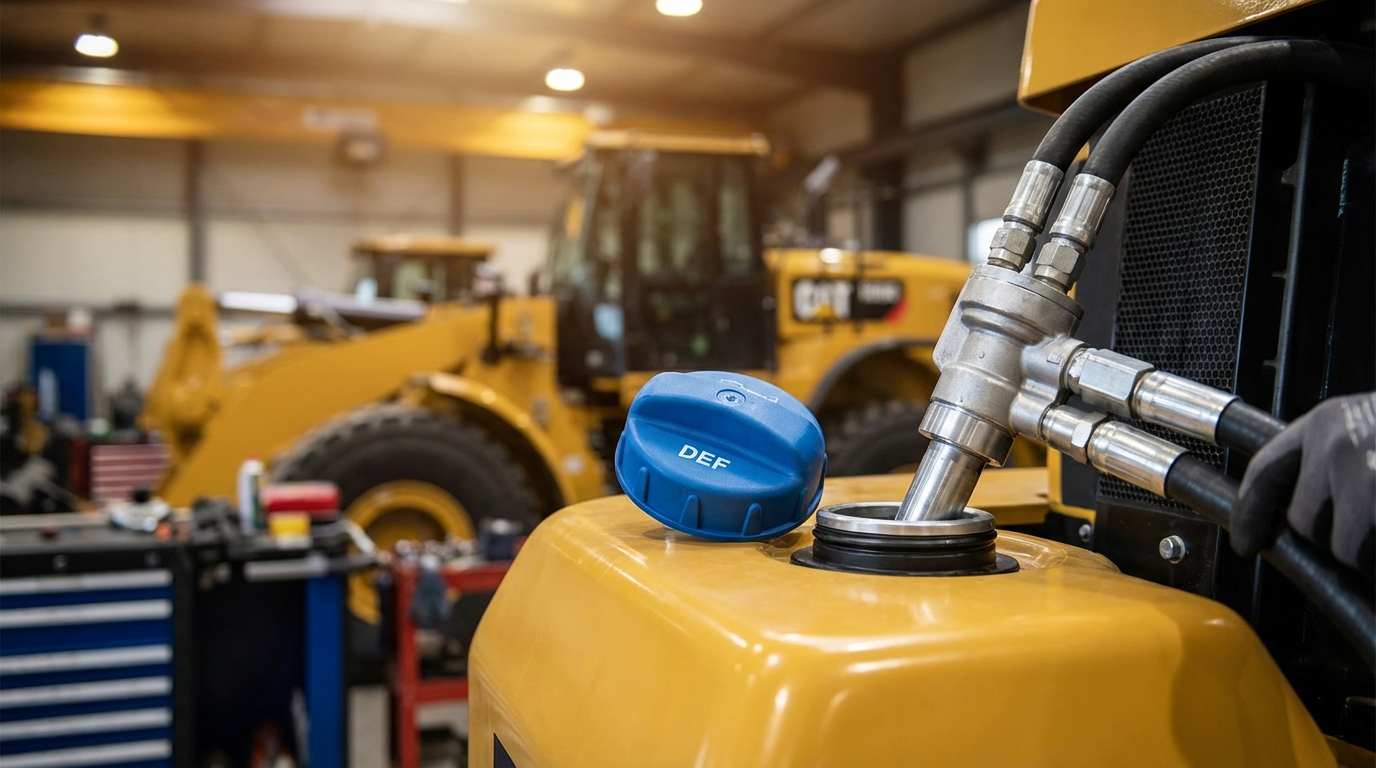
DEF Tank: Stores the fluid. Usually has a blue cap to distinguish it from fuel. Tanks range from 5-50+ gallons depending on equipment size.
DEF Pump Module: Draws DEF from the tank and pressurizes it for injection. Contains heating elements for cold-weather operation.
Dosing Injector: Sprays precise amounts of DEF into the exhaust stream. Atomizes the fluid for proper mixing with exhaust gases.
SCR Catalyst: The ceramic honeycomb structure where the chemical reaction occurs. This is the most expensive component in the system.
Temperature Sensors: Monitor exhaust and DEF temperatures throughout the system. Critical for proper dosing calculations.
NOx Sensors: Measure nitrogen oxide levels before and after the SCR catalyst to verify the system is working correctly.
Control Module: The electronic brain that coordinates everything. Monitors all sensors, calculates DEF dosing rates, and triggers warning lights when problems occur.
Derating and Shutdown: Modern emissions systems will progressively derate engine power if problems aren’t addressed. Ignore warnings long enough, and the machine will refuse to start until repairs are made.
The Dosing Process
The system continuously adjusts DEF injection based on:
- Engine load and RPM
- Exhaust temperature
- Ambient temperature
- NOx sensor readings
DEF consumption typically runs 2-3% of fuel consumption. A machine burning 10 gallons of diesel per hour uses roughly 0.2-0.3 gallons of DEF per hour.
Common DEF Problems and Their Causes
Most DEF system failures trace back to three root causes: contamination, crystallization, or component failure from neglected maintenance.
Contamination
The SCR system is extremely sensitive to contamination. Even small amounts of foreign substances can destroy components that cost thousands to replace.
Common Contaminants:
- Diesel fuel (wrong tank)
- Dust and dirt (dirty fill equipment)
- Other fluids (coolant, oil, hydraulic fluid)
- Tap water (mineral content)
- Old or degraded DEF
Cross-Contamination Warning: If diesel fuel enters the DEF tank—even a few ounces—the entire system typically needs replacement. SCR catalysts, injectors, and pumps cannot be cleaned once contaminated. We’ve seen single fill-up mistakes cost over $15,000.
Crystallization
When DEF evaporates or degrades, it leaves urea crystals behind. These crystals clog injectors, pumps, and lines. Crystallization typically results from:
- Operating with low DEF tank levels (residue concentrates)
- High storage temperatures (above 86°F)
- Old DEF past its shelf life
- Leaking injectors that allow crystallization in the exhaust
Sensor and Injector Failures
These components operate in harsh conditions. The dosing injector sits in exhaust temperatures that can exceed 1,000°F. Sensors endure constant thermal cycling and exposure to exhaust gases.
Common failure patterns:
- Sticking injectors that over-dose or under-dose
- NOx sensor drift requiring recalibration
- Temperature sensor failures triggering derates
- Pump failures from running on low/empty tanks
Proper DEF Handling and Storage
How you handle and store DEF directly determines whether your equipment runs trouble-free or spends time in the shop.
Storage Temperature Requirements
DEF freezes at 12°F (-11°C). It also degrades at high temperatures. The acceptable range:
Frozen DEF: Not damaged—it can be thawed and used normally. The 32.5/67.5 ratio ensures uniform freezing. Just don’t try to force-fill with frozen DEF.
Hot DEF: This is the real problem. DEF stored above 86°F begins breaking down. Extended exposure to high temperatures reduces effective life to months instead of years.
Shop Storage: Keep DEF containers in climate-controlled areas when possible. If storing outside in summer, use a shaded location and rotate stock frequently. White or reflective containers help reduce heat absorption.
Handling Best Practices
Dedicated Equipment: Use pumps, funnels, and containers exclusively for DEF. Never use equipment that’s touched other fluids.
Cleanliness: DEF is sensitive to contamination. Keep fill caps clean. Wipe tank necks before filling. Use sealed containers.
Sealed Storage: DEF absorbs moisture and can become contaminated by airborne particles. Keep containers tightly sealed when not in use.
ISO 22241 Compliance: Only use DEF that meets the ISO 22241 standard (sometimes marked as AUS 32). Off-spec fluid causes problems.
Tank Fill Procedures
- Clean the area around the fill cap before opening
- Use clean, dedicated DEF equipment only
- Avoid filling in dusty or windy conditions
- Never top off with small amounts from old containers
- Replace tank cap immediately and ensure proper seal
- Document the fill in your maintenance records
DEF Quality: What to Look For
Not all DEF is created equal. Quality varies by supplier, and low-quality fluid is a leading cause of system problems.
Quality Indicators
API Certification: Look for the API (American Petroleum Institute) certification mark. This indicates testing and quality compliance.
ISO 22241 Standard: The international specification that defines DEF purity. Compliant fluid is sometimes labeled AUS 32 or AdBlue (European branding).
Shelf Life Awareness: Check manufacturing dates. DEF stored properly lasts 12-24 months. Improperly stored fluid may degrade much faster.
Signs of Good DEF:
- Clear, colorless liquid
- No particles or sediment
- Slight ammonia smell is normal
- API certified
- Recent manufacture date
Warning Signs:
- Cloudy or discolored fluid
- Visible particles
- Strong ammonia odor
- Unknown source/no certification
- Unknown or old date
Where to Buy
Bulk Suppliers: For fleets with significant DEF consumption, bulk tanks with temperature-controlled storage offer the best quality control.
Equipment Dealers: Usually stock fresh, high-quality DEF. Good source for smaller quantities.
Truck Stops: Convenient, but quality can vary. Stick to name brands.
Retail Stores: 2.5-gallon jugs work for topping off. Check manufacture dates—shelf stock may be old.
Avoid Bargain DEF: That cheap DEF at the discount store might save $5 today and cost $5,000 next month. Stick with reputable sources that can verify their product meets specifications.
Maintenance Schedule and Best Practices
Preventing DEF system problems is far cheaper than repairing them. A consistent maintenance routine keeps the system running reliably.
Daily Checks
- Verify DEF level (most machines have a gauge)
- Check for warning lights related to emissions
- Inspect DEF tank area for leaks
- Note any unusual exhaust (excessive smoke or smell)
Weekly Checks
- Inspect DEF tank cap and seal condition
- Check DEF lines for cracks, leaks, or damage
- Verify DEF quality in tank (clear, no particles)
- Review any stored fault codes
Monthly/Quarterly Maintenance
- Inspect dosing injector for crystallization
- Check all electrical connections to DEF components
- Verify heating system operation (before winter)
- Clean DEF tank fill neck area
- Review DEF consumption rates for anomalies
Seasonal Considerations
Winter Preparation: DEF freezes at 12°F. While equipment DEF systems have heaters, preparation matters:
- Verify tank heaters function before cold weather
- Check heated lines and connections
- Don’t fill with DEF that’s already frozen
- Allow extra warm-up time for system in extreme cold
- Keep tank above 1/4 full (less freezing issues)
Summer Considerations: Heat degrades DEF faster than cold damages it:
- Avoid filling from containers stored in hot sun
- Rotate DEF stock to use oldest first
- Consider tank level—less surface area means less heat absorption
- Inspect for crystallization around injector area
Troubleshooting DEF Warning Lights
When that warning light illuminates, understanding what it means helps you respond appropriately.
Common Warning Light Meanings
Low DEF Level: Fill the tank. Operating on empty can damage the pump and cause air in the system.
DEF Quality Warning: System detected off-spec fluid. Check DEF source. May require tank drain and refill.
SCR Efficiency Reduced: System isn’t achieving target NOx reduction. Could be quality issue, contamination, or failing component.
DEF System Malfunction: General fault. Requires diagnostic scan to identify specific problem.
Derate Stages: Most manufacturers use progressive derates:
- Initial Warning: Alert only, full power maintained
- First Derate: Typically 25% power reduction
- Second Derate: Further reduction to 40-50%
- Final Derate: Severe reduction, may only allow limp-home speed
- Shutdown: Engine will not restart until repairs are made
Immediate Actions
Do:
- Note exactly what warning appeared
- Check DEF level first (simplest cause)
- Continue operating if only a warning (monitor closely)
- Get diagnostic scan if warning persists
Don’t:
- Ignore warnings hoping they’ll clear
- Add any fluid that isn’t certified DEF
- Attempt to bypass or delete the system (illegal)
- Continue operating during severe derate
When to Call for Service
- Any warning that doesn’t clear after filling DEF
- Repeated quality warnings with fresh, quality DEF
- Visible crystallization around injector
- Any error code indicating component failure
- Progressive derate conditions
Cost of DEF System Repairs
Understanding repair costs emphasizes why prevention matters. These are typical ranges—actual costs vary by equipment and location.
A contamination event requiring full system replacement can easily exceed $20,000 when you factor in parts, labor, and downtime.
Cost Prevention: Quality DEF costs about $3-4 per gallon. A typical machine uses 200-400 gallons of DEF per year. That’s $600-1,600 annually in DEF costs. Proper handling and quality products prevent repairs that cost 10-20x that amount.
Tracking DEF Usage with FieldFix
Managing DEF effectively requires tracking consumption, costs, and maintenance across your fleet. This is where systematic fleet management becomes valuable.
What to Track
Consumption Rates: DEF consumption should run 2-3% of fuel consumption. Significant variations indicate problems—either system issues or operator behavior (excessive idling increases DEF consumption disproportionately).
Cost Per Hour: Include DEF in your true cost-per-hour calculations. It’s an operating expense that affects bidding and profitability.
Fill Records: Document every DEF fill—date, amount, source. If quality issues arise, you can trace back to specific batches.
Warning Events: Log any DEF-related warnings or fault codes. Patterns help identify developing problems before they cause failures.
Using FieldFix for DEF Management
FieldFix helps fleet managers track all these elements in one place:
- Fluid tracking logs DEF purchases alongside fuel and oil
- Maintenance scheduling prompts DEF system inspections
- Cost analysis includes DEF in hourly operating costs
- Warning documentation creates searchable records of fault codes
- AI diagnostics can help interpret DEF-related warning patterns
Real-World Example: A grading contractor noticed one excavator consistently used 4% DEF versus 2.5% for identical machines. FieldFix’s consumption tracking flagged the anomaly. Investigation revealed a sticking injector that was over-dosing. Catching it early cost $1,200 in repairs instead of the $8,000+ that crystallization damage would have caused.
Building DEF Maintenance Into Your Routine
The machines that run reliably have DEF maintenance built into their regular service:
- DEF level checks are part of daily walk-arounds
- Tank and line inspections happen during oil changes
- Quality verification occurs with every delivery
- Consumption tracking runs automatically
- Seasonal prep is scheduled in advance
Track Your Fleet’s Complete Operating Picture
DEF is just one piece of the puzzle. True cost-per-hour includes fuel, maintenance, repairs, and fluids like DEF. FieldFix tracks everything automatically—consumption, costs, maintenance, and diagnostics—so you can make informed decisions about your equipment.
Try FieldFix Free — Track up to 3 machines forever at no cost.
The Bottom Line
DEF systems aren’t going away. Tier 4 emissions standards are permanent, and proper maintenance of these systems is now as essential as oil changes and filter replacements.
The good news: DEF system problems are almost entirely preventable. Quality fluid, proper handling, clean equipment, and consistent maintenance eliminate the vast majority of failures. The operators who treat DEF with the same respect they give diesel fuel don’t experience the $10,000+ repair bills that catch others off guard.
Build DEF into your maintenance routine. Track consumption. Use quality products. Handle it correctly. The system will run reliably for years—and you’ll never have to explain to a customer why their project is delayed because you filled the wrong tank.
Related Articles

May 1, 2026
Heavy Equipment Transmission Maintenance: The Complete Guide to Preventing Drivetrain Failure
April 30, 2026
Heavy Equipment Cooling Pack Cleaning Guide: Stop Overheating Before It Starts
April 29, 2026