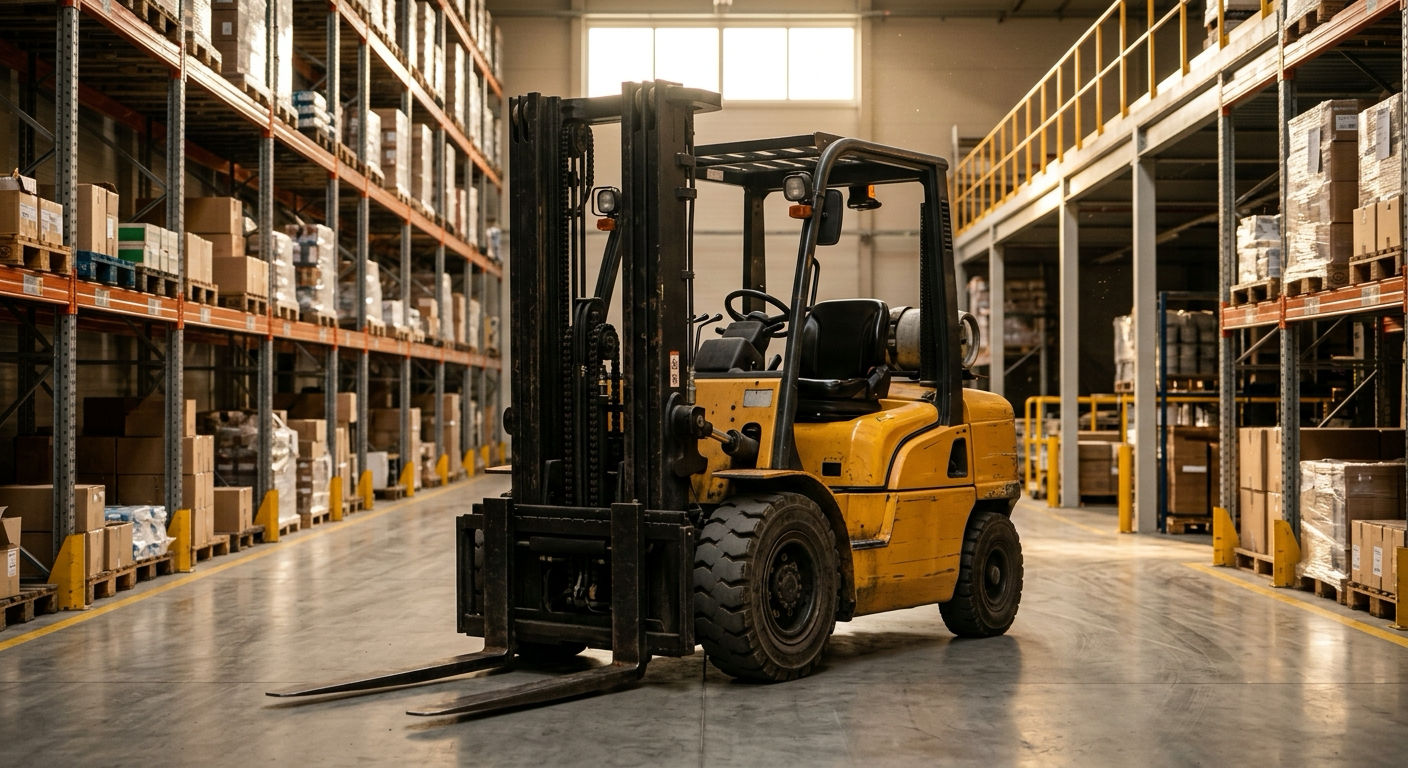
Forklift Maintenance Guide: Daily, Weekly, and Hour-Based Checks That Prevent Downtime
Learn the forklift maintenance routine that prevents breakdowns, protects operators, and extends tire, mast, hydraulic, and battery service life.
- Daily checks matter more on forklifts because they stop and start hundreds of times per shift.
- Mast chains, forks, tires, batteries, and hydraulic leaks deserve the most attention.
- Operator reports are useful only if someone logs them and closes the loop.
- Digital maintenance records make recurring failures obvious before they become expensive.
Forklift Maintenance Guide: Daily, Weekly, and Hour-Based Checks That Prevent Downtime
Forklifts do not live easy lives. They change direction constantly, carry off-center loads, run through dust, hit dock plates, rub curbs, and get handed from one operator to the next with very little sympathy. That is why forklift maintenance is not just another version of heavy equipment maintenance. The duty cycle is tighter, the operator exposure is higher, and the safety margin is thinner.
When a loader goes down, you lose production. When a forklift goes down, you can lose production, damage inventory, block shipping lanes, and put people at risk in a crowded workspace. That combination is exactly why forklifts need disciplined preventive maintenance.
The good news is that most forklift failures are not mysterious. They start as small, obvious problems that nobody logged, nobody owned, or everybody assumed the next shift would handle. This guide breaks down a practical forklift maintenance routine for warehouse fleets, yard trucks, and mixed-use industrial operations.
Why forklift maintenance is different
Forklifts rack up wear differently than most machines. The engine or motor may not log huge hours compared with a skid steer or excavator, but the constant starts, stops, tight turns, mast cycling, and brake use are brutal on components.
They also operate around racks, trailers, pedestrians, and finished goods. A small mechanical issue can quickly become a safety issue.
Three things make forklift maintenance uniquely important:
- High repetition: The same lift, turn, reverse, and brake actions happen hundreds of times per shift.
- Tight workspaces: Small steering or brake problems matter more when inches count.
- Operator turnover: Multiple operators notice issues, but problems get lost if reporting is informal.
The best forklift maintenance programs are boring on purpose. They use short routines, fixed intervals, and fast documentation so the little stuff gets handled before it stacks up.
Daily forklift inspection checklist
Every shift should start with a walkaround and a basic function test. Not a fake one. Not a clipboard exercise where every box gets checked before the key turns. A real inspection.
Focus on the systems that fail fast or create immediate safety exposure:
1. Forks and carriage
Look for bent forks, uneven fork height, visible cracks, heel wear, missing locking pins, and damage around the carriage. Fork wear is not cosmetic. Reduced fork thickness cuts lifting capacity.
2. Mast, rollers, and lift chains
Watch for chain slack, dry links, damaged anchors, rough mast travel, and roller wear. Listen while raising and lowering the mast. Grinding, popping, or jerky movement means something is already wrong.
3. Tires and wheels
Cushion tires chunk, flat spot, and separate. Pneumatic tires lose pressure or get cut. Either way, tire condition affects truck stability, turning behavior, and operator comfort.
Check for:
- Low tread or excessive wear
- Chunking, tearing, or exposed cords
- Uneven wear from alignment or operator abuse
- Embedded debris
- Loose lug hardware or wheel damage
4. Hydraulics
Look underneath the truck and around hose routes, lift cylinders, tilt cylinders, and fittings. Small hydraulic leaks become big messes quickly on forklifts because the leaks end up on smooth warehouse floors.
5. Controls, horn, lights, alarms, and seat belt
Basic safety systems have to work every shift. Horn dead? Seat belt torn? Reverse alarm intermittent? Tag it and fix it. Warehouses are not the place for “good enough.”
6. Brakes and steering
The brake pedal should feel consistent. Steering should not wander, bind, or require correction every few feet. Operators usually notice these problems early, but only if somebody asks and records the answer.
The daily inspection should end with one simple question: would you want your best operator using this truck around your best customer’s product right now? If the answer is no, pull it from service.
Weekly and monthly service points
Daily inspections catch active problems. Weekly and monthly service keeps wear under control.
Weekly attention should include:
- Cleaning the truck thoroughly enough to expose new leaks and damage
- Checking mast chain lubrication and equal tension
- Inspecting battery cables or fuel connections
- Checking hydraulic fluid, brake fluid if applicable, and coolant on internal combustion units
- Looking for loose overhead guard, fender, or compartment hardware
- Verifying backup alarm, lights, and operator display warnings
Monthly service should go deeper:
- Measure fork wear and inspect for distortion
- Inspect mast rollers, side play, and chain anchors
- Check steer axle components and kingpins for wear
- Inspect brake linings or braking performance trends
- Inspect contactors and battery connectors on electric units
- Check air filter condition, belts, and exhaust system on internal combustion units
- Leaks, lubrication, battery condition, and obvious wear
- Fast checks that prevent surprise failures mid-shift
- Best handled by a tech or lead with a repeatable checklist
- Measurements, adjustment, and wear trending
- Better time to plan parts orders before failure
- Ideal point to review recurring operator complaints
Hour-based maintenance schedule
Calendar reminders alone are not enough for forklifts. Some trucks run one shift per week. Others run two or three shifts per day. Use hour-based service to match actual usage.
Here is a practical schedule for mixed fleets:
Every 250 hours
- Full preventive maintenance inspection
- Lubricate mast and specified grease points
- Check chain condition and adjustment
- Inspect fork locking hardware
- Review tires for wear pattern changes
- Inspect hydraulic hoses and cylinders
- Confirm all decals and safety devices are intact
Every 500 hours
- Change engine oil and filters on internal combustion units
- Inspect and clean battery connectors on electric units
- Check brake wear and parking brake function
- Inspect steer axle play and wheel bearings where applicable
- Test charging system or battery discharge performance
- Verify lift and tilt speeds are within expected range
Every 1,000 hours
- Replace higher-wear belts, hoses, or filters as needed
- Review mast rollers and chain stretch more critically
- Inspect drive tires or load wheels for replacement planning
- Service transmission or drive unit per manufacturer interval
- Review failure history to find repeat offenders
The exact intervals should follow the manufacturer, but this framework keeps most fleets honest.
Electric vs. internal combustion forklift maintenance
Electric forklifts and internal combustion forklifts fail differently. If you treat them the same, you will miss half the story.
Electric forklifts
Watch battery watering, connector heat, cable damage, charging habits, and drive motor or contactor issues. Battery neglect is usually not dramatic at first. It shows up as shortened run time, slow lift speed, hot connectors, and charging complaints.
Internal combustion forklifts
These units need closer attention on engine oil, air intake, cooling system, belts, fuel delivery, and exhaust condition. In dusty yards, neglected air filtration and cooling issues show up quickly.
Most common forklift failures
Most fleets see the same repeat offenders:
-
Tire wear ignored too long
The truck still moves, so nobody acts. Then handling gets sloppy, loads feel unstable, and the repair becomes urgent instead of planned. -
Mast chain neglect
Poor lubrication and lack of inspection lead to uneven lift behavior and accelerated wear. -
Battery abuse on electric units
Missed watering, dirty connectors, and bad charging habits quietly kill battery life. -
Hydraulic leaks treated as housekeeping instead of maintenance
A forklift with an active leak is not just messy. It is unsafe. -
Brake and steering complaints dismissed as operator preference
If multiple operators complain, the truck is telling the truth.
Repair now vs. schedule later
Not every defect has to stop work immediately. But plenty of them do.
Repair now if the issue involves:
- Fork cracks, bending, or retention failure
- Brake weakness or inconsistent stopping
- Steering instability
- Active hydraulic leaks
- Chain damage or rough mast movement
- Inoperative horn, seat belt, or other key safety devices
Schedule later, but document it immediately, for things like:
- Minor cosmetic damage
- Non-critical body panel issues
- Early tire wear that has not crossed a replacement threshold
- Small comfort issues that do not affect safe operation
The trap is letting “schedule later” become “forget forever.” If it is worth noting, it is worth tracking to completion.
How to build a better forklift PM program
Good forklift programs are not built on hero mechanics. They are built on repeatable habits.
Start with five rules:
- Use one inspection format for every shift
- Log defects by unit, not by memory
- Tie PMs to hours, not vibes
- Review recurring failures monthly
- Remove trucks from service when safety systems are compromised
The strongest programs also connect operations and maintenance. Operators should know how to report defects quickly. Techs should be able to see repeat history fast. Supervisors should know which trucks keep eating tires, chains, batteries, or brake components.
How FieldFix helps
Forklift fleets create lots of little maintenance events. That is exactly why spreadsheets and whiteboards fall apart.
FieldFix helps teams:
- Track inspections and PMs by unit
- Log operator-reported defects with photos and notes
- Spot repeated tire, chain, brake, or battery failures
- Schedule service by hours instead of guesswork
- Keep machine history visible when deciding whether to repair or replace
If one forklift keeps showing up with the same problem, the record should make that obvious. If a truck has gone quiet because nobody is documenting it, that should be obvious too.
Final thoughts
Forklift maintenance is not complicated, but it is unforgiving. Small defects become safety issues fast. Small leaks become floor hazards. Small steering and tire problems become handling problems. Small reporting gaps become repeat failures.
If you want more uptime, safer operators, and fewer ugly surprises at the dock or in the aisle, build a routine that catches the boring stuff early and tracks it all the way to completion.
Use FieldFix to track inspections, service intervals, defect history, and recurring repair patterns across every forklift in your fleet.
Related Articles
September 4, 2026
Heavy Equipment Fall Service Planning Guide: How to Prevent Winter Downtime
September 3, 2026
Horizontal Directional Drill Maintenance: The Complete HDD Service Guide for Contractors
September 2, 2026