Heavy Equipment Hydraulic Accumulator Safety & Maintenance Guide
Learn how to inspect, depressurize, maintain, and replace hydraulic accumulators on heavy equipment before they trigger downtime or safety failures.
Key Takeaways
- Hydraulic accumulators store energy even after the engine is shut off, which makes them both useful and dangerous
- Common failure signs include pressure loss, harsh machine response, fluid foaming, external leakage, and repeated shock loads
- Charging with the wrong gas or skipping pressure checks can ruin seals, damage pumps, and create a serious safety hazard
- A simple inspection routine can catch most accumulator problems before they turn into hose failures, valve damage, or downtime
- Field documentation matters because nitrogen charge history, pressure readings, and failure trends are easy to lose without a system
Hydraulic accumulators do a thankless job on heavy equipment. They smooth pressure spikes, absorb shock, support emergency functions, and help hydraulic systems respond without beating themselves to death. When they fail, the symptoms get blamed on pumps, hoses, valves, cylinders, or operators.
That is exactly why accumulators deserve more attention.
On excavators, wheel loaders, material handlers, cranes, forestry equipment, and mobile hydraulic systems, the accumulator is often the quiet buffer keeping the entire system civilized. Lose pre-charge pressure or damage the bladder, piston, or diaphragm, and machine performance starts getting sloppy fast. Control response changes. Pressure spikes get nastier. Components wear harder. In some cases, safety functions stop working the way the OEM intended.
This guide covers what hydraulic accumulators do, how to inspect them, where fleets screw this up, and how to build a repeatable maintenance routine that keeps a small issue from turning into an expensive hydraulic headache.
What a Hydraulic Accumulator Actually Does
A hydraulic accumulator is a pressure storage device. Most heavy equipment accumulators use nitrogen gas separated from hydraulic fluid by a bladder, diaphragm, or piston. As system pressure rises, hydraulic oil compresses the gas side and stores energy. As pressure falls, that stored energy pushes back into the circuit.
That simple function supports a lot of critical jobs:
- Dampening pressure shocks from rapid valve movement
- Absorbing pulsation from pumps and hydraulic events
- Maintaining pressure for emergency steering or brake release
- Supporting boom suspension, ride control, or attachment cushioning
- Improving response in circuits that see repeated demand spikes
If your accumulator loses its nitrogen pre-charge, it loses its cushion. The system becomes harsh, inefficient, and harder on every nearby component.
Important: Accumulators can remain pressurized after shutdown. Treat every unit like it is still storing energy until you have followed the OEM depressurization procedure and verified pressure is safely relieved.
Why Accumulator Maintenance Gets Ignored
Accumulator problems are easy to miss because the failure rarely announces itself with one dramatic moment. Instead, performance gets a little rougher. The ride control does not feel quite right. The attachment slams harder than it used to. A circuit seems noisy when hot. Operators adapt. Techs chase the visible symptom. The accumulator gets forgotten.
There are three reasons this happens over and over:
First, many fleets do not have pre-charge checks built into scheduled service. Oil samples, filters, grease, and hose checks make the list. Accumulator charge verification does not.
Second, accumulator symptoms overlap with other hydraulic failures. A bad pre-charge can mimic pump cavitation, valve instability, poor damping, or inconsistent circuit response. If nobody checks the accumulator early, labor hours disappear into trial-and-error diagnosis.
Third, some technicians avoid accumulators because stored gas pressure makes them nervous. Fair enough. They deserve respect. But avoiding them is not a strategy. It just delays the problem until the failure gets more expensive.
What Happens When You Stay Ahead of Accumulator Maintenance
- ✅ Better shock absorption and smoother control feel
- ✅ Less stress on hoses, seals, pumps, and valve blocks
- ✅ More reliable emergency or support functions
- ✅ Faster troubleshooting when hydraulic behavior changes
- ✅ Lower odds of replacing healthy parts while the real problem sits untouched
What Happens When You Ignore It
- ❌ Pressure spikes hammer nearby components
- ❌ Ride control and cushioning functions degrade
- ❌ Repeated seal failures show up elsewhere in the circuit
- ❌ Operators report vague “machine feels rough” complaints
- ❌ Diagnosis gets longer, dirtier, and more expensive
The Biggest Safety Risks
Accumulator maintenance is not just a reliability issue. It is a safety issue.
The obvious risk is stored energy. A charged accumulator can discharge fluid with enough force to move machine components, spray hydraulic oil, or create a violent release if handled incorrectly. That means lockout procedures, pressure relief steps, and manufacturer service instructions are not optional paperwork. They are the barrier between routine service and a very bad day.
The second risk is using compressed air or oxygen instead of dry nitrogen for charging. This is one of those mistakes that sounds too dumb to happen until it does. Oxygen under pressure in the wrong environment can create a fire or explosion risk. Shop air introduces moisture and contamination. Use the correct charging kit and dry nitrogen only.
The third risk is assuming zero external leakage means the accumulator is fine. Internal failures can still leave the circuit unstable, and a dead accumulator tied to a safety-related function is the kind of hidden defect that bites you when conditions get ugly.
Never crack fittings, remove valves, or disassemble an accumulator without following the OEM depressurization procedure. If you do not know the exact procedure for that machine and accumulator type, stop and get the service information first.
Daily and Weekly Inspection Checklist
You do not need to perform a full pressure test every day. You do need a repeatable routine that helps you catch warning signs before the machine starts eating hydraulic components.
Daily Operator Checks
- Look for oil seepage around the accumulator shell, charging valve, and nearby fittings
- Watch for changes in ride control, boom suspension, braking support, or cushioning behavior
- Listen for sudden harshness or chatter in circuits that usually run smooth
- Note any new fault codes or repeated pressure alarms tied to the circuit
- Report “machine feels different” complaints instead of shrugging them off
Weekly Technician Checks
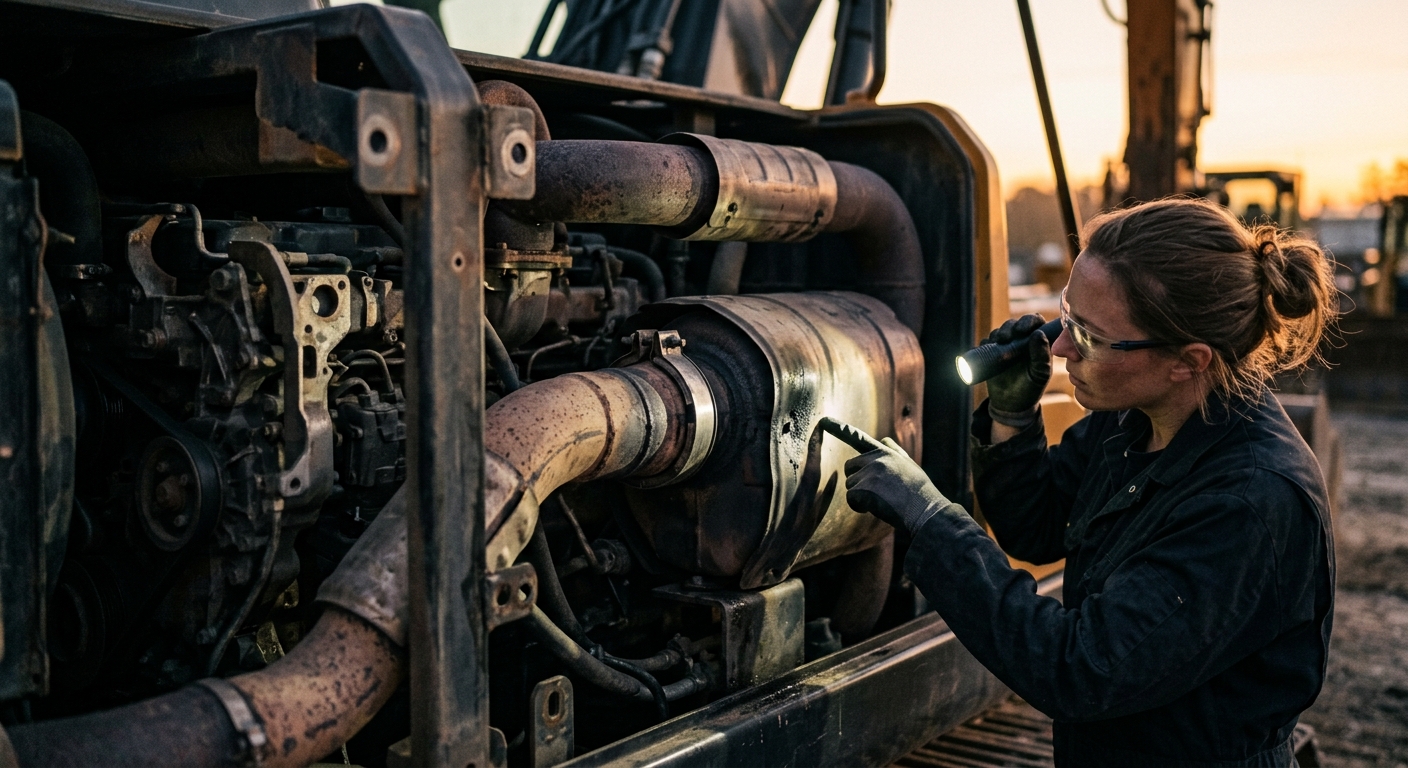
- Inspect shell condition for dents, corrosion, abrasion, or impact damage
- Check valve caps, guards, and mounting hardware
- Verify hoses and hard lines near the accumulator are not rubbing or vibrating excessively
- Look for temperature staining or signs of repeated overheat exposure
- Review recent work orders for repeated seal, hose, or shock-related failures on the same machine
Best practice: If a machine uses an accumulator for ride control or emergency backup, add a simple function test to your weekly routine. Operators notice the feel long before a meter confirms the charge is drifting.
Case Study: The Loader That Kept Blowing Return Hoses
A contractor kept replacing return-side hoses on a wheel loader that felt unusually violent when traveling with a loaded bucket. The hoses were blamed on routing and operator habits. The real culprit was a ride control accumulator with almost no nitrogen pre-charge left. Once the accumulator was tested and recharged to spec, the harsh cycling stopped and the repeat hose failures disappeared.
Takeaway: When a circuit suddenly feels sharp, hammering, or unforgiving, the accumulator deserves a fast look before you condemn the rest of the system.
How to Test Pre-Charge Pressure
Testing pre-charge is where maintenance shifts from guesswork to actual diagnosis. The exact process varies by machine and accumulator design, so the service manual wins. But the broad approach is consistent.
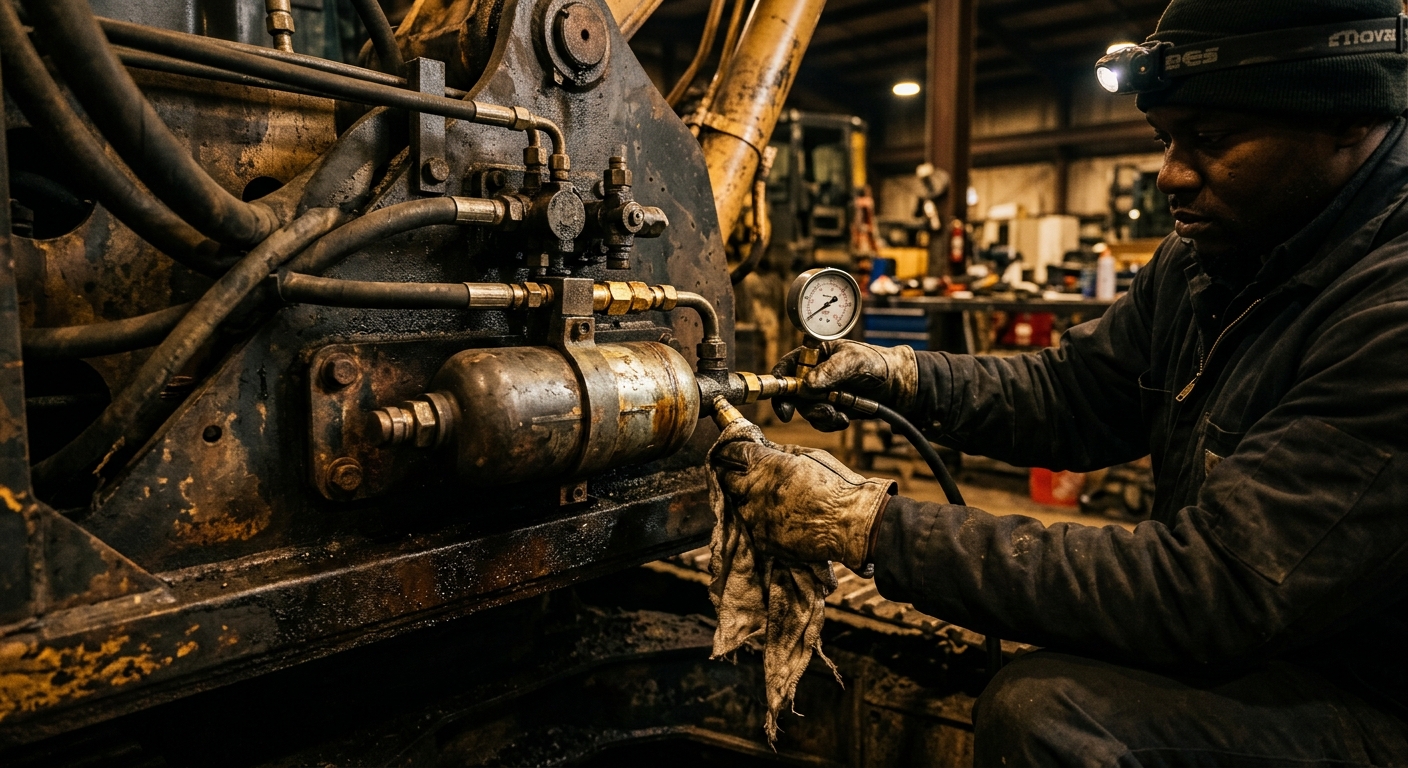
Start by parking the machine safely, lowering implements, shutting down the engine, and following the full hydraulic pressure relief procedure. Then isolate the accumulator circuit if the OEM procedure requires it. Only after the system is safely depressurized should you connect the proper charging and gauging kit.
What are you checking? You are confirming whether the nitrogen pre-charge matches spec for that application. Too low and the accumulator loses its cushion. Too high and it may not accept enough hydraulic fluid volume to do its job correctly.
Technicians often make two mistakes here:
- They skip temperature considerations and compare readings without regard for service conditions
- They “top it off” without documenting the original reading, which destroys useful failure history
When you record accumulator service, log:
- Machine ID and hours
- Accumulator location and function
- OEM pressure specification
- Actual measured pre-charge
- Ambient temperature if relevant
- Whether the unit was recharged, left alone, or replaced
Do not wing the pressure spec. Similar machines can use different charge settings depending on circuit design. Charging by memory is how good components get damaged.
Common Failure Symptoms and Root Causes
When an accumulator goes bad, the symptoms are usually telling you something specific.
Symptom: Ride Control or Cushioning Stops Working
Most likely causes:
- Nitrogen pre-charge loss over time
- Failed bladder or diaphragm
- Isolation valve issue preventing accumulator function
Symptom: Hydraulic Circuit Feels Harsh or Spiky
Most likely causes:
- Undercharged accumulator no longer absorbing pressure spikes
- Internal gas-side failure
- Wrong replacement accumulator spec
Symptom: Repeated Seal or Hose Failures Nearby
Most likely causes:
- Pressure shock no longer being dampened
- Mounting damage causing vibration and fatigue
- Accumulator bypassed, empty, or ignored after earlier repairs
Symptom: External Oil Leak at the Unit
Most likely causes:
- Valve damage or poor service procedure
- Seal failure
- Corrosion or physical shell damage
Symptom: Gas Charge Will Not Hold
Most likely causes:
- Leaking charging valve
- Permeation over a long interval
- Bladder or diaphragm rupture
- Internal piston seal wear on piston-style units
Repair vs Replace Decisions
Not every accumulator issue means the whole assembly is scrap, but this is not the place for cheap optimism.
Repair or Recharge Makes Sense When
- ✅ The unit is structurally sound and simply low on pre-charge
- ✅ The charging valve core or cap is the confirmed leak source
- ✅ OEM procedure allows seal service or subcomponent replacement
- ✅ The accumulator body shows no corrosion, dents, or heat damage
Replacement Is the Smarter Move When
- ❌ The shell is damaged, corroded, or questionably repaired
- ❌ The bladder or diaphragm has failed and contamination is present
- ❌ The unit repeatedly loses charge after recent service
- ❌ The cost of teardown and uncertainty is close to a new assembly
- ❌ The accumulator supports a critical safety function and trust is gone
If an accumulator has been neglected long enough to damage nearby components, replacing only the accumulator may not close the loop. Check hoses, fittings, pressure spikes, valve behavior, and any components that have been absorbing the abuse while the accumulator sat dead.
Case Study: The “Pump Problem” That Wasn’t
One excavator was flagged for weak responsiveness and occasional chatter after warm-up. The pump was close to being condemned. A tech checked the boom suspension accumulator first and found the charge far below spec. After recharge and verification, the complaint disappeared and the pump stayed in service.
Takeaway: An accumulator test is cheaper than a pump replacement and far less embarrassing.
Building an Accumulator Maintenance Program
If you run more than a couple machines, accumulator care should be standardized instead of left to memory.
Build your program around four rules:
- Identify every accumulator in the fleet. List machine, circuit, type, and OEM pressure spec.
- Assign inspection intervals. Daily observation, weekly visual checks, and scheduled pressure verification based on OEM guidance and machine severity.
- Document every reading. The trend matters more than one isolated number.
- Link complaints to the accumulator early. Harshness, shock, repeated hose failures, and weak ride control should trigger a quick review.
This is where software beats sticky notes and “I think we checked that last winter.” If your team logs charge readings, symptoms, and repairs in one place, you start seeing patterns across machines instead of treating every hydraulic complaint like a mystery.
Why Better Record Keeping Pays Off
Accumulator maintenance is a perfect example of why clean records create profit. The unit itself may be small compared to the rest of the machine, but it sits upstream of expensive consequences. When you can see that a specific accumulator has needed recharge twice in six months, or that a circuit started blowing hoses after the charge fell off, you move from reactive repairs to pattern-based decisions.
That is the real win. Not just fixing the issue, but shortening the time between symptom and correct diagnosis.
Field teams that document accumulator charge history alongside service notes, photos, and machine hours can spot repeat hydraulic issues faster and justify replacement decisions with actual evidence instead of gut feel.
Hydraulic accumulators are easy to overlook because they work quietly in the background. But that quiet little pressure vessel may be protecting the rest of your hydraulic system from shock, instability, and early wear every single day. Ignore it, and the bill usually shows up somewhere else.
Inspect it. Test it safely. Record what you find. Then make decisions with real data instead of crossed fingers.
Stop Guessing at Hydraulic Problems
FieldFix helps fleets track maintenance history, document inspection results, and spot repeat failure patterns before they become downtime. If your team is still chasing hydraulic issues from memory, it is time for a better system.