Heavy Equipment Air Conditioning Maintenance Guide: Keep Cabs Cold in Peak Season
Learn how to maintain heavy equipment AC systems, catch cooling problems early, reduce downtime, and keep operators productive in hot weather.
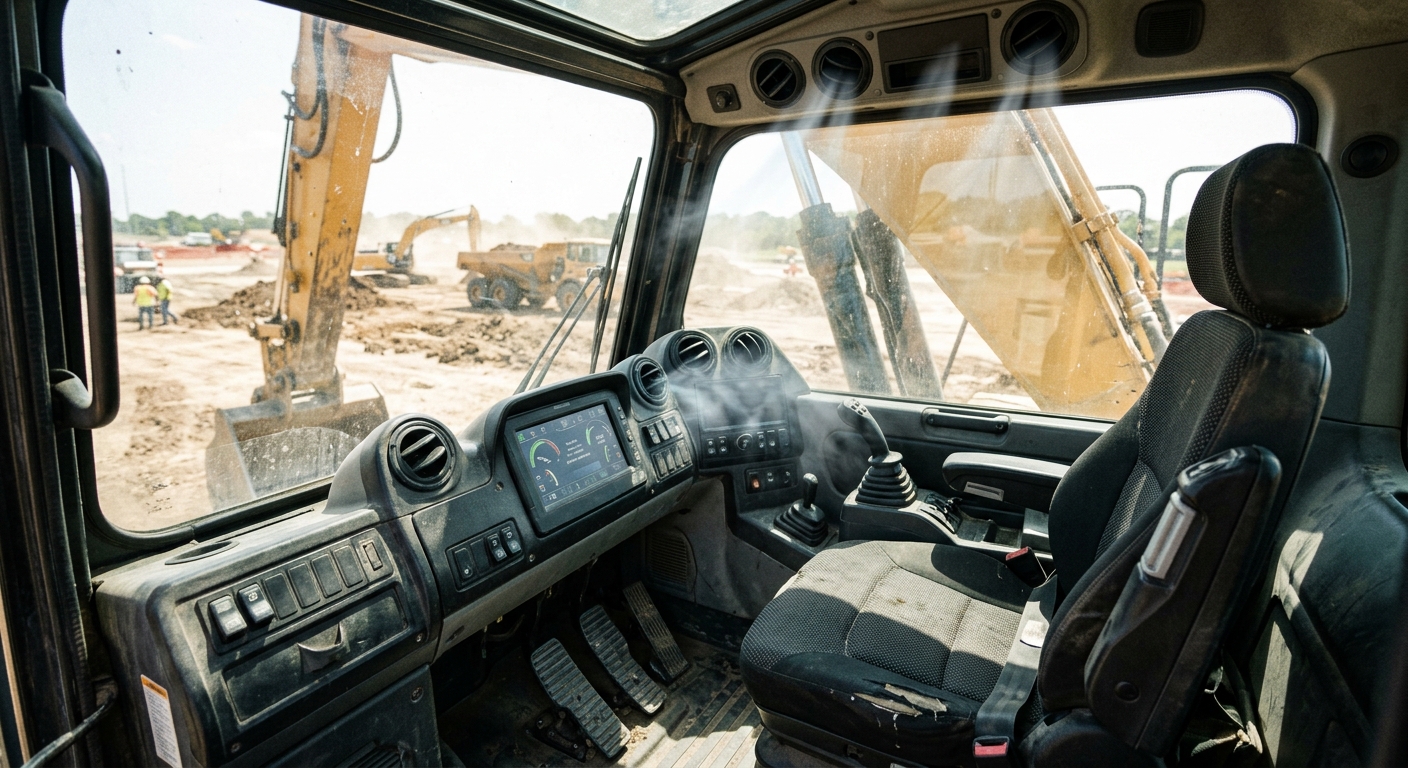
If you run loaders, excavators, dozers, skid steers, compact track loaders, cranes, or haul trucks in the summer, the air conditioning system is not a luxury. It is a production system.
When a machine cab gets hot enough, operator performance drops fast. Concentration slips. Windows fog more easily. Fatigue arrives earlier in the day. Operators start cracking doors or windows for relief, which pulls in dust and makes the cooling problem worse. By the time the shop gets the complaint, the crew has already been fighting the machine instead of working with it.
That is why air conditioning maintenance deserves its own routine. It is related to filters and HVAC components, but the refrigeration side of the system has its own failure patterns, its own inspection points, and its own bad habits. The worst one is simple: treating every warm-cab complaint like the machine “just needs a little refrigerant.”
That shortcut is how fleets turn a manageable leak or airflow issue into a compressor failure in the hottest week of the year.
Why AC maintenance matters
Air conditioning problems create more damage than most fleets account for because the cost is not just the repair invoice.
In hot weather, machine cabs become heat traps fast. Glass area is large, sun load is constant, and many machines operate at low travel speeds with dust, debris, and chaff collecting around cooling components. That means the AC system is already working hard before age, contamination, or wear enter the picture.
The business case is straightforward. A healthy AC system helps keep operators alert, keeps cabs sealed, protects visibility, and reduces the odds of mid-season failures that force a machine out of service when crews are busiest.
How heavy equipment AC systems work
You do not need to be an HVAC technician to manage heavy equipment AC systems well, but you do need to understand the basic chain.
The compressor circulates refrigerant through the system. The condenser rejects heat outside the cab. The receiver-drier or accumulator helps manage moisture and system condition. The expansion device meters refrigerant into the evaporator. The evaporator absorbs heat from cab air, and the blower moves that cooled air through the vents.
When any part of that chain gets restricted, contaminated, or worn out, the operator usually experiences the same basic symptom: “the AC sucks.”
The problem is that identical complaints can come from very different root causes:
- Low refrigerant from a slow leak
- Dirty condenser fins that cannot reject heat
- Weak engine fan or cooling fan performance
- Plugged cab filters reducing airflow across the evaporator
- Blower motor or resistor issues
- Moisture contamination inside the refrigerant circuit
- Sensor, relay, switch, or clutch electrical faults
- Damaged door seals allowing too much hot air and dust into the cab
This matters because plenty of shops recharge systems that really have airflow restrictions, and plenty of operators complain about airflow when the refrigerant side is actually fine. If you want fewer repeat tickets, start by diagnosing the symptom correctly.
Early warning signs crews should not ignore
Most expensive AC failures send warning shots first. The trick is getting the crew to notice them while the fix is still cheap.
Watch for:
- Vent air that stays cool in the morning but turns weak by afternoon
- Cooling that fades at idle and improves when engine speed rises
- Vents that blow acceptably on some fan speeds but not others
- Operators reporting that the cab is slow to cool down after lunch
- Condenser areas packed with dust, seed fluff, mulch, or chaff
- Oily residue at hose fittings, compressor areas, or service ports
- Water not draining properly from the evaporator area
- AC clutch cycling rapidly or failing to engage consistently
- Fogging, humidity, or damp smells inside the cab
- Repeat “top-off” service history on the same machine
One of the best early clues is inconsistency. If the AC sometimes works well and sometimes does not, there is usually a condition-based issue hiding underneath: heat load, airflow restriction, clutch performance, fan speed, or pressure control behavior. Those patterns matter.
High-impact inspection points
If you want the highest return on maintenance time, start with the inspection points that cause the most trouble.
1. Condenser cleanliness
Heavy equipment lives in dirty environments. The condenser often gets buried under dust, grass seed, wood fiber, or quarry debris. When heat cannot leave the refrigerant efficiently, high-side pressure climbs and cooling performance drops.
Inspect condenser fins carefully. Look for packed debris, bent fins, and damage from careless washing. Clean with the right method for the machine and avoid turning the fins into a flattened mess with aggressive pressure.
2. Cooling fan performance
Many machines depend on strong fan performance to move air through the cooling stack. If the fan clutch, hydraulic fan controls, reversing fan logic, or fan motor performance is off, the AC suffers first in hot conditions.
If a machine cools better while moving than sitting, that is a clue worth chasing.
3. Cab airflow
The evaporator cannot do its job if airflow across it is restricted. Check recirculation and fresh-air filters, blower speed operation, duct condition, and evaporator cleanliness where accessible. Operators often describe this as “not cold enough” when the real issue is inadequate air volume.
4. Hoses, fittings, and compressor area
Refrigerant leaks often leave oily residue because compressor oil travels with the refrigerant. Look for grime accumulation around fittings, hose crimps, compressor shaft seals, and service ports.
5. Electrical controls
AC systems rely on switches, pressure sensors, relays, fuses, clutches, and control modules. Intermittent cooling complaints can be electrical long before anyone realizes it.
- Cleaning condenser areas before peak heat arrives
- Logging vent temperature complaints early
- Checking for oily residue instead of guessing
- Separating airflow complaints from refrigerant complaints
- Blindly recharging systems without leak diagnosis
- Ignoring dirty cooling packs because the engine temp looks fine
- Waiting until the hottest week of the year to test performance
- Assuming all warm-cab complaints come from low refrigerant
Common AC failures and root causes
Most fleet AC failures land in a few predictable buckets.
Slow refrigerant leaks
This is the classic repeat complaint. A hose crimp, compressor seal, fitting, or condenser pinhole starts leaking slowly. The machine still cools for a while, then performance drops under peak heat. Someone adds refrigerant, the system recovers briefly, and the cycle repeats.
That is not maintenance. That is borrowed time.
Condenser restriction
This is brutally common on land clearing, mulching, agriculture, quarry, and demolition equipment. The system may technically be charged correctly, but dirty condenser fins push pressures up and cooling down.
Compressor wear or clutch issues
A weak compressor or failing clutch can cause intermittent performance, poor cooling at idle, or noisy operation. If a system has been run low on charge repeatedly, compressor wear becomes much more likely because oil circulation and lubrication suffer.
Moisture contamination
When systems are opened carelessly or the drier is neglected, moisture enters the circuit. That can damage components, create corrosion, and affect expansion device performance. It is one of those invisible problems that makes diagnosis messy later.
Evaporator or airflow restrictions
An evaporator coated in debris, combined with weak blower output, can make a charged system feel useless from the operator seat.
Repair vs. recharge decisions
There is a right way to recharge a system and a lazy way to recharge a system.
The right way is to verify performance, inspect for leaks, recover and weigh refrigerant properly, and correct the root cause when the system is low. The lazy way is to toss refrigerant at the machine because the operator is hot and the shop is busy.
Use this practical rule:
- If the system is low once and the cause is clear, repair it correctly and recharge to spec.
- If the same machine has a second low-charge complaint, stop pretending it is random.
- If the system has contamination, compressor damage, or obvious repeated leak history, plan the larger repair before peak-season failures force your hand.
If you manage multiple machines, compare patterns. If one model repeatedly loses charge at the same fitting or hose routing point, that is a fleet lesson, not a one-off repair.
A simple AC maintenance schedule
Most fleets do not need a complicated process. They need a repeatable one.
Before summer
- Inspect and clean condenser and cooling pack areas
- Verify blower operation on all speeds
- Replace filters as needed
- Check belt condition where applicable
- Test vent temperature and cooling performance on suspect machines
- Investigate repeat complaints before heat peaks
Monthly in hot season
- Inspect for debris loading around condenser surfaces
- Ask operators about cool-down time, idle cooling, and airflow strength
- Check for oily residue at visible fittings and hoses
- Review any top-off history or recurring work orders
At scheduled service intervals
- Inspect electrical connectors, relays, and clutch operation
- Confirm drain function and cab sealing
- Log any refrigerant-side repairs with clear notes on cause and parts replaced
The biggest goal is timing. You want to service AC systems in a controlled window, not after operators have been baking for two weeks and the machine is already behind schedule.
Tracking AC health in FieldFix
Air conditioning problems get expensive when maintenance history is vague. If your records just say “AC checked” or “added refrigerant,” you do not really have records. You have guesses.
In FieldFix, AC tracking should include:
- Operator complaints in plain language
- Vent temperature or performance notes when available
- Leak locations found and repaired
- Parts replaced such as hose assemblies, compressor, clutch, drier, or switches
- Repeat service dates on the same machine
- Photos of condenser condition or damaged components
That history helps you separate machines with one isolated issue from machines that are starting to develop a pattern. It also helps you budget smarter. A machine that needs one hose repair is different from a machine that has become a seasonal AC money pit.
When fleets track AC work properly, they usually discover two things. First, many cooling complaints were preventable with earlier condenser cleaning and inspection. Second, recharge-only service creates far more repeat downtime than anyone wants to admit.
Bottom line
Heavy equipment air conditioning systems fail in predictable ways. Dirty condensers, weak airflow, slow leaks, worn compressors, and ignored operator complaints do not stay small forever.
Treat cab cooling like a real production system. Inspect it before summer punishes you, diagnose it with a little discipline, and repair leaks instead of feeding the same machine another temporary recharge. Your operators stay sharper, your cabs stay sealed, and your fleet avoids one of the most annoying forms of preventable downtime.
Use FieldFix to log operator complaints, document leak repairs, attach photos, and build maintenance history for every machine so your team can fix cooling problems early instead of reacting in the middle of a heat wave.
Related Articles
June 23, 2026
Heavy Equipment Axle and Differential Maintenance Guide: Stop Heat, Noise, and Metal Before Failure

June 22, 2026
Portable Generator Maintenance Guide for Contractors: Prevent Expensive No-Start Mornings

June 20, 2026