Heavy Equipment Center Pin and Oscillation Joint Maintenance Guide
Learn how to inspect, grease, and track center pins and oscillation joints before looseness, frame wear, and steering issues turn costly.
Articulated dump trucks, wheel loaders, motor graders, and other center-joint machines live a rough life. They twist across uneven ground, steer under load, slam through ruts, and keep moving even when operators are carrying more speed than they should. All that force has to go somewhere. A big part of it lands right at the center pin and oscillation joint.
That is why these components deserve more respect than they usually get. Plenty of fleets stay disciplined on engine service, hydraulic filters, and tire checks, then treat the articulation joint like a lifetime part. It is not. It is a high-load wear point. If the grease intervals stretch, the seals fail, or the first signs of movement get ignored, the machine can start wearing itself apart right through the middle.
The ugly part is that center-joint damage often starts quietly. Steering can feel a little loose. Tire wear can look slightly uneven. Operators may mention a clunk when changing direction or a vague feeling that the machine is wandering more than it used to. Those are early clues. Catch them there and the repair is manageable. Ignore them and you risk worn bushings, damaged bores, steering geometry problems, cracked mounts, and downtime that always shows up at the worst possible moment.
Why center pin maintenance matters
The articulation joint is one of those systems that affects almost everything around it.
When the joint is tight and properly lubricated, the machine steers predictably, the front and rear frames stay aligned the way they were designed to, and loads transfer through the center section without beating up surrounding steel. When the joint gets sloppy, bad things stack up.
First, handling gets worse. Operators compensate for looseness without always realizing it. That can mean more steering correction, rougher machine control, and more impact loading on already worn parts.
Second, tires and driveline components pay the price. Misalignment and articulation slop can increase scrub, make the machine feel unstable on slopes, and create wear patterns that crews may blame on tires or axle issues instead of the real culprit in the middle.
Third, the repair scope expands. Replacing a pin and bushing set is one thing. Rebuilding worn bores, repairing cracked mounts, or correcting damage caused by months of continued operation is a very different bill.
How the articulation and oscillation joint works
Different machine designs vary, but the basic job stays the same. The center pin provides the main pivot for steering articulation, while the oscillation joint allows the front and rear frames to twist relative to each other as the machine moves over uneven ground. On some machines, these functions are packaged together in a compact center section. On others, the arrangement is slightly different, but the inspection logic is similar.
That joint sees a brutal combination of forces:
- steering load when the machine turns under power
- impact load when one frame section hits uneven terrain
- side load when operating on slopes or carrying offset loads
- contamination from mud, dust, water, and pressure washing
- neglect when grease points are hard to reach or easy to ignore
The whole system depends on a few basic things working together:
- The pin has to stay properly supported.
- The bushings or bearings have to stay lubricated.
- Seals have to keep contamination out and grease in.
- Retaining hardware and mounting structure have to stay tight and intact.
Once any of those starts slipping, wear accelerates. Dirty grease acts like grinding paste. Dry movement creates heat and metal transfer. Small amounts of play turn into larger impacts every time the machine changes direction or crosses rough ground.
Warning signs of wear
Most center-pin failures announce themselves before they become catastrophic. The problem is that those warnings are easy to misread if nobody is specifically watching for them.
Common red flags include:
- a clunk or knock when changing steering direction
- visible movement at the joint while another operator cycles steering
- grease pushing out dirty, metallic, or watery
- missing, torn, or damaged seals around the pivot area
- uneven tire wear that does not fully make sense from inflation alone
- wandering, loose, or delayed steering feel
- cracking paint, rust lines, or witness marks around mounts and retainers
- uneven frame gap or obvious tilt that was not there before
Some machines show the problem during travel. Others show it best when parked and checked carefully with a pry bar, dial indicator, or loader bucket positioning procedure recommended by the manufacturer. The point is not to get fancy for the sake of it. The point is to verify whether the joint is actually staying tight under load.
- Fresh grease purges cleanly at service time
- No sharp clunk during steering transitions
- Seals remain intact and seated
- Movement stays within manufacturer tolerance
- Grease zerks that will not take grease
- Polished metal and rust trails around the joint
- Operators describing the machine as loose or sloppy
- Visible joint shift while steering or braking
One mistake fleets make is assuming the machine is fine because it is still usable. Of course it is still usable. These joints usually wear progressively, not instantly. That false sense of security is what turns an ordinary wear repair into a major machining job later.
Inspection and greasing routine
This is where discipline wins. You do not need a complicated ritual. You need a repeatable process that operators and technicians actually follow.
At every daily walkaround
Check the center section visually. Look for missing hardware, seal damage, fresh metal dust, cracked paint, grease leakage, or contamination buildup. If the machine has been working in mud or water, that matters. Abrasive contamination shortens joint life fast.
Operators should also pay attention to feel. If the steering response has changed, if the machine seems to wander, or if there is a new clunk during direction changes, that should go in the inspection note instead of dying in someone’s memory five minutes later.
At every scheduled lubrication interval
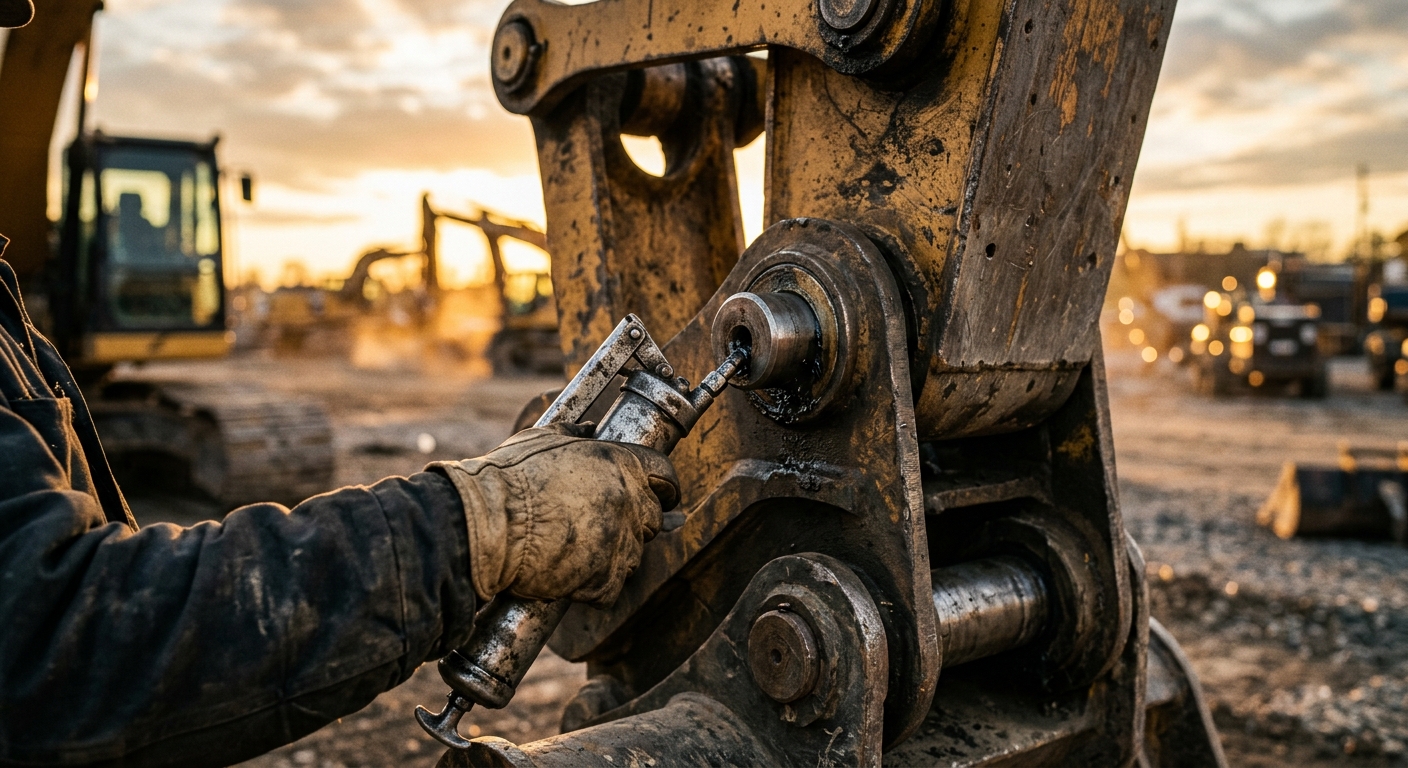
Grease the joint with the correct lubricant and procedure for that machine. That means the correct grease type, the right service interval, and the machine positioned as recommended so grease can distribute properly. Some joints grease best when the frames are straight. Others require articulation or unloading of certain points. Check the manufacturer procedure and do not wing it.
The point of greasing is not just stuffing lubricant in until the gun feels heavy. Watch what purges out. Clean purge is good. Dirty, watery, or metallic purge means the joint may already be dealing with contamination or wear.
At routine maintenance inspections
Take the next step beyond basic lubrication:
- verify grease fittings are intact and flowing
- inspect seals closely for tears or displacement
- check retaining bolts, lock plates, and keeper hardware
- look for measurable vertical or horizontal play
- inspect surrounding frame plates and weld areas for cracking
- review operator complaints and prior notes for repeat symptoms
If the machine model has a specified measurement method for articulation play, use it. This is not the place for “looks okay to me” maintenance.
After severe operating conditions
Machines that spend time in deep mud, demolition debris, abrasive fines, or constant shock loading need more attention than the generic schedule suggests. The center joint does not care what the calendar says if contamination or impact has already compromised the seals and grease film.
This is where fleets should adjust intervals based on actual use, not wishful thinking. A loader on a clean yard and a loader living in slurry or blasted rock do not deserve the same assumptions.
Repair versus "run it a little longer"
Every fleet knows the temptation. Production is busy. The machine is still moving. The quote is not cheap. Somebody says, “Let’s keep an eye on it.”
Sometimes that is fine for a cosmetic issue. It is usually stupid for articulation-joint wear.
If the play is still within tolerance and the problem is limited to lubrication neglect or minor seal damage, you may be able to correct course without major repair. But if the joint already has measurable looseness beyond spec, clunking under load, or evidence that the bores and surrounding structure are starting to suffer, continuing to run it is a gamble with bad odds.
Here is the blunt comparison.
- Better chance of staying within normal wear-component replacement
- Less risk of frame and bore damage
- More predictable downtime planning
- Lower chance of secondary tire and steering wear
- Higher chance of machining and structural repair
- More operator complaints and reduced machine control
- Harder-to-schedule downtime when it finally forces the issue
- More total cost hiding behind short-term delay
The best fleets make the repair decision with evidence, not vibes. They track service intervals, record measured movement, capture photos, and compare current condition against the last inspection. That turns “I think it’s worse” into something useful.
How FieldFix helps you stay ahead of joint wear
Center-pin maintenance is exactly the kind of work that gets lost when records are weak. Greasing gets skipped because nobody logged the last service. Operators mention looseness, but the comment lives in a text thread and disappears. A technician notices dirty purge, but there is no place to compare it against the prior inspection. Then the fleet acts surprised when a major center-joint repair lands all at once.
FieldFix helps by giving the joint a service history instead of a guessing contest.
Use it to track:
- lubrication intervals by machine and hours
- recurring operator complaints about steering feel or clunking
- photos of seals, purge condition, and visible wear
- measured articulation play over time
- repair history for pins, bushings, retainers, and machining work
- notes tied to severe operating conditions that justify shorter intervals
That matters because trendlines beat memory. If one machine starts needing grease more frequently, purges dirty every service, or shows a slow increase in movement, you can act before the machine starts destroying more expensive parts.
The real win is control. Instead of waiting for looseness to become obvious to everybody, you catch it when it is only obvious to people paying attention.
Bottom line
The center pin and oscillation joint are not glamorous components, but they quietly decide whether an articulated machine stays tight, predictable, and profitable. Ignore them, and the machine will eventually bill you for it right through the middle.
Inspect the joint visually. Grease it correctly. Measure movement consistently. Log what operators are feeling. And when the evidence says wear is advancing, fix it before the bore and frame become part of the conversation.
Use FieldFix to log articulation-joint inspections, attach photos, track grease intervals, and spot rising play before a bushing job becomes a machining project.