Heavy Equipment Flood Recovery Guide: What to Do After Water Damage
Learn how to inspect, dry, test, and recover heavy equipment after flooding to reduce downtime, prevent hidden damage, and avoid catastrophic failures.
Floodwater is brutal on heavy equipment. Even if a machine looks fine from the outside, water intrusion can wreck wiring, contaminate lubricants, corrode connectors, and turn a quick cleanup into a six-figure mistake if you crank the engine too soon.
- Do not start flood-exposed equipment until it has been fully inspected.
- Engines, hydraulics, axles, gearcases, and fuel systems all need contamination checks.
- Electrical damage often shows up days or weeks later if connectors are not cleaned and dried correctly.
- Fast documentation protects insurance claims and helps prioritize repairs across the fleet.
- A repeatable recovery process can save a machine that would otherwise become a total loss.
Why flood damage gets expensive fast
Flood exposure is not just about wet seats and muddy floors. Heavy equipment is full of systems that depend on clean, dry, sealed conditions. Water breaks that assumption immediately.
The biggest problem is that water damage is usually layered:
- Mechanical damage from contaminated oil, grease, coolant, or fuel
- Electrical damage from corrosion, shorts, and failed sensors
- Hydraulic damage from emulsified fluid and rust inside precision components
- Operational damage from rushed restart attempts
- Financial damage from unplanned downtime and denied warranty or insurance disputes
can turn a recoverable inspection job into a full engine or hydraulic teardown.
is often enough time for corrosion to begin spreading through wet electrical connections.
needs to be treated as suspect after submersion or high-water exposure.
A machine that sat in clean rainwater up to the bottom of the frame is a very different case than one that was submerged in muddy, debris-filled floodwater. Silt, chemicals, sewage, and organic debris all increase the risk. Dirty floodwater is especially nasty because even after the machine is dry, residue stays behind and keeps attacking seals, bearings, connectors, and finishes.
What to do in the first 24 hours
The first day matters more than most fleet owners realize. The goal is not to get the machine running fast. The goal is to avoid making the damage worse while creating a clean recovery path.
1. Secure the machine
Move it only if it can be done safely and without powering contaminated systems. If the machine is stuck in a dangerous location, recovery comes before repair, but use the least invasive method possible.
2. Do not start it
This is the part people screw up. Operators want to “see if it still runs.” That impulse is expensive.
If water got into the intake, cylinders, crankcase, transmission, final drives, hydraulic reservoir, or fuel system, startup can cause:
- hydrolock
- bearing damage
- gear damage
- contaminated fluid circulation
- electrical shorting
- sensor and controller failure
3. Document the water line and condition
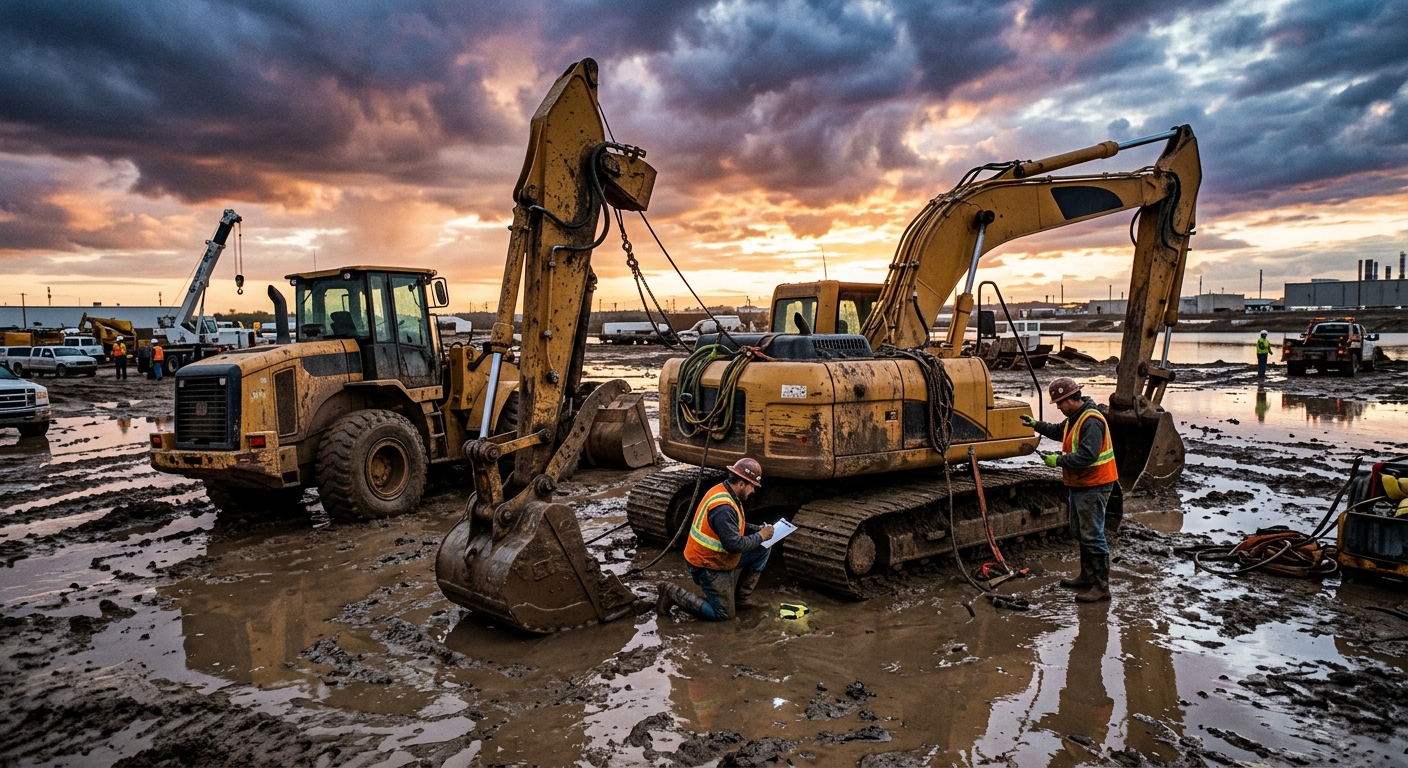
Take photos from all sides. Capture the water line on the cab, frame, engine bay, and compartments. Photograph serial numbers, hour meter readings, warning lights, and any visible debris or contamination.
4. Disconnect battery power if safe to do so
Isolate the electrical system to reduce the chance of shorts and uncontrolled corrosion activity.
5. Begin cleaning before disassembly gets delayed
Pressure washing can help on the exterior, but do not blast water into connectors, breathers, or damaged seals. Start with mud removal around access covers, drains, dipsticks, and service points so your inspection does not pull debris deeper into the machine.
How to inspect each major system
A flood recovery plan works best when it is systematic. Random checking misses hidden failures.
Engine system
Start with the air intake path, turbo inlet, intercooler plumbing, exhaust side, and engine oil.
Check for:
- water in the air filter housing
- mud or residue in intake tubing
- milky or overfull engine oil
- rust on exposed internal surfaces
- signs that water entered the cylinders
If there is any evidence of water intrusion, pull the oil and sample it. Depending on severity, you may need to remove injectors or glow plugs and rotate the engine by hand before any restart attempt.
Fuel system
Fuel tanks breathe, and floodwater finds weak points.
Inspect:
- tank vents
- fuel caps and seals
- water separators
- primary and secondary fuel filters
- fuel samples from the tank bottom
Even small amounts of water in diesel can create injector damage, microbial growth, and repeat no-start issues later.
Hydraulic system
Hydraulic systems hate contamination. Water reduces lubrication quality, promotes corrosion, and damages pumps, motors, valves, and cylinders.
Look for:
- cloudy or milky hydraulic oil
- water droplets in sight glass or sample jars
- breached breathers or caps
- wet electronic valve connectors
- sludge in reservoir bottoms
If contamination is confirmed, a simple top-off will not save you. You are looking at drain, flush, filter replacement, and in severe cases deeper component cleaning.
- Water stayed below critical vent and fill points
- No fluid contamination found
- Electrical enclosures remained dry
- Machine was cleaned quickly
- Milky fluids in multiple compartments
- Cab electronics were submerged
- Silt packed into harnesses and valves
- Saltwater or sewage exposure occurred
Drivetrain, axles, and gearcases
Any sealed compartment with a breather is vulnerable. Open inspection plugs, sample lubricants, and look for discoloration or overfill from water intrusion. Bearings and gears may survive if contamination is caught early, but not if the machine keeps working on emulsified lubricant.
Electrical system
This is where flood damage becomes sneaky.
Modern heavy equipment depends on controllers, sensors, relays, displays, telematics hardware, and CAN communication. A connector that looks okay today can corrode internally and fail next week.
Inspect and service:
- battery cables and grounds
- fuse panels and relay boxes
- cab displays and switches
- ECM and controller housings
- sensor plugs and harness routing points
- telematics or GPS hardware
Use proper electrical contact cleaner, dry compressed air where appropriate, and dielectric protection only after connectors are fully dry and clean.
Cab and operator environment
Cab recovery matters too. Wet insulation, seat foam, and HVAC ducting can create mold, odor, and ongoing electrical issues.
Inspect the cab for:
- moisture under floor mats
- soaked seat bases
- wet control pods and joysticks
- contaminated HVAC ducts and filters
- safety label damage
- compromised cameras or displays
If the operator environment stays damp, you are not done.
When recovery makes sense versus replacement
Not every flooded machine should be saved. The right decision depends on water depth, contamination type, machine value, replacement lead times, insurance coverage, and how critical the unit is to operations.
A recovery usually makes sense when:
- floodwater stayed below major electronic modules
- contamination was limited and caught quickly
- the machine has strong replacement value
- repair documentation is solid
- you can complete fluid, filter, and electrical remediation properly
Replacement or total-loss treatment becomes more likely when:
- full submersion occurred
- saltwater exposure happened
- major controllers and displays were underwater
- multiple compartments show contamination
- the repair estimate approaches market value
A practical decision rule
If the machine needs major fluid recovery, harness work, controller replacement, and cab teardown, run the math before emotion takes over. Sentiment is not a maintenance strategy.
How to document damage for insurance
Insurance claims go smoother when your documentation looks like it came from an organized operator, not a panicked guess.
Build a flood recovery file for each machine with:
- unit ID, make, model, serial number, and hours
- date and time of flood exposure
- estimated water depth
- photos before cleanup and during teardown
- fluid sample notes
- technician inspection notes
- parts replaced
- downtime days
- contractor or dealer estimates
The more structured the record, the easier it is to prove severity and justify either repairs or total-loss decisions.
How to reduce the next flood hit
You cannot stop storms, but you can stop chaos.
The best fleets create a flood plan before they need one:
Build a machine priority list
Know which units get moved first. Usually that means the highest-value machines, the hardest-to-replace units, or the ones parked in the lowest areas.
Store critical machines with elevation in mind
If a yard floods repeatedly, the answer is not better luck. It is better parking strategy, drainage work, or alternate storage during severe weather windows.
Protect records and keys
Keep titles, insurance information, spare keys, and machine records available digitally and offsite.
Standardize post-flood inspections
Use the same checklist every time so nothing gets skipped under pressure.
Track everything
Every fluid check, sample result, connector repair, filter replacement, and restart approval should be logged.
That matters for three reasons:
- it improves repair quality
- it supports insurance recovery
- it helps you spot repeat failures after the machine returns to work
Final takeaway
Flood recovery is one of those jobs where discipline beats speed. The machines that survive are usually not the lucky ones. They are the ones handled by crews who resisted the urge to “just fire it up” and followed a real inspection process instead.
If floodwater touched your fleet, treat every affected machine like hidden damage is already there. Because half the time, it is.
FieldFix helps fleets document machine condition, track service actions, and build a clean maintenance history that actually stands up when downtime gets expensive.
See how FieldFix helps heavy equipment owners stay ahead of costly failures.