Heavy Equipment Fuel Water Separator Maintenance Guide
Learn how to inspect, drain, and service fuel water separators on heavy equipment to prevent injector damage, hard starts, downtime, and costly repairs.
Key Takeaways
- Water in diesel fuel destroys injectors, corrodes components, and causes hard starts long before a machine fully quits.
- Draining the separator on schedule is cheap insurance compared to a common-rail fuel system repair.
- Many fleets replace fuel filters but ignore the separator bowl until a warning light shows up. That is backwards.
- Condensation, bad bulk storage, loose caps, and contaminated deliveries are the most common causes of repeat water issues.
- A simple inspection and documentation routine makes contamination patterns obvious across the fleet.
Water in diesel fuel is one of those problems crews underestimate until it gets expensive. The machine still starts, mostly. It might stumble a little in the morning. Maybe there is a fuel warning light once in a while. Maybe the operator says it feels soft under load. So the job keeps moving and the warning gets pushed to tomorrow.
That is how a simple drain-and-check task turns into injector damage, pump wear, corrosion, and a machine that suddenly refuses to run when you actually need it.
Fuel water separator maintenance is not glamorous. It will not get bragged about in the yard. But if you run compact equipment, loaders, dozers, excavators, generators, or any diesel-powered support equipment, it deserves a permanent place in your maintenance system.
This guide covers what the separator does, how often to service it, what symptoms matter, and how to stop repeat contamination before it chews through your fuel system budget.
Why water in diesel is such a brutal failure path
Modern diesel fuel systems are not forgiving. High-pressure common-rail systems run with extremely tight tolerances. They depend on clean fuel for lubrication and precision metering. Water does the opposite.
Warning: A little water does not stay a little problem. Once it reaches injectors or the high-pressure pump, repair costs jump fast and contamination can spread through the entire system.
Here is what water does inside a diesel system:
- Reduces lubricity so pumps and injectors wear faster
- Causes corrosion on metal components and electrical sensor contacts
- Promotes microbial growth in tanks, especially in warm, humid conditions
- Triggers rough running and hard starts because water does not combust like fuel
- Creates freeze risk in cold weather, blocking flow and starving the engine
The ugly part is that fuel contamination problems often look like other issues at first. Operators complain about power loss, misfires, or intermittent no-starts. Someone blames the battery. Someone else blames the weather. Meanwhile the separator bowl is half full of water and the machine has been telling you the truth the whole time.
What a fuel water separator actually does
A fuel water separator is designed to remove free water and larger contaminants before they reach sensitive fuel system components. Depending on the machine, it may be a standalone primary filter with a clear bowl, a spin-on separator element, or part of a multi-stage fuel filtration setup.
The separator works by slowing and redirecting fuel flow so heavier water droplets can settle out. Some systems use coalescing media to combine fine droplets into larger ones that fall into the bowl. That collected water must then be drained manually or electronically removed, depending on the design.
Think of the separator as the machine’s first bouncer. If it does its job and you service it on time, the expensive parts deeper in the system stay protected. If you ignore it, all the ugly stuff gets a free pass.
Info: The separator is not just a filter with a different name. Its job is specifically to separate water and contamination before the final fuel filter and injection components take the hit.
Most failures happen because crews confuse three different tasks:
- Draining accumulated water
- Replacing the separator element
- Replacing the secondary or final fuel filter
Those are related jobs, but they are not the same job and they do not always happen at the same interval.
The warning signs operators should never ignore
Separator problems usually announce themselves before a machine fully fails. The issue is that the clues are easy to shrug off.
Watch for these signs:
- Hard starts, especially after the machine sat overnight
- Engine stumble or hesitation under load
- Fuel restriction or water-in-fuel warnings
- White smoke during rough running or failed combustion events
- Frequent filter plugging
- Visible water line or cloudy contamination in a clear separator bowl
- Rust-colored residue, slime, or dark debris in drained fuel
Early symptoms worth acting on
- Intermittent warning light
- Occasional stumble when throttling up
- Small but repeatable amount of water at drain time
- One machine showing worse fuel behavior than the rest
Bad assumptions that cost money
- "It cleared up, so it must be fine"
- "We changed the filter, so the system is handled"
- "It only happens on cold mornings"
- "The tank we got fuel from should be fine"
If the same machine needs water drained repeatedly, the separator is not the root problem. It is just the component reporting the problem. The actual cause is usually tank contamination, poor storage practice, a damaged cap, condensation, or fuel delivered from a questionable source.
Inspection and drain intervals that make sense
Manufacturer guidance wins, always. But in the real world, most small fleets need a simple rule set operators can remember and actually follow.
Practical Service Rhythm for Small Fleets
Daily or pre-op for high-use machines:
- Check for water-in-fuel warning lights
- Inspect clear separator bowls if equipped
- Look for leaks, cracked bowls, or loose drain valves
Weekly:
- Drain any visible water or contamination
- Inspect tank cap seals and surrounding area
- Note fuel source if a machine is showing repeat contamination
Every 250 hours:
- Replace separator element if operating in dirty, wet, or bulk-fuel environments
- Inspect fuel lines and primer components
- Check storage tank practices if multiple units show water
Every 500 hours or per OEM interval:
- Replace separator and secondary fuel filters together when appropriate
- Sample bulk fuel if contamination is recurring
- Review machine history for repeated fuel warnings or cold-start complaints
Pro tip: If your equipment works in seasonal humidity, sits for long stretches, or gets fueled from transfer tanks, tighten the inspection interval. Water problems love idle equipment and sloppy storage.
The separator should be viewed like a monitoring point, not a one-time maintenance item. If a machine repeatedly collects water, that information is incredibly useful. It tells you where to look next.
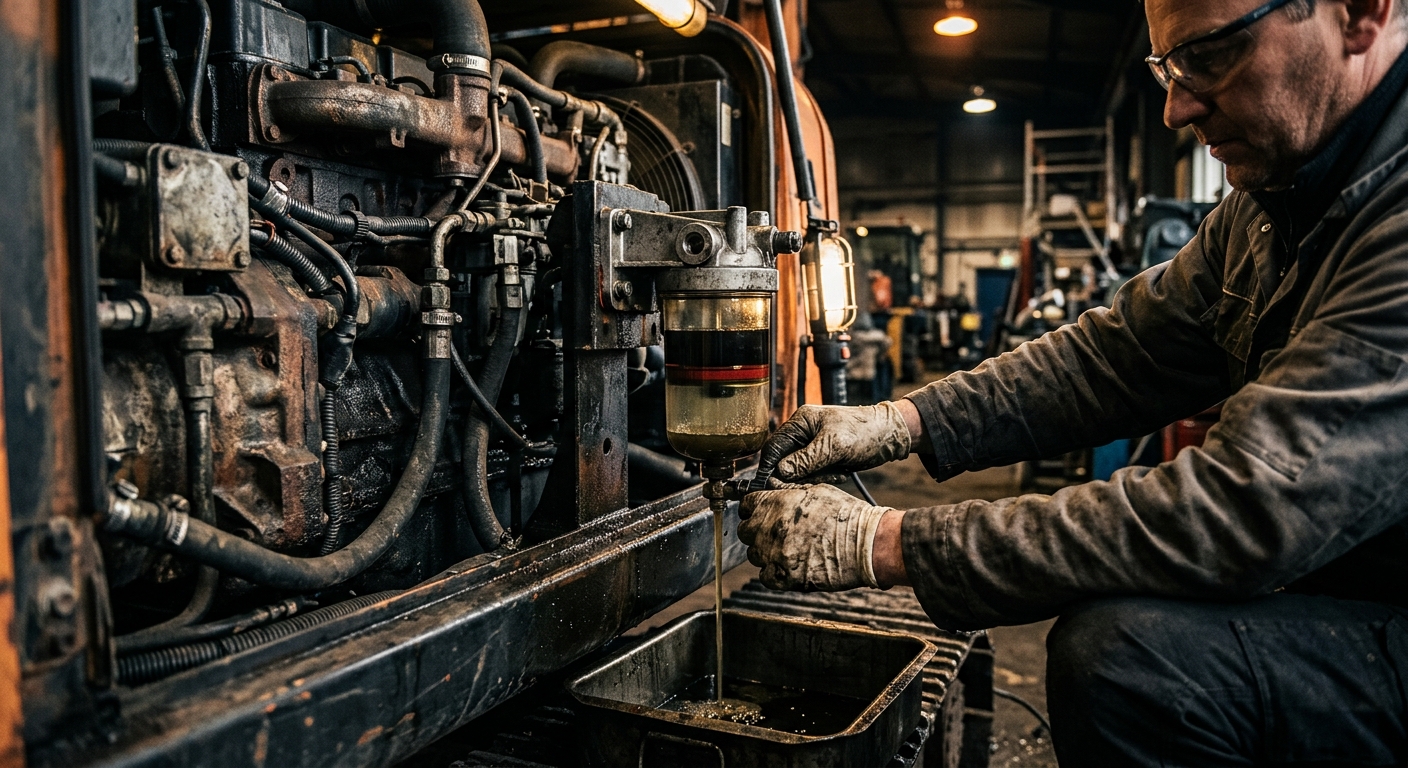
How to drain a separator the right way
Draining the separator is simple, but sloppy technique can create a mess or introduce more contamination.
Basic process:
- Park safely, shut down, and relieve any pressure concerns per the machine manual.
- Clean the area around the separator before opening anything.
- Place a clean container under the drain.
- Open the drain slowly and watch the fluid.
- Drain until the fluid changes from water or mixed contamination to clean fuel.
- Close the drain securely and check for leaks.
- Prime the system if required by the machine design.
- Record what you found, not just that you did the task.
What you are looking for matters:
- Clear water at the start usually means simple accumulation or condensation.
- Milky or cloudy fluid suggests mixed contamination and more turbulence in the system.
- Dark sludge or slime points toward microbial growth or dirty storage.
- Rust flakes or sediment suggest tank or component corrosion.
Danger: Never drain into a filthy open bucket and then assume the sample told you anything useful. If the container is contaminated, your diagnosis is garbage before you start.
If a lot of water comes out, do not stop at “drained separator, back to work.” Check the fuel tank, recent fuel source, and downstream filter condition. Large water volume is a system problem, not a separator success story.
Separator maintenance vs filter replacement
This is where a lot of crews burn money or miss problems. They either replace filters too often without fixing the cause, or they stretch filter intervals while expecting the separator bowl to save them forever.
Good maintenance logic
- Drain water when present
- Replace elements on schedule or when restriction/warnings justify it
- Investigate repeat contamination patterns
- Keep fuel storage practices tied to machine outcomes
Wasteful maintenance logic
- Swap filters every time a machine runs rough without diagnosis
- Ignore the separator until the engine derates
- Assume one clean drain means the root cause is solved
- Never document which fuel source was involved
If your team replaces the secondary filter but never drains the primary separator, you are forcing the expensive, sensitive side of the system to do cleanup work it should never be doing. That is dumb and it gets punished.
Where water contamination really comes from
Separator bowls do not fill with water by magic. The source is usually one of a few repeat offenders:
- Condensation in partially filled tanks
- Poor bulk storage tank maintenance
- Fuel deliveries from contaminated sources
- Missing or damaged filler caps
- Worn seals that let wash water or rain enter
- Transfer tanks left open or handled carelessly
- Long idle periods with temperature swings
If you see water across multiple machines, stop blaming the individual units. Audit the storage tank, delivery process, and fueling routine. The separator is only where the problem shows up first.
A practical contamination response plan
You do not need a giant SOP. You need a repeatable sequence.
When a machine shows meaningful water contamination:
- Drain and inspect the separator
- Photograph the sample if it is abnormal
- Check the tank cap, filler neck, and recent fuel source
- Inspect or replace the separator element as needed
- Check the secondary filter if symptoms continue
- Review whether any sister machines used the same fuel source
- Decide whether the issue is isolated or storage-related
Example: compact track loader with repeat no-start complaints
A contractor keeps replacing batteries on a loader that is hard to start after rainy weekends. The separator bowl finally gets checked and shows recurring water. The actual culprit is a worn fuel cap seal plus an operator habit of parking with a low tank. New cap, tighter fueling routine, separator service, and the problem disappears. The battery was never the story.
Example: multiple machines, same week, same contamination pattern
Two excavators and a generator all show water-in-fuel warnings after a fresh delivery. That is not coincidence. Sampling the storage tank reveals contamination at the source. Catching the pattern early prevents a full week of random filter changes and downtime chasing ghosts.
Field examples from small fleets
Small fleets are actually in a good position here because patterns are easier to spot if someone is paying attention.
One machine that needs frequent draining may point to:
- A damaged cap
- A tank vent issue
- A machine that sits more than the others
- Operator-specific fueling habits
Several machines with the same issue usually point to:
- Shared fuel source problems
- Bulk storage tank contamination
- Weather-related condensation plus poor tank management
- A missed maintenance step in the fueling process
The lesson is simple: separator maintenance is not just a service task. It is diagnostic information. Treat it like that and it becomes one of the cheapest ways to catch a fuel problem early.
Tracking separator service with FieldFix
Separator service should never live only in someone’s head. That is how contamination patterns stay invisible.
With a tool like FieldFix, you can log:
- Machine hours at drain time
- Whether water was present
- How much contamination was found
- Which filter elements were replaced
- What fuel source the machine used
- Photos of abnormal samples or bowl condition
That creates something most fleets do not have: actual evidence. You can see whether one machine is an outlier, whether one crew is repeatedly fueling from a bad source, or whether a storage tank issue is quietly affecting the whole fleet.
Bottom line: A separator drain is not a checkbox. It is a fast condition check for one of the most expensive systems on the machine.
Keep Small Fuel Problems from Turning into Big Repair Bills
FieldFix helps contractors track machine hours, log fuel-system service, document contamination events, and spot repeat maintenance patterns across the fleet. If water-in-fuel issues keep showing up, the answer is not guessing harder. It is tracking the pattern and fixing the source.
Start using FieldFix to organize maintenance history and reduce downtime