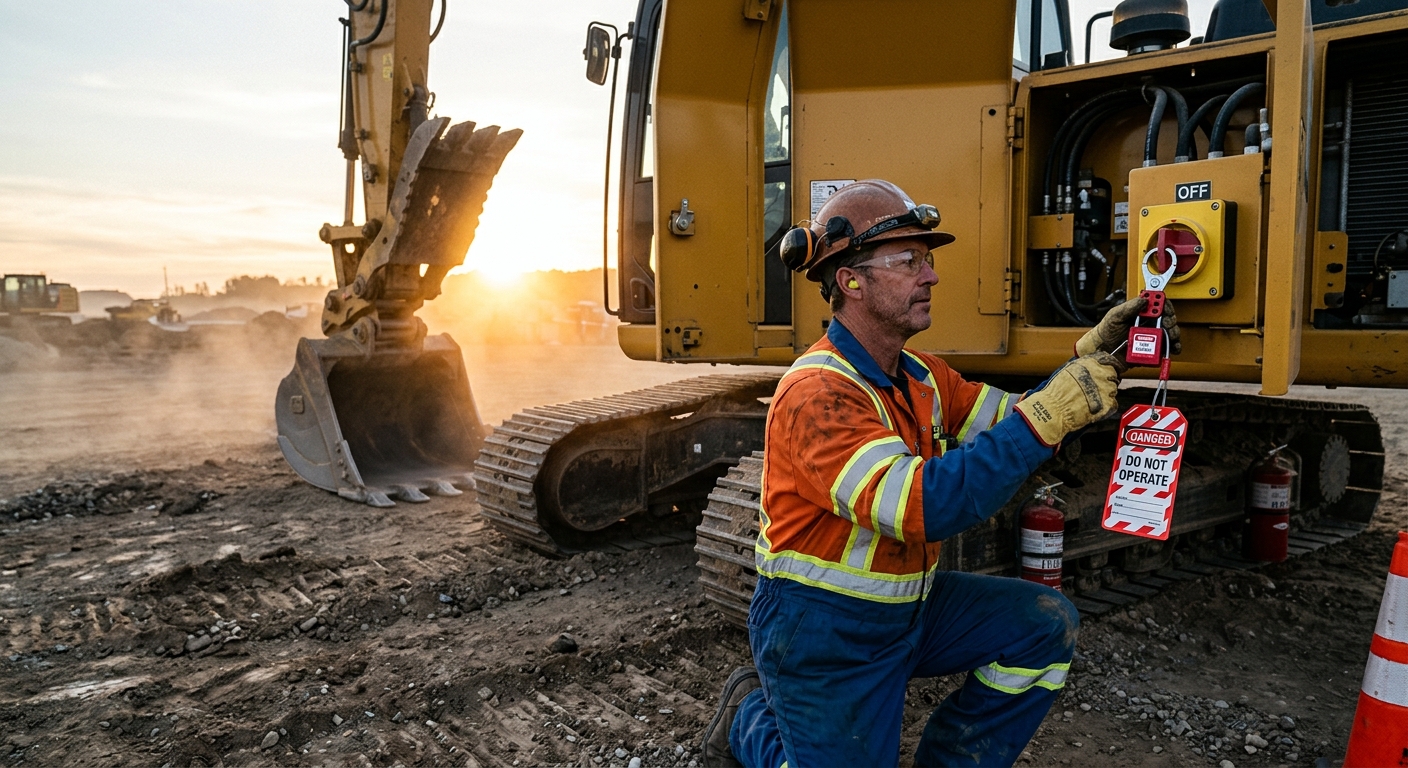
Heavy Equipment Lockout Tagout Guide: How to Control Energy Before Maintenance Starts
Learn how to use lockout tagout for heavy equipment maintenance to prevent startup accidents, control stored energy, and protect technicians in the field.
A surprising number of maintenance injuries happen after the machine is already “off.” That is the trap. Operators shut the key down, somebody assumes the system is dead, and then a bucket settles, a hydraulic function moves, or another person restarts the machine because they think the work is finished.
That is exactly what lockout tagout is meant to prevent.
For contractors, fleet managers, and service techs, heavy equipment lockout tagout is not bureaucratic nonsense. It is a blunt, practical system for controlling hazardous energy before anyone puts hands near moving parts, pressurized lines, suspended attachments, or electrical components.
Why lockout tagout matters on heavy equipment
Heavy equipment is more dangerous than a lot of plant equipment because the energy is layered. You are not just dealing with electricity. You are dealing with hydraulic pressure, gravity, spring force, rotating components, stored heat, batteries, and sometimes attachments that can shift unexpectedly when pressure bleeds off.
A proper lockout tagout process does four jobs:
- It tells everyone the machine is out of service.
- It physically isolates the energy source where possible.
- It controls stored energy that remains after shutdown.
- It verifies the machine cannot restart or move unexpectedly.
can turn a simple repair into a life-changing injury
exist on even a "simple" skid steer or excavator
beats months of downtime, claims, and regret
The contractors who get this right usually have a simple attitude: if a tech has to trust a verbal warning alone, the process is weak.
The energy sources that hurt people
If you want lockout tagout to work, start by identifying what can still hurt someone after the engine is off.
Hydraulic energy
Hydraulic systems are the big one. Pressure can remain trapped in hoses, cylinders, and attachments. A line crack, fitting removal, or control bump can release that energy fast.
Mechanical energy
Fans, belts, shafts, drivetrains, booms, loader arms, and swing systems can still move if they are not blocked, pinned, or lowered to a safe position.
Gravity
Gravity is undefeated. Raised buckets, blades, lift arms, dump bodies, and booms need physical support or a fully lowered position. If the only thing holding weight is hydraulic pressure, that is not safe.
Electrical energy
Batteries, starter circuits, alternators, accessory systems, and control modules can create arc, shock, or unintended startup risk.
Thermal and pressure hazards
Hot coolant, pressurized caps, exhaust components, and fuel systems deserve their own respect. Plenty of injuries come from opening a hot system too soon.
The core lockout tagout steps
A good heavy equipment lockout tagout procedure is not complicated, but it does need discipline.
1. Prepare for shutdown
Before touching the machine, identify:
- The maintenance task
- The energy sources involved
- The proper shutdown sequence
- The lockout points available
- The tools, blocks, pins, or stands required
If the job involves a raised component, get the support method ready before you begin.
2. Shut the machine down normally
Park on stable ground. Set the parking brake. Lower attachments if possible. Bring engine speed down and turn the unit off using the normal procedure.
This step matters because emergency-style shutdowns can leave systems in awkward or unstable positions.
3. Isolate the energy source
Depending on the machine, that may include:
- Removing the key
- Disconnecting the battery or using a battery disconnect
- Engaging service locks or articulation locks
- Applying boom locks, lift arm supports, or body props
- Closing valves or isolating hydraulic attachments
The goal is to make startup or movement physically harder, not just socially discouraged.
4. Apply lock and tag
Use a lock that identifies the person doing the work. The tag should say who locked it out and why. On a multi-person repair, each person needs their own lock or a controlled group lockout method.
No lockout system should rely on “everybody knows I’m under it.”
5. Relieve or block stored energy
This is where people get lazy and where accidents happen.
You may need to:
- Cycle controls to relieve residual hydraulic pressure
- Lower attachments fully onto the ground
- Install mechanical supports
- Chock wheels or tracks if movement is possible
- Wait for hot systems to cool
- Bleed pressure cautiously using the correct procedure
- Key off, no lock
- Bucket still raised
- Pressure not relieved
- Another worker can restart it
- Energy sources identified
- Machine physically isolated
- Stored energy relieved or blocked
- Responsible person clearly tagged
6. Verify zero-energy state
Try the controls. Attempt startup with the lockout still in place if appropriate. Confirm the machine does not crank, move, or actuate.
Verification is the part that separates procedure from theater.
7. Perform the work and control re-energization
When the job is done, inspect the area, reinstall guards, confirm people are clear, remove tools, and only then remove locks according to your company procedure.
How field procedures differ from shop procedures
In a shop, you usually have better footing, more tools, and a more controlled environment. In the field, the risks get uglier fast.
Field service often means mud, slope, traffic, weather, poor lighting, and jobsite pressure. That changes how lockout tagout should be handled.
In the field, pay extra attention to:
- Ground stability before jacking, blocking, or crawling under anything
- Visibility so another operator does not try to move the machine
- Wheel chocks and attachment support on uneven terrain
- Communication when multiple crews are nearby
- Whether the repair should even happen on-site
A hard truth: some repairs should be deferred until the machine is on level ground or back at the shop. If the work zone makes safe energy isolation sketchy, forcing the repair is a dumb way to save an hour.
Common mistakes that cause close calls
Most lockout failures are not caused by ignorance. They are caused by shortcuts.
Assuming the operator’s word is enough
“I shut it off” is not a safety system.
Trusting hydraulics to hold a load
If a boom, bed, or lift arm can fall, it eventually will if you give it enough time.
Skipping group lockout rules
When two or three people touch the same machine, everyone needs positive control over re-energization.
Forgetting attachments
A machine may be isolated while the attachment still has stored pressure, mechanical spring force, or suspended weight.
Working around the lockout because production is yelling
This one is common and stupid. A rushed unsafe repair is how you turn a routine service issue into an OSHA recordable or worse.
How to build a repeatable company program
If you manage more than a handful of machines, you need more than tribal knowledge.
A usable company lockout tagout program should include:
- Machine-specific procedures for your most common fleet units
- Standard lock, tag, and support hardware
- Rules for field service versus shop service
- Group lockout steps
- Training for operators, techs, and supervisors
- Documentation of incidents, near misses, and updates
The best programs are boring in the best way. Same kit. Same sequence. Same expectations every time.
If you are small, keep it simple. A one-page machine shutdown checklist beats a perfect thirty-page binder nobody uses.
Why digital maintenance records matter
Lockout tagout usually breaks down for the same reason maintenance in general breaks down: the process lives in people’s heads.
Digital maintenance records help because they create repeatability. Instead of every foreman or tech inventing a new process, you can tie service tasks to checklists, notes, photos, and safety steps that are easy to review later.
That matters when you need to answer questions like:
- Who performed the repair?
- Was the machine isolated correctly?
- Were support devices used?
- Has this same failure happened before?
- Are certain machines creating repeated high-risk service events?
For growing fleets, this is where software starts earning its keep. If your lockout steps, repair notes, and machine history are scattered across text threads and clipboards, consistency dies fast.
The bottom line
Heavy equipment does not care whether the person working on it is experienced, rushed, tired, or “just taking a quick look.” Hazardous energy is still there whether you respect it or not.
The right lockout tagout process is simple: shut it down, isolate it, block it, tag it, verify it, then work on it. No swagger required. Just discipline.
FieldFix helps you track service history, standardize procedures, and keep machine records in one place so critical maintenance steps do not disappear into someone's memory. See how FieldFix works.