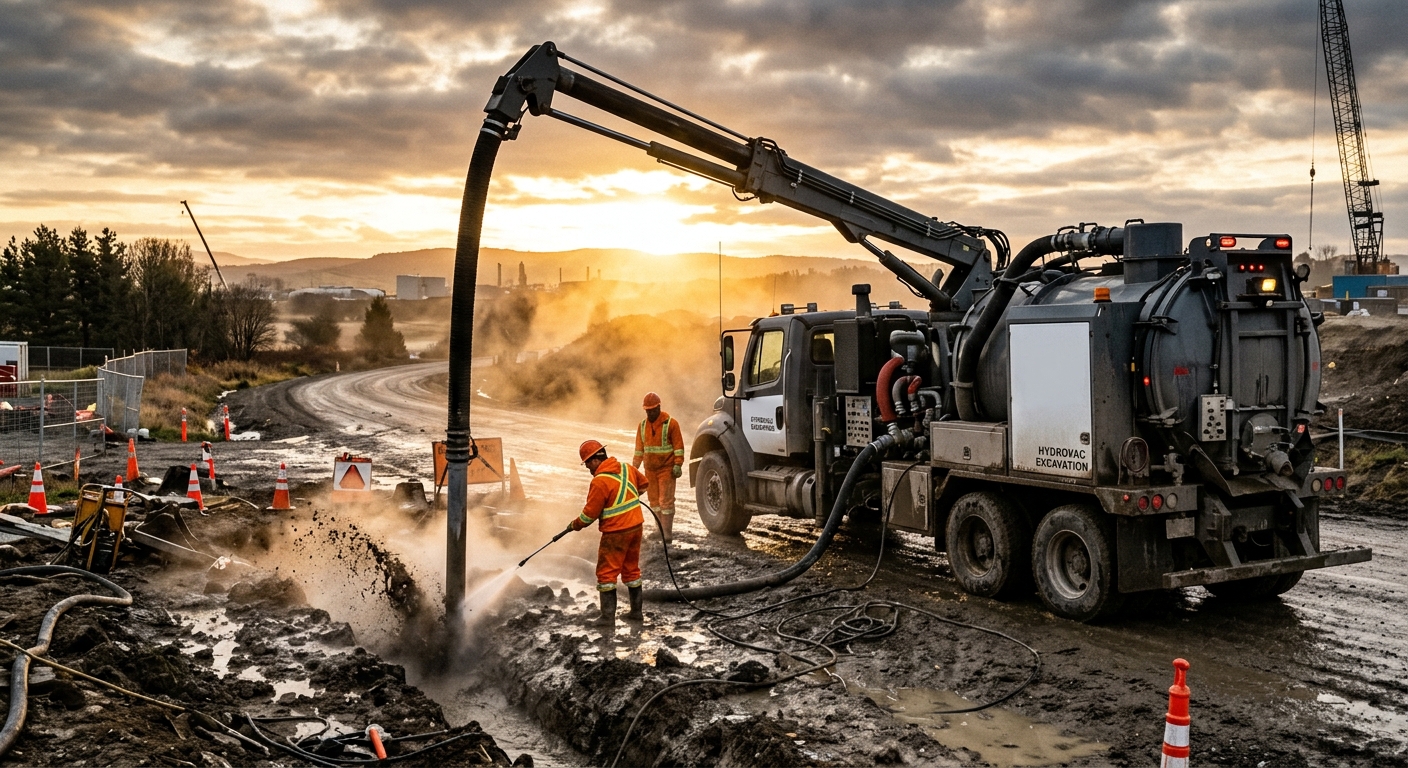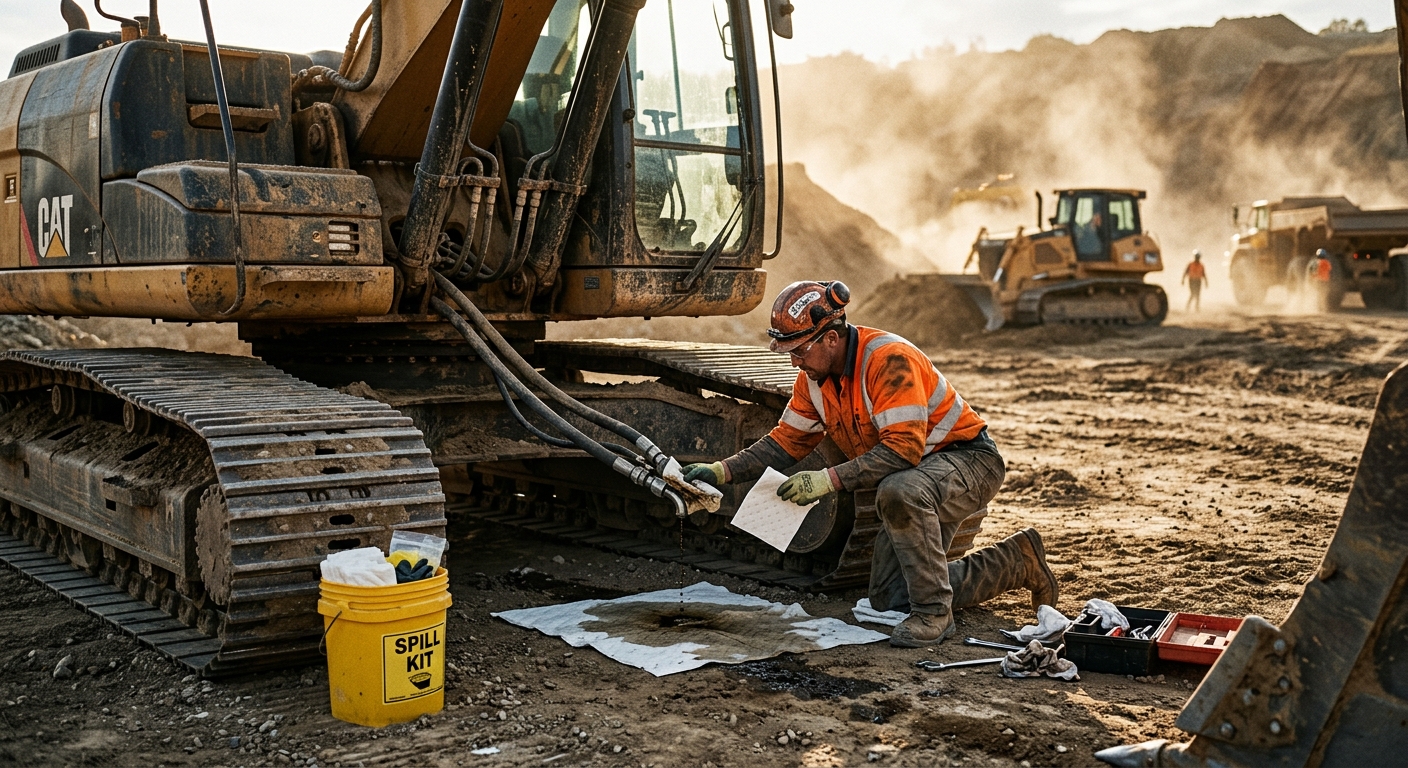
Heavy Equipment Spill Kit & Fluid Leak Response Guide
Learn how to handle heavy equipment fluid leaks fast with the right spill kit, response steps, training, and documentation to reduce downtime and risk.
Heavy equipment leaks are not rare. They are normal enough that every fleet should expect them, but serious enough that no crew should improvise when one happens.
A pinhole in a hydraulic hose. A rubbed-through fuel line. A loose drain plug after service. A cracked coolant reservoir on a rough haul. Most leaks start small. The damage usually comes from the response, or the lack of one.
If your crew has to ask, “Where are the absorbent pads?” or “Who has the shutoff plugs?” while fluid is spreading across a jobsite, the system is already broken.
The good news is this does not require a corporate safety department or an expensive environmental consultant. A practical spill response setup for a small equipment fleet can be simple, affordable, and easy to maintain—as long as someone owns it.
Why spill response matters
Most owners think about leaks in terms of repair cost. That matters, but it is only one slice of the problem.
A leak response plan protects more than the machine:
- It reduces slip hazards around the equipment.
- It protects soil, stone, pavement, and drainage areas from contamination.
- It limits the amount of product lost before shutdown.
- It gives operators confidence instead of panic.
- It creates better maintenance data for the next repair decision.
There is also a credibility piece here. Customers notice whether a crew works clean. A contractor who responds fast, contains the leak, and documents the repair looks organized. A crew that leaves stained gravel and oily cardboard behind looks sloppy.
The most common fluid leaks in the field
Different fleets see different failure patterns, but a few leak sources show up again and again.
1. Hydraulic leaks
Hydraulic systems live under pressure, vibration, heat, and constant movement. Common causes include hose abrasion, loose fittings, aged seals, damaged quick couplers, and impact near exposed lines.
Hydraulic oil spreads fast and can be hard to fully clean from dirt or aggregate. It also tends to show up in high-use machines that operators do not want to pull off a job, which makes bad decisions more likely.
2. Fuel leaks
Diesel leaks often come from cracked lines, bad clamps, worn primer bulbs, tank damage, or sloppy refueling connections. Even a slow drip matters. It creates a fire risk, a contamination issue, and a direct cost every hour the leak is ignored.
3. Coolant leaks
Coolant leaks may seem less dramatic, but they can take a machine down just as fast. Failed hoses, clamps, water pumps, surge tanks, and radiator damage can all trigger overheating and secondary engine risk.
4. Final drive, axle, and gear oil leaks
These usually develop more slowly, which is exactly why they get ignored. By the time someone acts, contamination, bearing wear, or low-fluid damage may already be underway.
5. DEF and other support-fluid leaks
Even when the fluid itself is less hazardous than fuel or oil, a leak still creates downtime, cleanup, and a maintenance event that should not be brushed off.
What to put in a real spill kit
A lot of crews technically have a spill kit. It is usually a torn plastic tote with three old pads, one glove, and a mystery sock that has been soaked by rain since last fall. That is not a spill kit. That is wishful thinking.
A useful heavy equipment spill kit should match your fleet, fluid volume, and work environment. Start with these basics.
Core absorbent materials
- Absorbent pads for quick placement under drips and active leaks
- Absorbent socks or booms to contain spread around the machine
- Granular absorbent for pavement, shop floors, or tight cleanup areas
- Heavy-duty disposal bags for used material
PPE and safety gear
- Nitrile gloves
- Safety glasses
- Disposable coveralls or at least arm protection for messy hydraulic cleanup
- Small caution cones or hazard markers if the jobsite has vehicle or foot traffic nearby
Leak control tools
- Drain pan or collapsible catch basin
- Rubber plugs or leak-stopping putty for temporary containment
- Zip ties or straps for securing a damaged hose out of the way after shutdown
- Rags or shop towels for controlled cleanup
- Flashlight or headlamp for low-light inspections
Documentation tools
- Waterproof incident sheet or checklist
- Permanent marker
- QR code or printed instructions linking to your internal leak-response SOP
- Phone mount card reminding the operator to photograph the source, spread area, and machine hours
Support items crews forget
- Small shovel or scoop for contaminated absorbent
- Secondary bucket with lid
- Spare gloves
- Spare trash bags
- Label tags for waste material
What works
- Dedicated spill kits in every primary machine and service truck
- Simple restock checklist after every use
- Bright, easy-to-spot container location
- Standardized kit layout across the fleet
What fails
- One shared kit stored back at the shop
- Loose supplies scattered through side boxes
- No ownership for refill and inspection
- Operators guessing what product to use first
For most small to midsize fleets, a smart setup is one compact kit in each machine plus a larger replenishment kit in the service truck or fuel truck. The machine kit handles immediate containment. The truck kit handles backup supply and deeper cleanup.
What to do in the first 15 minutes
When a leak is discovered, the crew needs a repeatable sequence. Not a debate. Not a scavenger hunt.
Here is the practical order of operations.
1. Stop the machine safely
Shut the equipment down as soon as it is safe to do so. Do not keep running the machine “just to finish this pass” if fluid is actively leaking.
2. Identify the fluid
Determine whether it is hydraulic oil, engine oil, diesel, coolant, gear oil, or another fluid. This affects cleanup, repair urgency, and how the crew contains the spill.
3. Control the source if possible
If a valve can be isolated or the damaged area can be positioned to reduce flow, do that. The goal is to stop more fluid from escaping before the cleanup area grows.
4. Contain the spread
Use socks, pads, or booms around the leak perimeter first. A common mistake is wiping the center while the spill keeps spreading outward.
5. Protect drains, water paths, and sensitive areas
If the leak is near a storm drain, culvert, drainage ditch, or finished hardscape, prioritize protection immediately. Direction matters. So does slope.
6. Notify the right person
The operator should know exactly who to contact: foreman, service manager, owner, or lead mechanic. Delay here creates confusion later.
7. Photograph and document
Take clear photos before the repair begins. Get wide shots and close-ups. Record machine ID, hours, fluid type, location, and suspected source.
8. Decide: field repair, tow, or service dispatch
Not every leak is a field fix. Some are. Some absolutely are not. A good response plan makes that decision faster.
Example: hydraulic hose rub-through on a skid steer
An operator notices a thin spray under load while running a grapple. He shuts down, drops the attachment, places pads beneath the leak, and uses absorbent socks to stop spread downhill. He photographs the hose abrasion point, records machine hours, and calls the service lead. Because the hose routing issue is obvious, the repair includes both hose replacement and added abrasion protection. Result: 45 minutes of disruption instead of a half-day mess and a repeat failure next week.
How to train operators and techs
You do not need a long classroom session to improve leak response. You need clarity, repetition, and ownership.
A good training standard for a field crew can be built around five questions:
- How do I spot the leak early?
- What is the first safe shutdown step for this machine?
- Where is the spill kit?
- Who do I call?
- What photos and notes do I capture before repair?
That is it. If every operator can answer those five things without hesitation, your response time improves immediately.
Keep training visual
Use photos from your own fleet. Show examples of hose abrasion, fitting seepage, puddling under parked equipment, atomized hydraulic mist, and coolant residue trails. Generic training slides are forgettable. Real machine examples stick.
Practice with the actual kit
Open the kit during tailgate meetings. Make operators handle the socks, pads, drain pan, and disposal bags. If the first time they touch the kit is during an actual leak, the training did not happen.
Assign ownership
Every spill kit needs an owner. Usually that means:
- Operator checks condition weekly
- Foreman verifies presence on site
- Mechanic or fleet lead restocks after use
Without ownership, kits silently degrade.
Documentation and root-cause follow-up
Cleanup is not the end. If you stop at cleanup, you miss the reason the leak happened.
Every leak event should produce a short maintenance record with:
- Date and time
- Machine ID
- Hour meter reading
- Fluid type
- Location of leak
- Suspected failed component
- Photos
- Temporary containment used
- Repair completed
- Root cause category
Useful root cause categories include:
- Wear and age
- Abrasion or routing issue
- Loose fitting or incorrect torque
- Impact damage
- Missed inspection item
- Service error
- Unknown pending teardown
This is where patterns start showing up. Maybe one machine repeatedly eats return hoses near a clamp point. Maybe a fuel truck nozzle is damaging filler necks. Maybe a certain operator keeps reporting issues late instead of early. Data makes those patterns visible.
Example: repeated coolant leaks after transport
A fleet logs three coolant-related incidents across two machines within six weeks. Documentation shows all three occurred after highway transport. Photos reveal support brackets loosening and hose chafe worsening after repeated vibration. The fix is not just replacing hoses. It is checking mounting points and adding transport-focused inspection items before dispatch. That is the kind of lesson you miss when leak incidents never get documented.
Mistakes that cost crews time and money
Most spill-response failures are not dramatic. They are dumb little misses that compound fast.
Mistake 1: No kit in the machine
If the first response supply is in a truck parked 20 minutes away, you do not have a response plan.
Mistake 2: Fixing before documenting
Crews rush into repair mode and forget photos, meter hours, or failure notes. Then nobody can learn from the incident later.
Mistake 3: Cleaning the visible mess but ignoring contamination spread
Fluid follows slope, tire tread, boots, and track movement. If you only clean the obvious puddle, you may leave a wider problem behind.
Mistake 4: Treating seepage like an emergency—or emergencies like seepage
Not every damp fitting is a shutdown event. But not every active leak is “good enough until tonight” either. The team needs clear thresholds.
Mistake 5: Never restocking the kit
A used spill kit that was never replenished is worse than an empty one, because everyone assumes it is ready.
A simple rollout checklist
If your leak response process is messy right now, do not overbuild it. Start with this:
- Standardize one spill kit layout for the whole fleet.
- Put one kit in every primary machine and service truck.
- Create a one-page SOP for first-response steps.
- Add a photo/documentation checklist.
- Train operators in a 15-minute field demo.
- Assign restock ownership.
- Review every leak event for root cause, not just repair completion.
That alone puts you ahead of most small fleets.
The real goal is not perfection. It is response speed and consistency. Because when a leak happens, your crew will fall back to whatever system already exists. If that system is vague, slow, or half-stocked, the leak gets bigger than it needed to be.
A clean fleet is not a fleet with zero failures. It is a fleet that catches problems early, responds fast, and learns from every incident.
Want tighter maintenance records across your fleet?
FieldFix helps equipment owners track inspections, document failures, log repairs, and spot recurring problems before they become expensive habits. If you want cleaner maintenance history and faster field decisions, FieldFix gives your crew one place to keep it all straight.