Heavy Equipment Pins and Bushings Maintenance Guide
Learn how to inspect, grease, measure, and replace worn pins and bushings before slop, cracking, and expensive structural damage hit your fleet.
Heavy equipment owners love talking about engines, hydraulics, and undercarriages. Fair enough, those are expensive. But a shocking amount of lost performance starts somewhere less glamorous: worn pins and bushings.
On excavators, loaders, backhoes, skid steers, and attachments, pins and bushings sit at the pivot points that do the real work. They absorb shock, carry load, and allow controlled movement. When they are tight and lubricated, the machine feels precise. When they are dry and worn, everything gets sloppy fast.
This is one of those maintenance categories that separates disciplined fleets from chaotic ones. Ignore it, and you eventually pay for line boring, welding, attachment damage, and structural repairs. Stay ahead of it, and you protect accuracy, safety, and resale value.
Why pins and bushings matter
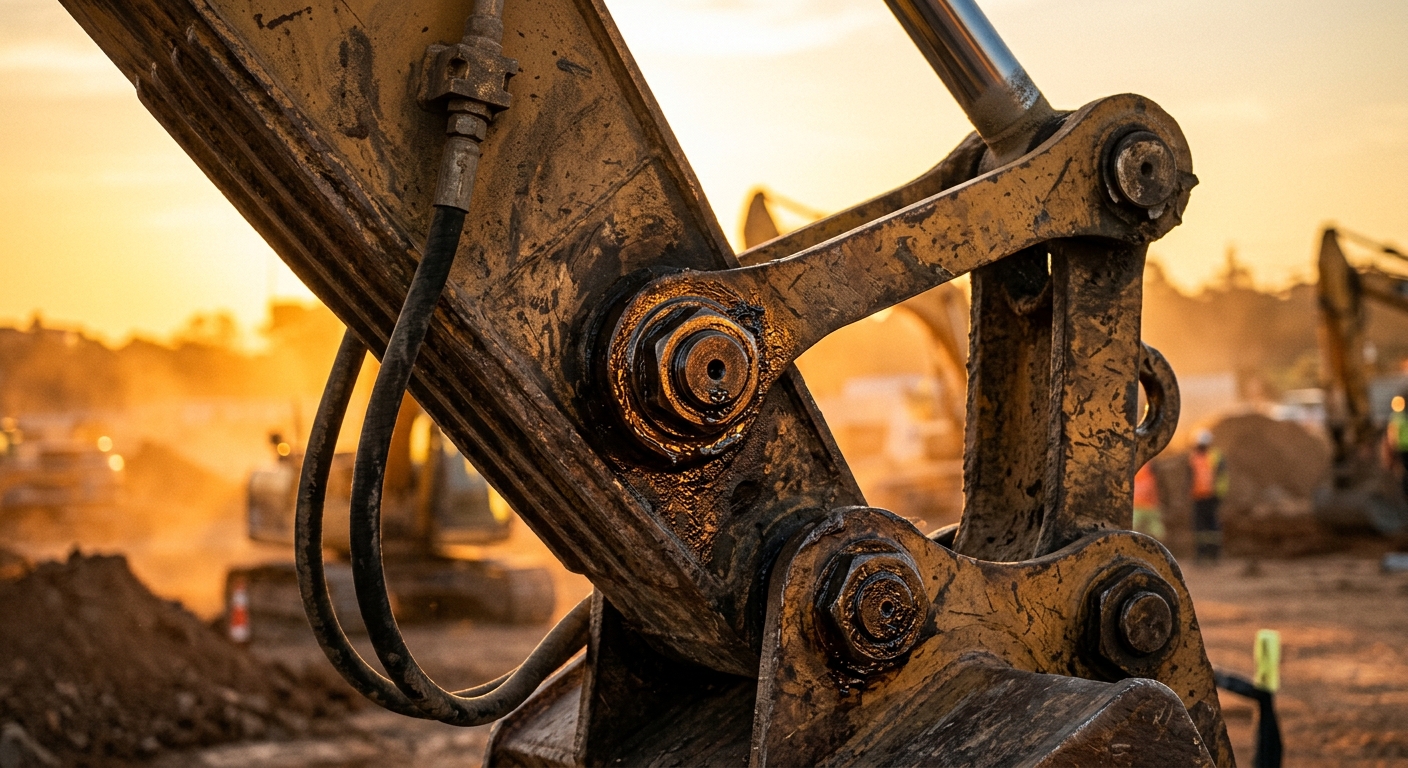
Pins and bushings control movement at joints. Think bucket linkage, boom-to-stick pivots, quick couplers, lift arms, tilt cylinders, and attachment connection points. The pin is the shaft. The bushing is the sacrificial wear surface around it. The entire system is designed so the cheaper part wears first.
That last sentence matters.
A healthy wear system protects expensive structures. A neglected one destroys them.
When a pivot point loses lubrication or operates with contamination packed inside it, the metal surfaces stop moving the way they were designed to. Wear accelerates. Clearances open up. Load shifts unevenly. Instead of smooth rotation, you get impact, chatter, and side loading.
Operators feel this before managers see it in a spreadsheet. The bucket will start to feel loose. Fine grading gets harder. Couplers may clunk during movement. Attachments stop sitting as square as they should. A machine that was crisp becomes vague.
That vagueness costs money in three ways:
- More time to do the same work.
- More wear on surrounding components.
- More risk of structural damage if the joint keeps running loose.
Where wear shows up first
Different machines have different weak spots, but some pivot points get abused more than others.
Common high-wear locations include:
- Bucket to linkage connection points
- Boom foot and stick pivots on excavators
- Loader arm pivots on compact track loaders and wheel loaders
- Quick coupler interfaces
- Tilt linkages and bell cranks
- Attachment ears on hammers, grapples, compactors, and mulchers
- Backhoe swing and dipper pivots
Why these spots? Because they see constant cycling, dirty conditions, shock loads, and side loads from imperfect operation.
If operators are prying sideways, slamming attachments, or running dry because grease intervals get skipped, wear speeds up. Mud, sand, and fines make it worse. Contamination basically turns the joint into grinding compound.
- Greasing after washdown or wet work
- Cleaning around zerks before greasing
- Replacing worn bushings before the parent metal wears
- Training operators to avoid side-loading and impact abuse
- Skipped grease intervals
- Pumping fresh grease over packed dirt
- Running oversized or poorly matched attachments
- Ignoring clunking, movement, or ovalized holes
Warning signs operators should never ignore
Most pin and bushing failures do not arrive like a lightning strike. They show up as clues. Good operators notice them. Good fleets document them.
Look for these warning signs:
- Visible movement at a pivot point when the joint changes direction
- Clunking or knocking during bucket curl, lift, or attachment movement
- Uneven wear patterns on pins
- Grease purging out dirty, metallic, or discolored
- Cracked paint around ears or bosses, which often signals movement underneath
- Elongated or egg-shaped holes
- Attachments that no longer sit square
- Reduced control during finish work
- Grease fittings that take grease poorly because the passage is blocked or the joint is already damaged
One of the biggest mistakes fleets make is treating these symptoms like cosmetic annoyances. They are not. A little visible play becomes a lot of impact under load.
A practical inspection process
You do not need a laboratory to catch most wear early. You need consistency.
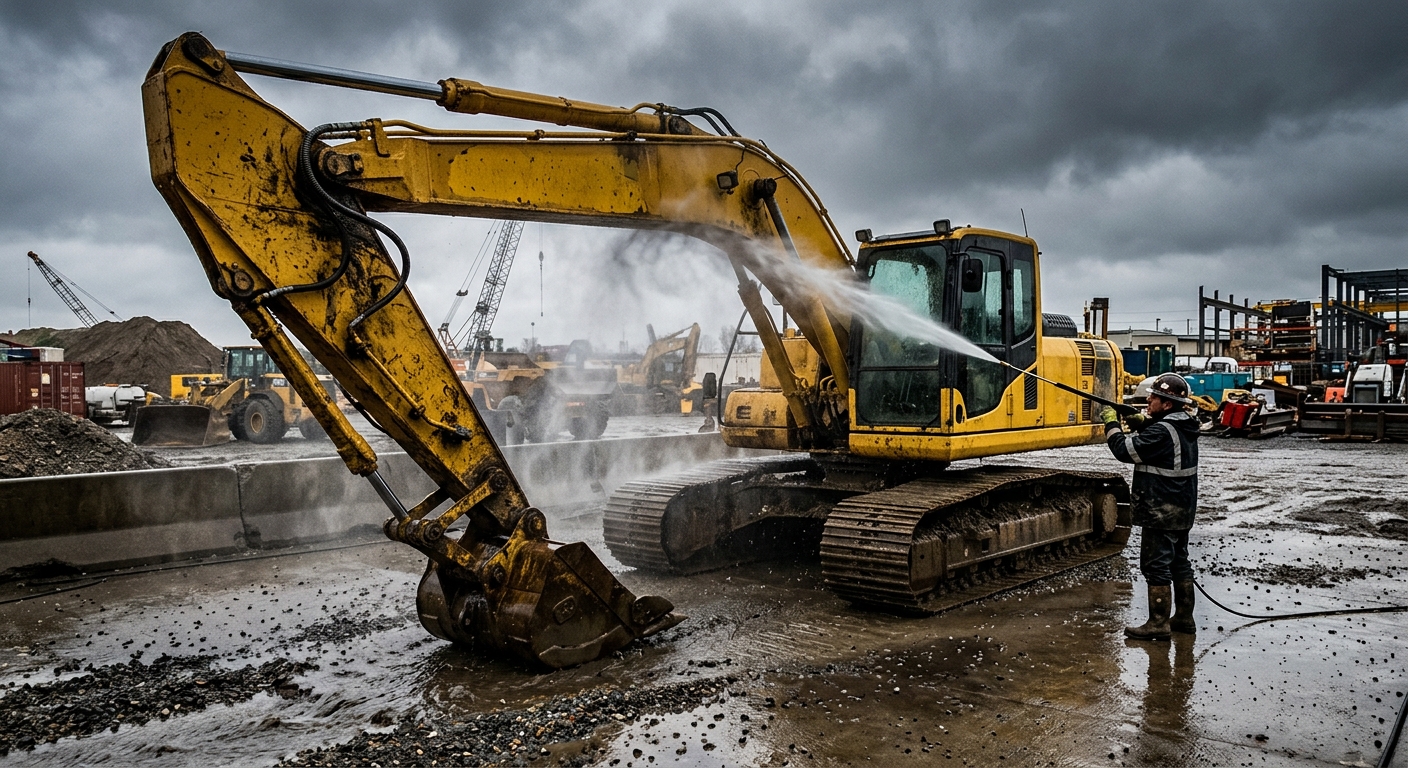
Start with a visual inspection during washdown or daily walkaround. Look for leaking grease, dry joints, rust trails, movement marks, and cracked paint around pivot areas. Then watch the machine cycle through normal movements. If you see the joint hesitate, jump, or knock as direction changes, that is your first red flag.
Next, use a pry bar carefully, with the machine safely supported and following manufacturer procedures, to check for excess movement where appropriate. Measure side-to-side and vertical play if your service manual gives limits. On more disciplined fleets, technicians compare current measurements against previous inspections so wear trends become obvious before failure.
The best process usually looks like this:
- Clean the joint area.
- Inspect grease fittings and purge points.
- Grease the joint properly.
- Cycle the joint.
- Recheck for abnormal movement or dirty purge.
- Measure pin and bore wear if movement looks excessive.
- Log the result in your maintenance system.
If a joint will not take grease, do not shrug and move on. Figure out why. It may be a plugged fitting. It may also be a misaligned passage, hardened contamination, or damage severe enough that grease is no longer flowing through the wear surface the way it should.
This is where documentation matters. If one operator says, “It’s been clunking for weeks,” and nobody logged it, your maintenance process is broken. FieldFix-style recordkeeping exists for exactly this reason: small wear patterns should become visible before they become failures.
When to grease, repair, line-bore, or replace
Not every loose joint needs a full structural repair. But not every loose joint can be saved by another shot of grease either.
Here is the blunt version:
- If the joint is dry but still within wear limits, grease it and monitor closely.
- If the pin or bushing is worn but the bore is still true, replace the wear components.
- If the bore is elongated or the surrounding metal is damaged, you are likely in weld-and-line-bore territory.
- If cracks have formed in the structure, stop treating it like routine maintenance and address it as a serious repair item.
Replacement timing matters more than fleets want to admit. Many crews try to “get one more season” out of loose pins and bushings. That instinct is understandable and usually expensive.
A good shop asks four questions before deciding the repair path:
- Is the wear isolated to replaceable parts?
- Has the bore shape changed?
- Is there damage to the surrounding structure?
- What is the downtime cost if we wait?
If the machine is critical during your busiest season, proactive replacement usually wins. Planned downtime on your schedule beats unplanned downtime on the machine’s schedule. Machines are rude like that.
The cost of waiting too long
Pin and bushing maintenance feels easy to delay because the machine often still runs. That is the trap.
A loose bucket pin does not instantly shut the machine down. Instead, it quietly chips away at precision, then component life, then structure. By the time the bill gets your attention, the original maintenance item is no longer the real problem.
A minor service event might include new pins, new bushings, labor, and grease. A delayed repair can include:
- Machining or line boring
- Welding up worn ears or bosses
- Structural crack repair
- Additional pin kits or coupler parts
- Attachment repair
- Rental replacement while the machine is down
- Missed work or slower production on active jobs
The real cost is not just parts and labor. It is the stack of secondary consequences. Slower finish work. Operator frustration. Extra fuel from repeated corrections. Lower resale because buyers can feel the slop immediately.
That is why disciplined fleets track wear items early. Not because they enjoy maintenance. Because they hate surprise downtime more.
A simple maintenance plan for crews
If you want better pin and bushing life, do not build a heroic maintenance program that nobody follows. Build a simple one that your crew can actually execute.
A practical plan looks like this:
Daily or per shift
- Look for dry joints, fresh movement marks, missing fittings, and obvious play
- Grease according to manufacturer guidance and actual job conditions
- Flag clunking or looseness immediately
Weekly
- Wash and inspect high-wear pivot points more carefully
- Check attachments for square fit and abnormal movement
- Verify grease passages and replace damaged zerks
Every scheduled service interval
- Inspect and document wear at major pivots
- Measure movement if wear is suspected
- Compare with previous service notes
- Decide whether the machine stays in monitor mode or moves into planned repair
Whenever harsh conditions apply
- Increase greasing frequency in wet, abrasive, dusty, or demolition environments
- Inspect more often after operators report impact events or abnormal noises
This is also a training issue. Operators should know that precision loss, clunking, and visible movement are reportable defects, not personality traits of an old machine. Shops should know which pivot points are worth measuring first. Managers should know that waiting for failure is not thrift. It is just deferred spending with worse timing.
Final takeaway
Pins and bushings are classic fleet blind spots because they are small, familiar, and easy to postpone. That is exactly why they deserve more attention.
Take care of them early and they stay cheap. Ignore them and they drag structural repairs, downtime, and resale value down with them.
The winning approach is simple: grease consistently, inspect movement, measure wear, log what you find, and replace sacrificial components before the machine starts wearing parts that were never supposed to be consumable.
That is not glamorous maintenance. It is profitable maintenance.
FieldFix helps you track inspections, log wear issues in the field, and keep maintenance history tied to each machine so small problems get fixed before they become expensive ones.