Heavy Equipment Wash-Down and Corrosion Prevention Guide
Learn how to wash heavy equipment the right way, prevent corrosion, protect resale value, and stop dirt, salt, and moisture from quietly destroying fleets.
A lot of owners treat washing equipment like vanity maintenance. That is backward.
A machine does not need to sparkle for Instagram. It does need to get mud, salt, fertilizer, concrete splatter, mulch dust, and oily grime off its frame before that mess starts trapping moisture and chewing through paint, wiring, fittings, and hardware. Corrosion is slow, boring, and expensive. That combination is exactly why it gets ignored.
The ugly part is that corrosion almost never shows up as one dramatic failure. It shows up as seized pins, crusty battery terminals, damaged connectors, rust creeping under paint, stuck fasteners, weakened steps, bad grounds, ugly hydraulic line brackets, and frames that look a lot older than they should. By the time it is obvious, the damage has been happening for months or years.
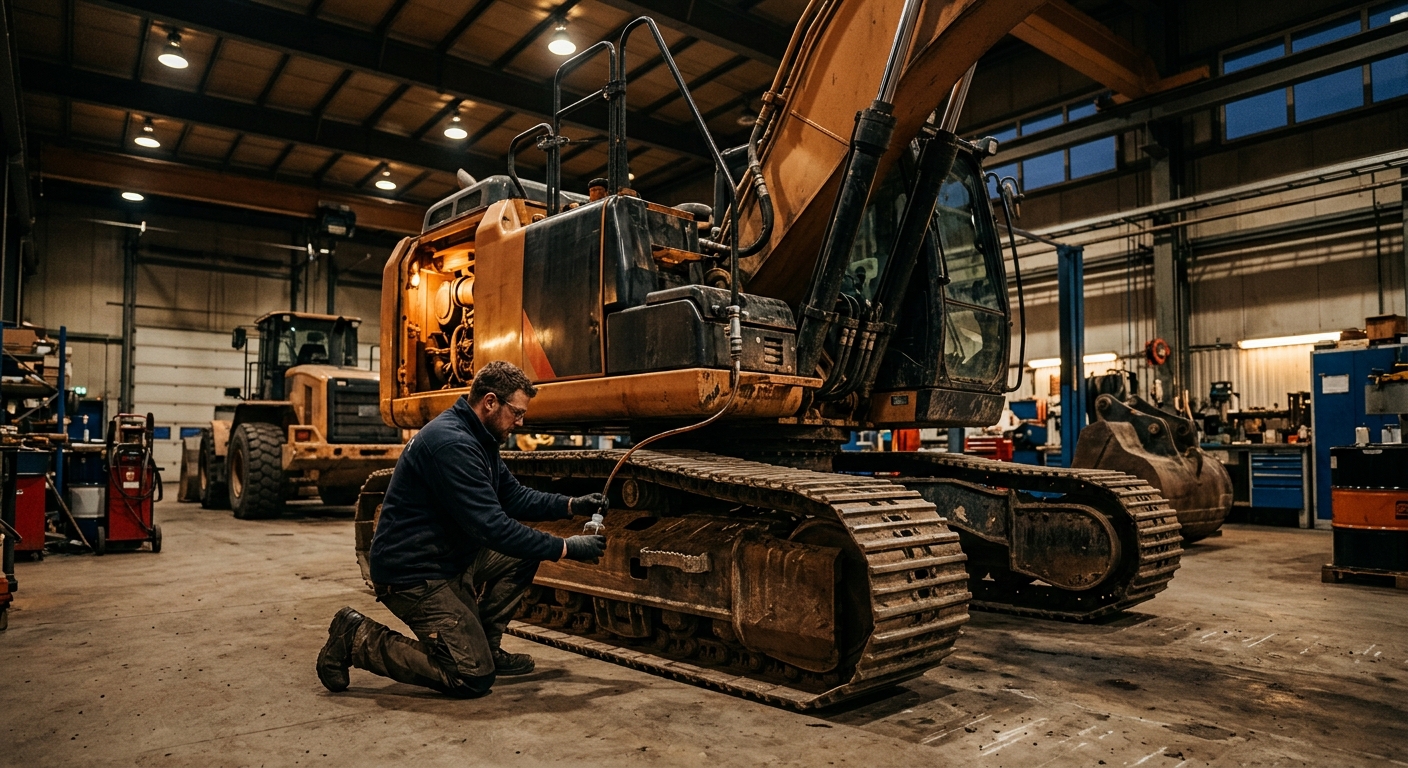
Washing is also inspection time. A clean machine makes leaks easier to find, damaged hoses easier to spot, and cracked welds harder to miss. Dirt hides problems. Clean equipment tells on itself.
Why wash-down matters more than most fleets think
Heavy equipment lives in rough environments. That is normal. What should not be normal is letting grime stay on the machine indefinitely.
Mud holds water. Salt attracts moisture. Organic debris packs into corners and stays wet. Fine dust combines with grease and turns into abrasive sludge. Concrete residue is alkaline and nasty. Fertilizer residues can be brutal. If your machine spends time on winter roads, near coastal environments, around agricultural chemicals, or on muddy jobsites, contamination is not just making it dirty. It is changing the environment right at the surface of the metal.
That matters because most corrosion starts where moisture gets trapped and nobody looks. Behind guards. Under battery boxes. Around steps. On handrails. Inside belly pans. At hose clamps. Around weld seams. At chipped paint edges. Around electrical connectors and grounding points. This is where little cosmetic issues quietly become structural irritation, electrical headaches, and future downtime.
Wash-downs also improve safety. Packed mud on steps and platforms increases slip risk. Dirt around cooling packages hurts airflow. Debris around moving components can hide wear. If your machine is caked in junk, your inspection quality is automatically worse.
What actually causes corrosion on heavy equipment
Corrosion is not random bad luck. It usually needs moisture, oxygen, and some help from contamination or damaged protective coatings.
Paint, powder coat, plating, and surface treatments exist to separate metal from the environment. Once a coating gets chipped, rubbed through, or undercut, corrosion gets an opening. Add moisture and contamination, and the process speeds up.
The main corrosion accelerators in heavy equipment fleets are pretty predictable:
- Road salt and deicing chemicals during transport or winter work
- Fertilizer, manure, and agricultural residues
- Wet clay and packed mud that stay against steel surfaces
- Concrete slurry and cement dust
- Salt air in coastal environments
- Standing water in belly pans, compartments, or boxed sections
- Battery acid or venting around battery trays and terminals
- Mixed metals and bad grounds creating galvanic headaches
- Damaged paint that never gets touched up
Some operators hear “corrosion” and only picture major rust holes. That is too late in the story. The earlier phase is the real killer: light surface rust around chips, white oxidation on aluminum parts, green crust on copper-related electrical connections, rust jacking under brackets, and seized fasteners that turn a simple service into a miserable half-day project.
- Rinsing contaminants off quickly
- Letting machines dry instead of staying packed with mud
- Touching up paint damage early
- Protecting battery areas, electrical connections, and bare metal
- Leaving salt or slurry on the machine for days
- Pressure washing seals and connectors carelessly
- Ignoring chipped paint and exposed metal
- Assuming a dirty machine is just part of the job
How to wash equipment correctly without causing damage
There is a right way to wash a machine, and there is the chaos version where someone blasts water into every seal and connector like they are trying to win a fight against dirt. Do not do the chaos version.
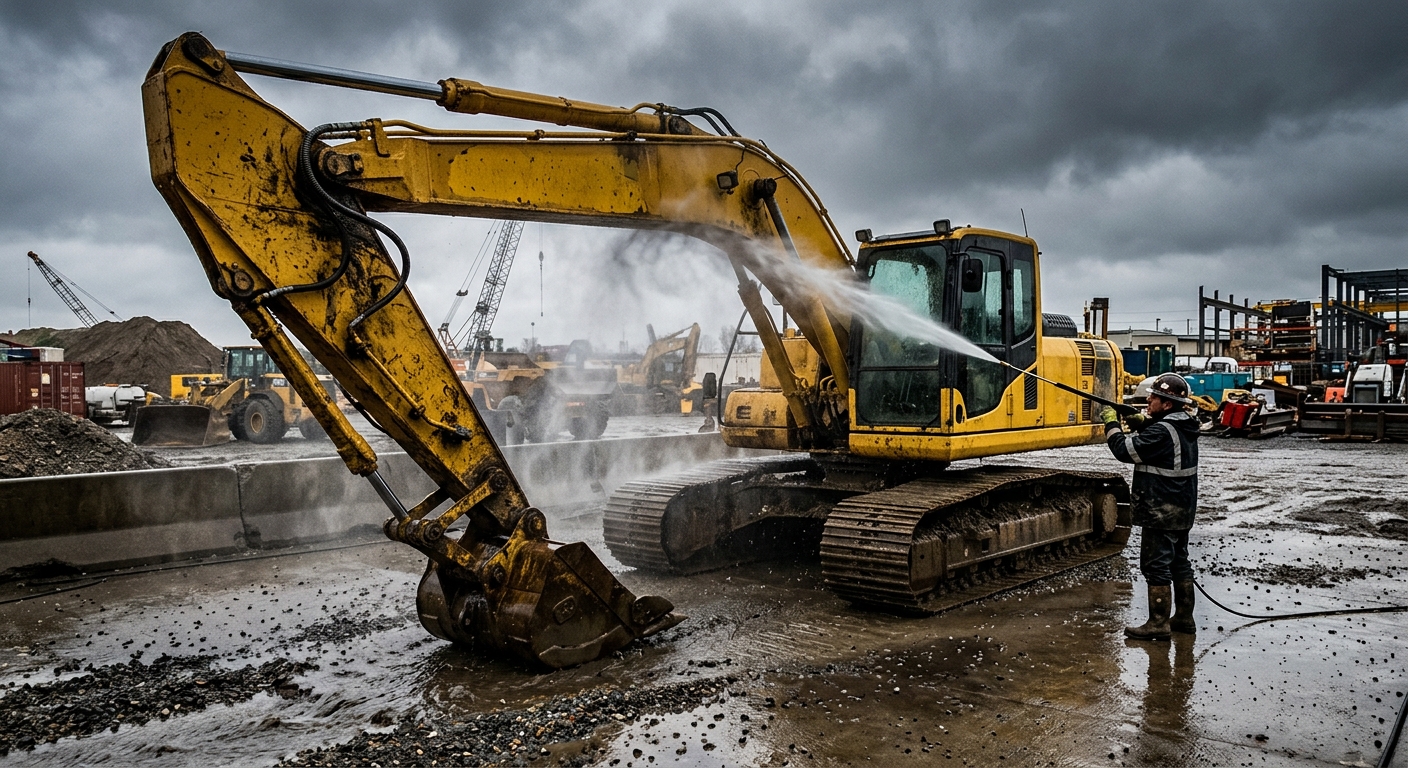
Start with a cool machine whenever possible. Hot components can flash-dry cleaners, warp your process, and make it easier to crack something if cold water hits sensitive areas. Knock off the heavy mud first. A low-pressure rinse or gentle removal step is usually smarter than attacking everything at full pressure from two inches away.
Then wash with intent:
- Rinse off loose mud, dust, and debris from top to bottom.
- Use an equipment-safe detergent where oily buildup or stubborn contamination exists.
- Clean around steps, handrails, belly pans, cooling package inlets, battery areas, and attachment couplers.
- Pay attention to undercarriage shelves, frame ledges, and packed corners where material stays wet.
- Rinse thoroughly so cleaner residue does not become its own problem.
- Let the machine drain and dry.
- Inspect while it is clean, before the next shift covers it up again.
High pressure has its place, but it is not magic. Stay back from seals, decals, electrical connectors, grease purging points, bearing areas, and cooling fins unless you know exactly what you are doing. Blasting directly into harness connections, cab seals, or fragile fin packs is a fantastic way to convert a cleaning job into an electrical or cooling issue.
A good wash-down also includes drying logic. Machines do not need to be towel-dried like sports cars, but they do need a chance to shed trapped water. Open compartments if appropriate. Make sure belly pans are not holding soup. If the machine will sit, let it dry in a way that does not keep moisture trapped in dark corners.
The high-risk corrosion zones crews miss
Most people wash what they can see from ten feet away. Corrosion loves the spots they forget.
These are the big ones worth checking every time:
- Undercarriage shelves and frame recesses
- Belly pans and skid plates
- Battery trays, battery hold-downs, and cable terminals
- Steps, ladders, handrails, and platform mounts
- Hydraulic tube clamps and bracket contact points
- Electrical grounds, connectors, and fuse box areas
- Cooling package frames and mounting hardware
- Attachment couplers, quick attach mechanisms, and pin bosses
- Boxed sections or compartments where mud gets packed in
- Paint chips at door edges, access panels, and service covers
These spots get missed because they are annoying, not because they are unimportant. But annoying maintenance is usually the maintenance that actually matters.
If you run machines in mulch, demolition, roadwork, concrete, or agriculture, the machine-specific trouble spots will show themselves pretty quickly. Once you know them, standardize them. Put them on the checklist. If a corrosion hotspot keeps repeating on one machine family, stop relying on memory.
How to build a wash-down routine that people will actually follow
The best wash-down routine is not the most perfect one. It is the one your team will do consistently.
That means matching the routine to the machine environment.
A machine running in dry dirt all week may only need periodic wash-downs plus targeted cleaning around service points. A machine exposed to road salt, manure, fertilizer, coastal air, or concrete slurry needs faster turnaround. Waiting for the weekly wash is dumb if today’s contamination is corrosive enough to start working immediately.
A practical routine looks like this:
After especially corrosive or wet jobs
- Rinse off salt, slurry, fertilizer, manure, or coastal residue the same day if possible
- Remove packed mud from undercarriage and frame pockets
- Check steps and platforms for slip hazards
Weekly for hard-use machines
- Full wash-down
- Inspect battery zone, steps, undercarriage shelves, attachment interface, and visible paint chips
- Log corrosion spots that need touch-up or repair
At service intervals
- Drop guards or open access areas where contamination hides
- Clean compartments properly
- Touch up exposed metal
- Protect terminals, connectors, and approved bare-metal areas as needed
Seasonally
- Before winter or road transport season, inspect coatings and vulnerable hardware
- After winter, do a more thorough decontamination and corrosion audit
If you manage multiple machines, track this in the same place you log services and inspections. If wash-down history lives nowhere, skipped cleaning will quietly become the default.
When to touch up, repair, or stop pretending rust is no big deal
Not every rust spot is a crisis. Some are easy wins if you catch them early.
Light surface rust on a chipped panel edge or bracket can often be cleaned up, treated, and touched up before it spreads. The key is speed. Small damaged areas stay cheap only if you handle them while they are still small.
Move beyond touch-up and into real repair when you see:
- Rust bubbling under surrounding paint
- Repeated corrosion at the same seam or mounting area
- Deep scaling or metal loss
- Cracked or weakened step mounts, guards, or brackets
- Electrical issues tied to corroded grounds or connectors
- Fasteners so seized that routine service becomes a battle
There is also the professionalism factor. A machine that is permanently caked in grime with rust blooming around every edge tells crews and buyers the same story: nobody is really on top of this fleet. That perception matters more than people admit.
The long-term payoff in uptime, resale, and professionalism
A clean, corrosion-managed fleet is easier to inspect, easier to service, safer to operate, and easier to sell.
You will not always see the ROI in one obvious line item. You will see it in fewer seized fasteners, fewer electrical gremlins, better cooling cleanliness, fewer hidden leaks, cleaner service work, less ugly structural rust, and stronger resale conversations. Buyers trust what they can see. So do technicians.
This is one of those maintenance habits that feels small and compounds hard.
Wash-down and corrosion prevention will never be the sexy part of fleet management. Good. The boring stuff is usually where the margin lives.
Track cleanings, exposure-based inspections, paint touch-ups, and recurring corrosion hotspots in FieldFix so the same preventable damage does not keep sneaking back.