Predictive Maintenance with AI Sensors: How Smart Equipment Prevents Breakdowns Before They Happen
Learn how AI-powered sensors and predictive maintenance are transforming heavy equipment management, reducing downtime by up to 50%, and saving thousands per machine.
Key Takeaways
- Predictive maintenance reduces unplanned downtime by 30–50% compared to reactive or time-based approaches
- AI sensors monitor vibration, temperature, pressure, and oil quality in real time to detect failures weeks before they happen
- ROI typically hits 3–5x within the first year of implementation
- You don’t need a massive fleet — even 3–5 machines benefit from predictive monitoring
- The technology is accessible now — cloud-based platforms have eliminated the need for expensive on-site infrastructure
Your excavator doesn’t break down randomly. It’s been telling you something was wrong for weeks — you just didn’t have the tools to listen.
That grinding noise in the final drive? It started as a barely detectable vibration anomaly 300 hours ago. The hydraulic pump that failed mid-job? Oil analysis would have flagged metal particles a month before the catastrophic failure. The engine that overheated on the hottest day of summer? Coolant temperature trends had been slowly climbing for two weeks.
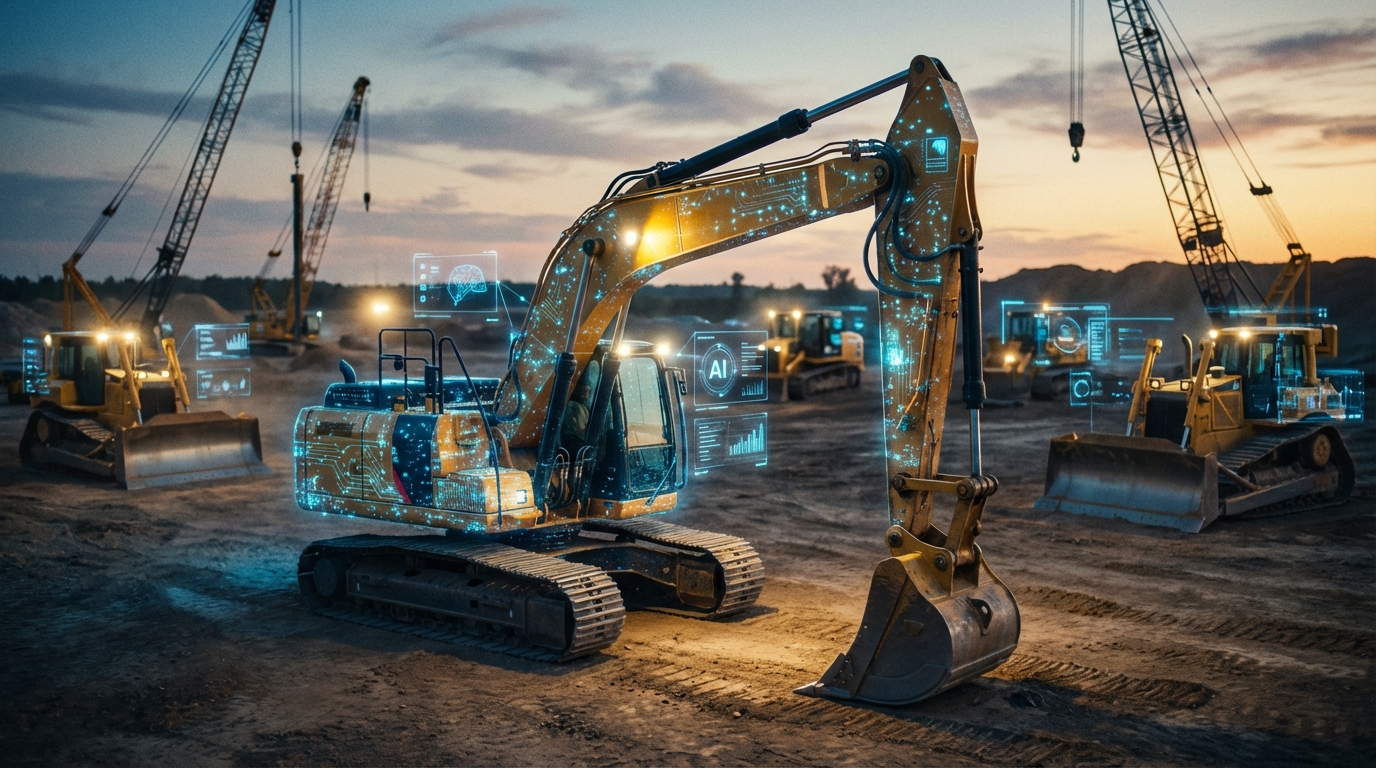
Predictive maintenance with AI sensors changes everything. Instead of waiting for failures (reactive) or replacing parts on a fixed schedule whether they need it or not (preventive), you maintain equipment based on its actual condition — and AI does the analysis for you.
The Real Cost of Reactive Maintenance
Most small and mid-size fleet operators still run on the “fix it when it breaks” model. It feels cheaper because there’s no upfront investment. But the numbers tell a different story.
Here’s what reactive maintenance actually looks like in practice:
Monday morning: Your skid steer won’t start on a job site 45 minutes away. Your operator calls in, you send a mechanic, and the machine sits idle for 6 hours while you diagnose a failed fuel injector. Total cost: the injector ($400), the mechanic’s time ($600), your operator sitting idle ($300), and the client calling to ask why the job is behind schedule (priceless damage to your reputation).
The predictive alternative: Two weeks earlier, fuel pressure data from a sensor would have flagged the degrading injector. You’d have ordered the part ($400), scheduled a 2-hour swap during a weekend ($200 labor), and never missed a beat on Monday. Total savings: $900+ per incident.
Multiply that across a fleet and a full year, and you’re talking about tens of thousands of dollars.
What Is Predictive Maintenance?
Predictive maintenance (PdM) uses real-time sensor data and machine learning algorithms to predict when a component is likely to fail — and alert you before it does.
It’s not magic. It’s pattern recognition at scale.
Every mechanical component has a failure signature. Bearings develop characteristic vibration patterns as they wear. Hydraulic systems show pressure fluctuations before a pump fails. Engines produce specific exhaust temperature profiles when fuel delivery degrades. Electrical systems show resistance changes before complete failure.
The AI component works in three stages:
-
Baseline Learning (1–4 weeks): Sensors establish normal operating parameters for YOUR specific machines in YOUR specific conditions. A track loader working in Florida sand has different “normal” than one in Minnesota clay.
-
Anomaly Detection (ongoing): Algorithms continuously compare current readings against baseline, flagging deviations that exceed statistical thresholds.
-
Failure Prediction (the payoff): As the system accumulates data, it learns which anomaly patterns lead to which failures — and can estimate remaining useful life for components.
How AI Sensors Actually Work
Modern AI sensor systems for heavy equipment combine three layers:
The Hardware Layer
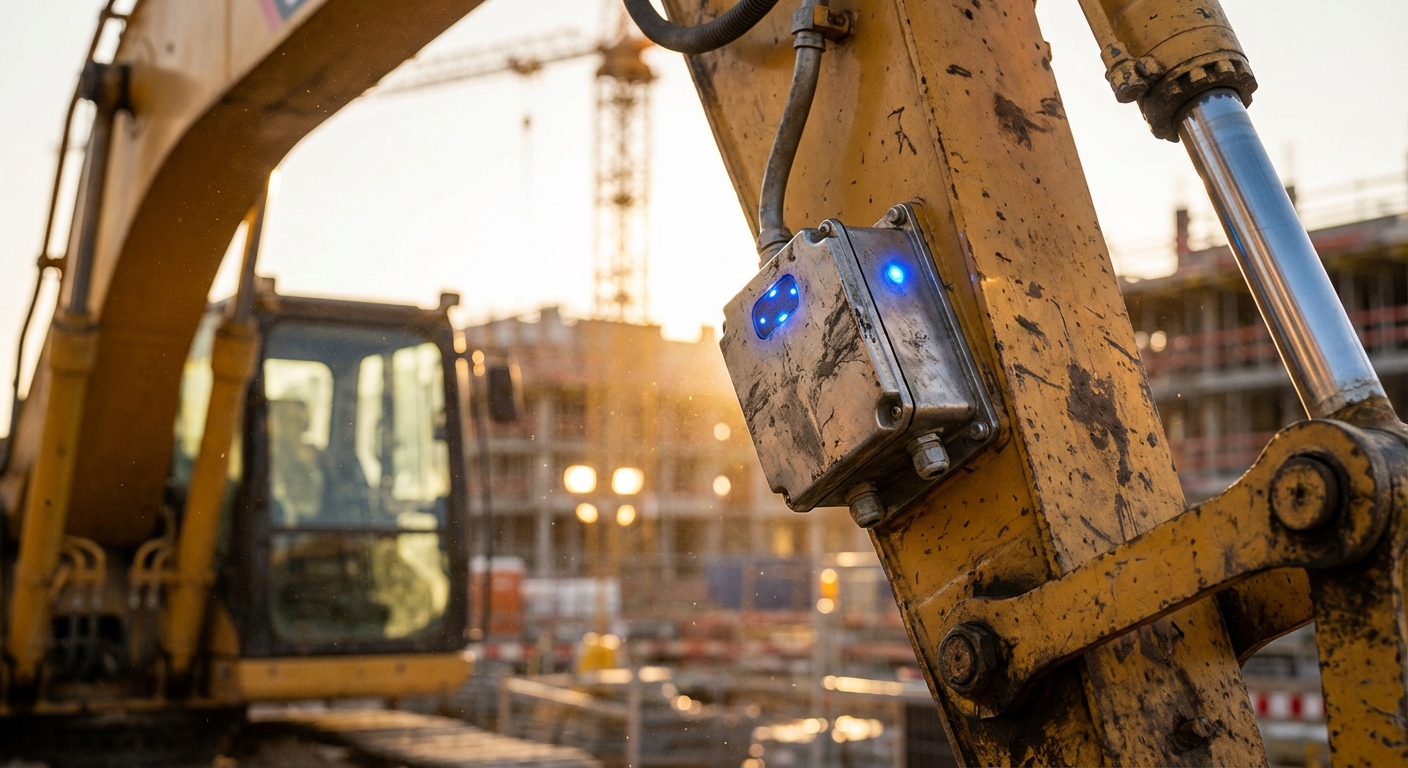
Small, ruggedized sensors mounted on critical components. These are designed for the vibration, dust, moisture, and temperature extremes of construction environments. Most communicate wirelessly via cellular or satellite to eliminate wiring hassles.
The Edge Processing Layer
Many modern systems include a gateway device mounted on the machine that does initial data processing. This is important because raw sensor data generates enormous amounts of information — gigabytes per day per machine. Edge processing filters out noise, compresses data, and only transmits meaningful signals to the cloud.
The Cloud AI Layer
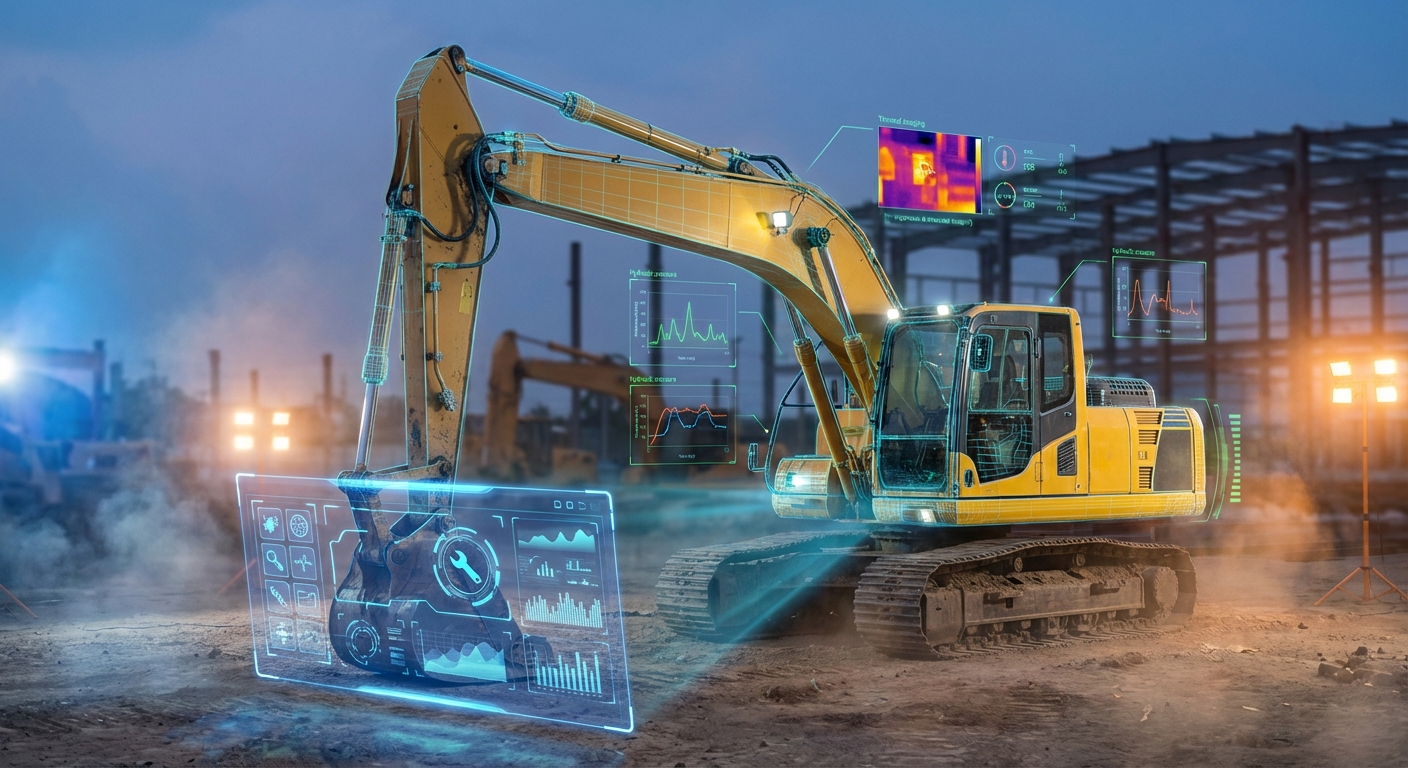
This is where the heavy lifting happens. Machine learning models trained on millions of hours of equipment data analyze your sensor inputs and generate actionable alerts. The best systems don’t just say “something is wrong” — they tell you what’s wrong, how urgent it is, and what to do about it.
Key Sensor Types for Heavy Equipment
Not all sensors are created equal. Here are the most impactful ones for construction and earthmoving equipment:
Vibration Sensors (Accelerometers)
What they monitor: Bearings, gears, shafts, final drives, swing motors How they work: Measure vibration frequency and amplitude. Every rotating component has a characteristic vibration signature when healthy. Changes in frequency indicate specific failure modes (misalignment, imbalance, bearing defects). Detection window: 2–8 weeks before failure
Oil Quality Sensors
What they monitor: Engine oil, hydraulic fluid, transmission fluid How they work: Measure particle count, viscosity, water contamination, and metal content in real time. Traditional oil analysis requires sending samples to a lab and waiting days. Inline sensors give you continuous readings. Detection window: 1–4 weeks before component damage
Temperature Sensors (Thermocouples/IR)
What they monitor: Engine components, hydraulic systems, electrical connections, bearings How they work: Track temperature at critical points. Overheating is a symptom of many failure modes — friction from wear, coolant system degradation, electrical resistance increase. Detection window: Hours to days (temperature rises can indicate imminent failure)
Pressure Sensors
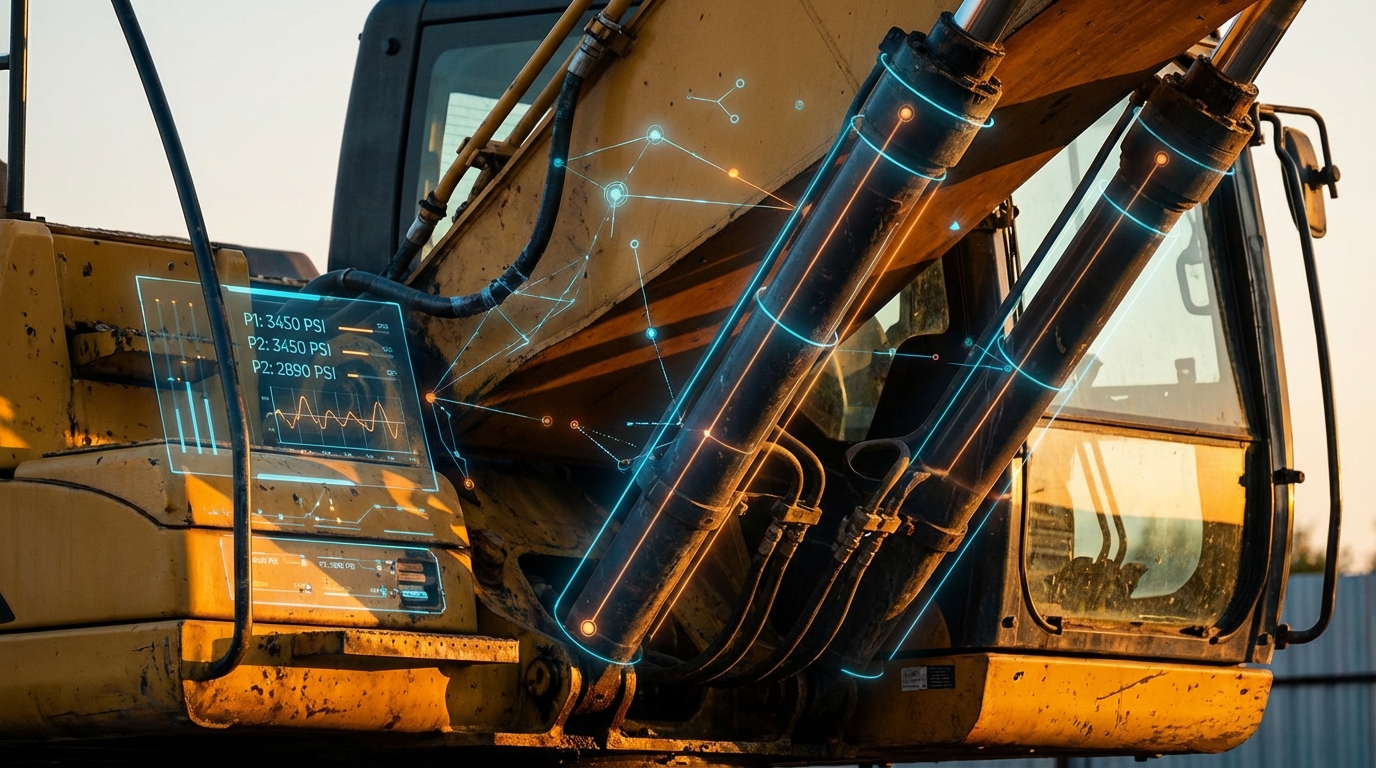
What they monitor: Hydraulic circuits, fuel systems, cooling systems How they work: Monitor system pressures in real time. Dropping hydraulic pressure can indicate pump wear, valve issues, or cylinder seal failure. Fuel pressure anomalies flag injector or pump problems. Detection window: 1–3 weeks before failure
Current/Voltage Sensors
What they monitor: Alternators, starters, solenoids, electronic control modules How they work: Track electrical system health. Voltage drops, current spikes, and resistance changes all indicate developing electrical problems. Detection window: Days to weeks
Case Study: Fleet of 8 Excavators
A mid-size earthmoving contractor installed vibration and oil quality sensors on their fleet of 8 excavators. Within the first 6 months:
- Detected 3 developing bearing failures — all repaired during scheduled downtime
- Identified contaminated hydraulic fluid in one machine before it damaged the pump ($8,000 pump saved)
- Extended oil change intervals on 5 machines by 15% based on actual oil condition data (saving ~$2,400/year in unnecessary oil changes)
- Total first-year ROI: 4.2x the cost of the sensor system
Predictive vs. Preventive vs. Reactive
Understanding the differences helps you see where predictive maintenance fits:
Reactive Maintenance (Fix When Broken)
Pros:
- Zero upfront investment
- Simple — no planning required
- Works fine for non-critical, cheap-to-replace items
Cons:
- 3–5x higher repair costs
- Unplanned downtime kills profitability
- Cascading failures (one broken part damages others)
- Safety risks from catastrophic failures
- No data for replacement planning
Preventive Maintenance (Time/Hour-Based Schedule)
Pros:
- Reduces unexpected failures by ~25%
- Creates maintenance discipline
- Industry-standard approach
Cons:
- Still replaces parts that have life left (waste)
- Doesn’t catch condition-specific issues
- Schedule-based, not condition-based
- Can miss rapidly-developing problems between intervals
Predictive Maintenance (Condition-Based with AI)
Pros:
- Reduces unplanned downtime by 30–50%
- Maintains parts based on actual condition
- Catches problems traditional inspections miss
- Builds valuable equipment data over time
- Enables optimal parts inventory planning
Cons:
- Upfront sensor and platform investment
- Learning curve for team adoption
- Requires cellular/internet connectivity
- Not all failure modes are sensor-detectable
Real-World ROI Numbers
Let’s break down the economics for a typical small fleet (5 machines):
The savings come from multiple sources:
Avoided catastrophic repairs: One prevented hydraulic pump failure ($6,000–$12,000) can pay for a year of monitoring on two machines.
Reduced downtime costs: If your equipment generates $150/hour in revenue, preventing even 40 hours of unplanned downtime per year saves $6,000 per machine.
Optimized parts replacement: Instead of replacing hydraulic filters every 500 hours regardless of condition, you replace them when sensor data shows they actually need it. Some last 400 hours, some last 700. You stop wasting money on unnecessary changes while catching the ones that clog early.
Better resale value: Equipment with comprehensive sensor data and maintenance records commands 10–15% higher resale prices. Buyers trust data over promises.
Getting Started: What You Need
You don’t need to instrument every machine with every sensor type on day one. Here’s a practical rollout plan:
Phase 1: Start with Your Most Critical/Expensive Machines
Pick your 1–3 highest-value or highest-utilization machines. Install vibration sensors on major rotating components (final drives, swing motors, pumps) and oil quality sensors on engine and hydraulic systems.
Cost: $5,000–$15,000 total Timeline: 1–2 days per machine for installation
Phase 2: Add Temperature and Pressure Monitoring
Once you’re comfortable with the platform and seeing value from Phase 1, add temperature and pressure sensors to expand coverage.
Cost: $2,000–$5,000 per machine Timeline: Half day per machine
Phase 3: Fleet-Wide Rollout
Extend to remaining machines, prioritizing by value and utilization. By this point, you’ll have data proving ROI and team buy-in.
What to Look for in a Platform
Not all predictive maintenance platforms are equal. Key features to evaluate:
- Plain-language alerts — not just raw data
- Mobile app — your operators and mechanics need alerts in the field
- Integration with your existing workflow — does it work with your fleet management software?
- Scalability — can you start small and grow?
- OEM data integration — can it pull from your machines’ existing telematics?
- Historical trending — can you see how component health changes over time?
Common Pitfalls to Avoid
Pitfall 1: Alert Fatigue
If your system sends 50 alerts a day, your team will start ignoring all of them. Configure alert thresholds carefully. Start conservative (fewer, higher-confidence alerts) and tune from there.
Pitfall 2: Ignoring the Human Element
Sensors detect problems. Humans fix them. If your mechanics don’t trust or understand the system, they’ll ignore its recommendations. Invest in training and show them early wins to build buy-in.
Pitfall 3: Expecting Instant Results
AI systems need time to learn your equipment’s baseline behavior. The first month generates learning data. Months 2–3 start producing useful alerts. By month 6, you’ll wonder how you operated without it.
Pitfall 4: Skipping Integration
A predictive maintenance system that exists in isolation creates extra work. Make sure it integrates with your fleet management platform, work order system, and parts inventory. Data should flow, not sit in silos.
Pitfall 5: Over-Instrumenting Too Fast
It’s tempting to put sensors on everything. Resist. Start with the components that fail most expensively and most often. For most earthmoving equipment, that’s: hydraulic pumps, final drives, engine bearings, and cooling systems.
The Future of Equipment Intelligence
We’re still in the early innings of AI-powered equipment management. Here’s what’s coming:
Digital twins: Complete virtual models of your machines that simulate wear and predict maintenance needs with even greater accuracy, using your actual operating data.
Automated parts ordering: When AI detects a developing failure, it automatically checks parts availability and pricing, and can place orders before you even see the alert.
Cross-fleet learning: As more machines contribute data to AI platforms, the models get smarter for everyone. A failure pattern detected on a machine in Texas helps predict the same issue on your machine in Ohio.
Operator behavior analysis: AI will correlate operator behavior (harsh loading, excessive idling, improper warm-up procedures) with equipment wear patterns, enabling targeted operator training that directly reduces maintenance costs.
Integration with job costing: Predictive maintenance data flowing directly into project cost estimates, giving contractors more accurate bids based on real equipment costs rather than guesswork.
The contractors who adopt these technologies early will have a significant competitive advantage — lower costs, less downtime, better equipment condition, and more accurate bidding.
Start Tracking Your Equipment’s Health Today
You don’t need AI sensors to start making better maintenance decisions. FieldFix helps you track maintenance, monitor costs, and catch problems early — whether you’re using advanced sensors or just your mechanic’s trained eye.
Start with what you have. Build from there.