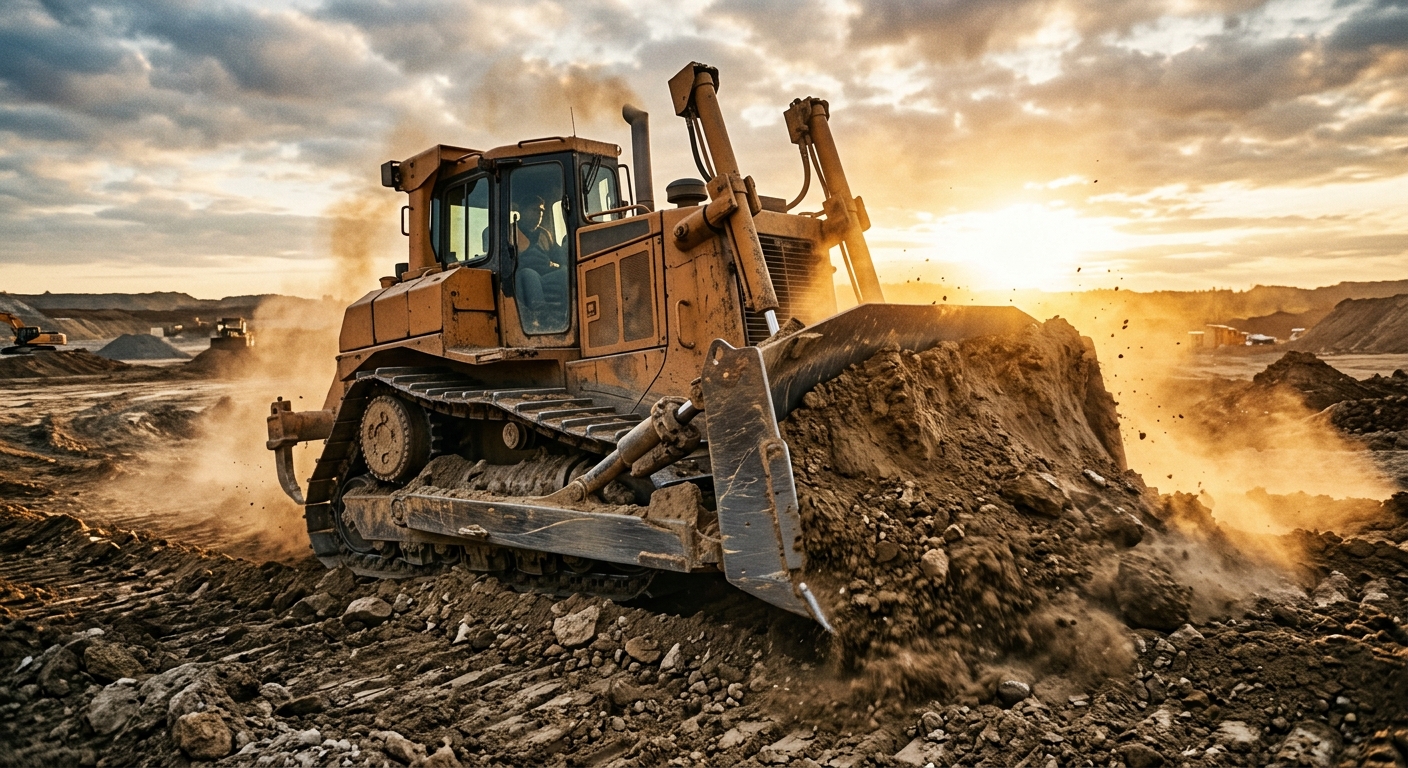
Crawler Dozer Maintenance Guide for Contractors
Learn the daily, weekly, and hour-based crawler dozer maintenance checks that reduce downtime, protect undercarriages, and extend machine life.
Crawler dozers live hard lives. They work in rock, clay, mud, demolition debris, and abrasive material that wants to grind everything down. They push heavy loads at low speed, run hot in dusty environments, and transfer huge forces through the undercarriage, blade structure, drivetrain, and cooling system. That combination makes them profitable machines when maintained well and absolute wallet assassins when neglected.
The problem is that dozer maintenance failures often look gradual right up until they are not. A little seep at a final drive becomes contamination and bearing damage. A slightly loose track becomes accelerated wear across rollers, idlers, and links. A cooling pack packed with debris quietly turns into overheating on the hottest day of the job. By the time production drops or the machine goes down, the damage has already been brewing for weeks.
That is why a crawler dozer maintenance plan needs more than generic “check fluids and grease it” advice. Contractors need a practical system built around the areas that actually fail, the conditions that speed up wear, and the habits that separate a long-running machine from a money pit.
often represent one of the largest lifetime maintenance expenses on a crawler dozer.
drops fast when packed debris blocks airflow through radiators and coolers.
are usually service events. Leaks ignored become component failures.
Why dozers get expensive fast
Dozers are simple in one sense: they convert engine power into traction and pushing force. But that simplicity is deceptive. Every hour of pushing loads the undercarriage, the blade pins and bushings, the transmission, steering system, and final drives. Abrasive material acts like sandpaper on every wear surface. Impact loads from rough operation do the rest.
The biggest maintenance mistake is treating a dozer like a machine that can just “take abuse.” Yes, crawler dozers are tough. No, they are not magic. Tough machines let people get away with bad habits for longer, which is exactly why the bill feels so brutal when it finally arrives.
The expensive failures usually come from a short list:
- Undercarriage wear that goes unchecked too long
- Final drive leaks or contamination
- Blade cutting edge wear that is allowed to damage the moldboard or end bits
- Overheating caused by restricted airflow
- Track frames packed with debris
- Operators using excessive spin turns, high-speed reverse, or unnecessary slamming into material
Daily crawler dozer checks
Daily checks are where most preventable downtime gets stopped. They do not need to take forever, but they do need to be consistent.
Start with a complete walkaround before startup. Look for fresh leaks under the machine and around the final drives, hydraulic cylinders, and hose connections. Inspect the blade for cracks, bent corners, missing hardware, and cutting edge wear. Check the ripper assembly too if the machine is equipped with one. Loose pins or visible cracking never get better by being ignored.
Then move to the undercarriage. Remove packed mud, rock, wire, or debris if present. Look at the track shoes, rollers, carrier rollers, idlers, and sprockets for abnormal wear patterns. If one side looks different from the other, that matters. Uneven wear usually means alignment, tension, or operating-condition issues are developing.
Cooling system checks are just as important. Open access panels and look for plugged fins, mud, dust, seeds, or oily residue on the radiator and coolers. A dozer can overheat without dramatic warning if airflow keeps getting choked down day after day.
Finally, confirm fluid levels, lights, alarms, and operator controls. A clean, functioning cab is not cosmetic. If visibility is poor or warning lights are ignored, maintenance problems become safety problems fast.
The highest-wear systems to watch
Every crawler dozer has a few systems that deserve disproportionate attention because they eat money when maintenance slips.
1. Undercarriage
The undercarriage is the star of the maintenance show whether you like it or not. Track links, pins, bushings, rollers, idlers, sprockets, and shoes wear together as a system. If debris builds up or tension is wrong, wear accelerates across everything. If operators run high-speed turns or spend all day on abrasive rock, the cost curve gets ugly in a hurry.
2. Final drives
Final drives quietly take a beating. They deserve constant leak checks and clean service practices. Low oil, contamination, or ignored seal damage can turn a manageable repair into a major teardown.
3. Blade, edge, and ripper wear points
Cutting edges, end bits, pins, bushings, and cylinder connection points all need inspection. Running the edge too long can transfer wear into the blade structure itself, which is a dumb place to save money.
4. Cooling system
Dozers spend their lives in nasty cooling conditions. Debris-packed radiators and coolers cause reduced efficiency, higher fluid temperatures, and shutdown risk. If you only clean cooling packs when the machine overheats, you are already behind.
- Adjust track issues only after derailment risk becomes obvious
- Ignore small leaks until fluid loss is visible on the ground
- Run cutting edges until base metal starts suffering
- Clean coolers only after overheat events
- Let operators use whatever driving style they want
- Inspect undercarriage wear and cleanliness on a set rhythm
- Repair leaks while they are still cheap and local
- Rotate or replace wear parts before structural damage starts
- Clean cooling packs before airflow drops off
- Coach operators on smooth, low-abuse machine handling
A grading contractor notices one dozer keeps carrying packed clay in the track frames at the end of each day. Instead of clearing it consistently, the crew leaves it because the machine is “still pushing fine.” Two weeks later, wear on rollers and idlers is visibly worse on that machine than the rest of the fleet, and track tension has become harder to manage. The issue was not mysterious. The machine had been grinding itself with material it never should have been carrying.
How to structure service intervals
Good crawler dozer maintenance happens on three layers: daily observation, scheduled service by hours, and condition-based intervention when the machine tells you something has changed.
Daily checks catch leaks, debris, looseness, and visual wear. Weekly attention should include more thorough cleaning, hardware inspection, and a review of operator notes. Hour-based service handles filters, oils, grease points, and manufacturer-required inspections. Condition-based work covers the stuff that does not wait politely for the calendar, like abnormal noise, heat, uneven wear, cracking, or sudden changes in steering and tracking.
The sweet spot is combining all three instead of trusting only one. Hour-based service alone misses real-world abuse. Operator intuition alone misses trends. Daily walkarounds alone miss longer-term wear progression.
If you manage multiple dozers, standardize the checklist. Same inspection order. Same terminology. Same leak categories. Same wear-photo habit. Consistency turns maintenance from opinions into data.
Operator habits that extend dozer life
Maintenance is not only a shop responsibility. Operators influence crawler dozer life every single shift.
Smooth operation matters. Hard impacts into piles, excessive spinning, aggressive counter-rotation, and constant high-speed reversing all drive wear into the undercarriage and drivetrain. So does failing to clear packed debris when conditions demand it. The machine may tolerate it in the short term, but parts do not forget.
Operators should also know what to report immediately:
- New noises during turns or travel
- Changes in steering response
- Fresh vibration through the seat or controls
- Hot smells, warning lights, or rising temperatures
- Blade drift, chatter, or abnormal cylinder behavior
- Material packing excessively into the undercarriage
The best crews do not shame operators for reporting weird behavior. They reward it. Because the operator who speaks up about a small leak today may save you from a final drive teardown next month.
One site superintendent started ending each Friday with a ten-minute machine review between the operator and mechanic. Nothing fancy, just leaks, temperatures, wear concerns, and anything that felt off. Within a month they caught a developing blade pin issue and a cooling-pack restriction before either one caused downtime. That is the kind of boring process that makes money.
When to monitor versus when to repair
Not every maintenance issue needs immediate teardown, but plenty of them do need immediate action. The trick is knowing the difference.
Monitor an issue briefly when it is minor, stable, and documented, such as light cosmetic seepage with no measurable fluid loss or wear that is still within service limits. Repair now when the condition is progressing, safety-related, or likely to damage adjacent components if ignored.
These situations usually deserve immediate repair planning:
- Final drive leaks with active oil loss
- Cracks around blade mounts, ripper structure, or major frame points
- Persistent overheating or repeated high-temperature alarms
- Abnormal undercarriage wear patterns that are accelerating
- Loose hardware that will enlarge holes or damage mating components
- Steering or travel behavior that changes suddenly
The general rule is simple: if continued operation will multiply the repair, stop being cheap.
can be monitored only if it stays minor and gets logged.
should be treated like active failure in motion.
are cheaper than structural repairs almost every time.
Building a better dozer maintenance program
If your crawler dozer maintenance program depends on one experienced person remembering everything, you do not have a program. You have a gamble.
Build a repeatable system instead. Create a dozer-specific checklist. Photograph recurring wear points. Track service hours and leak history. Standardize cooler cleaning, undercarriage inspections, and blade wear reviews. Make sure operators know what matters and mechanics have enough time to catch small issues before the schedule buries them.
Most important, do not treat downtime as bad luck when the warning signs were visible the whole time. Crawler dozers are honest machines. They usually tell you what is going wrong. The expensive part is when nobody listens.
Done right, crawler dozer maintenance is not glamorous. It is repetitive, disciplined, and occasionally annoying. It is also one of the clearest ways to protect production and keep a high-value machine making money instead of sitting dead on the edge of the jobsite like a very expensive boulder.
FieldFix helps contractors log inspections, track maintenance history, and catch repeat equipment problems before they drain profit. If your team is still relying on memory and scattered notes, it is time for a better system.
Related Articles
August 26, 2026
Heavy Equipment Winch Maintenance Guide: Keep Cable Pulling Safe and Reliable
August 25, 2026
Heavy Equipment Wiring Harness Chafing Prevention Guide: Stop Electrical Gremlins Before They Shut Down a Machine
August 24, 2026