Heavy Equipment Cutting Edges and End Bits: Inspection, Rotation and Replacement Guide
Learn how to inspect, rotate and replace cutting edges and end bits before wear damages buckets and blades, driving up fuel, labor and repair costs.
Key Takeaways
- Cutting edges and end bits are sacrificial wear parts that protect buckets, moldboards, and base edges from expensive structural damage
- Running edges too long increases fuel burn, reduces penetration, and can warp the parent metal underneath the wear surface
- Most fleets should inspect edges weekly and measure wear monthly instead of waiting until operators complain about performance
- Rotating or flipping reversible edges at the right time can stretch usable life by 25-40%
- A $600-$2,500 wear-part replacement often prevents a $5,000-$20,000 rebuild on the blade, bucket, or moldboard
Cutting edges and end bits live in the same category as tires, filters, and teeth: everybody knows they matter, but plenty of fleets still run them until they are basically gone. These parts are designed to wear so your bucket, dozer blade, or box edge does not. Once the sacrificial steel is gone, the machine starts eating the expensive steel underneath.
The problem is that cutting edge wear happens gradually. Operators adapt. The machine still pushes. The loader still carries material. The dozer still grades. So the urgency never feels obvious until the parent edge is scalloped, the bolts seize in place, or the end bits are worn back far enough to start twisting the corners of the blade.
This guide breaks down how to inspect cutting edges and end bits, what wear patterns actually mean, when rotation makes sense, and how to set replacement triggers before the job turns expensive.
Why Cutting Edges Matter More Than Most Fleets Realize
On a dozer, cutting edges and end bits control how the blade enters material, how evenly it carries a load, and how much effort is required to maintain grade. On a loader bucket, the edge determines penetration, floor cleanup, and how well the machine fills in dense piles. On motor graders and snow equipment, edge condition directly affects finished surface quality.
When these parts are fresh, the machine cuts efficiently and the wear is predictable. When they are worn, three things happen fast:
- Penetration gets worse. A rounded edge skates instead of bites, forcing the operator to use more power and more passes.
- Load distribution gets uneven. Once one corner wears faster than the other, the machine starts carrying and cutting crooked.
- The parent structure becomes the wear surface. That is where the repair bill gets stupid.
The expensive mistake
Many crews judge cutting edges by what they can still “get away with.” The correct question is whether the wear part is still protecting the base edge, bolt holes, and moldboard. Once it is not, you are already late.
What Cutting Edges and End Bits Actually Do
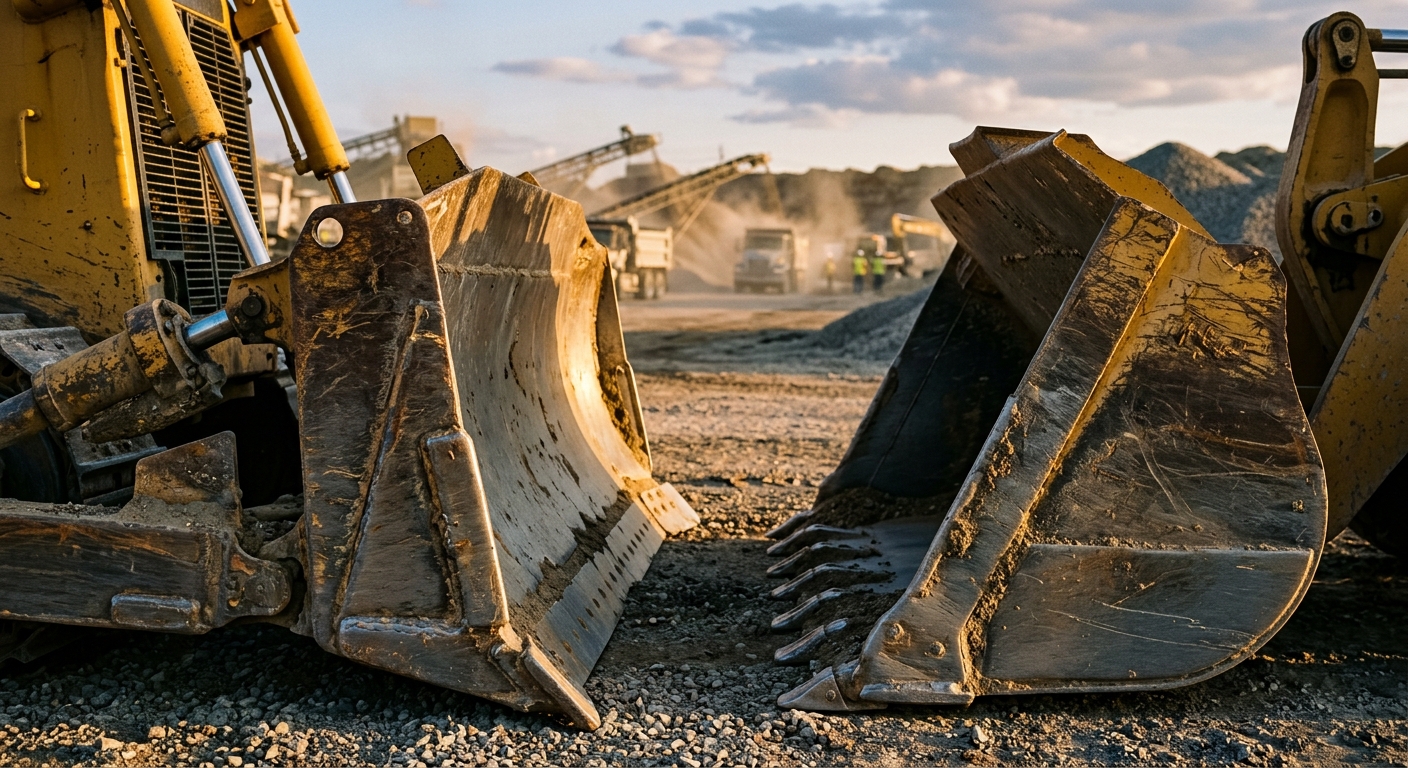
Cutting edges are the main wear strips mounted along the bottom of a blade or bucket. End bits protect the outer corners, where abrasion and impact are usually highest. Together, they handle:
- Abrasion from soil, gravel, crushed concrete, and rock
- Impact loading when the edge hits hard material or buried obstructions
- Shape retention so the bucket or blade keeps a usable profile
- Replaceable wear protection for costly fabricated structures
Most fleets think of these as simple chunks of steel. They are not that simple. Edge thickness, bolt pattern, hardness, bevel orientation, and reversible design all affect life and performance.
The job of the wear part is brutally simple: wear first, wear evenly, and be cheap to replace. The minute it fails at any of those three, your maintenance program needs attention.
The Real Cost of Running Worn Edges Too Long
The obvious cost is the replacement part. The hidden costs are what hurt:
- Extra fuel because the machine needs more effort to penetrate or maintain grade
- Slower cycle times because the operator compensates with multiple passes
- Premature damage to the base edge, side cutters, moldboard corners, and weldments
- Frozen or worn bolt holes that turn a normal replacement into a fabrication job
- More tire or undercarriage scrub when the blade or bucket pulls unevenly
Here is the part operators hate hearing: the machine may still “work fine” while all of that is happening. That does not make it cheap.
If a wheel loader needs an extra five seconds per cycle because the bucket edge no longer cleans the pile efficiently, that delay compounds over hundreds of cycles a week. If a dozer needs more track slip to keep cutting because the edge is rounded over, you are not just burning fuel. You are paying for extra undercarriage wear too.
Red flag
If the edge is worn back close to the bolt heads, or the end bit has lost its original corner shape, do not wait for the next PM. That machine is one hard day away from chewing into expensive steel.
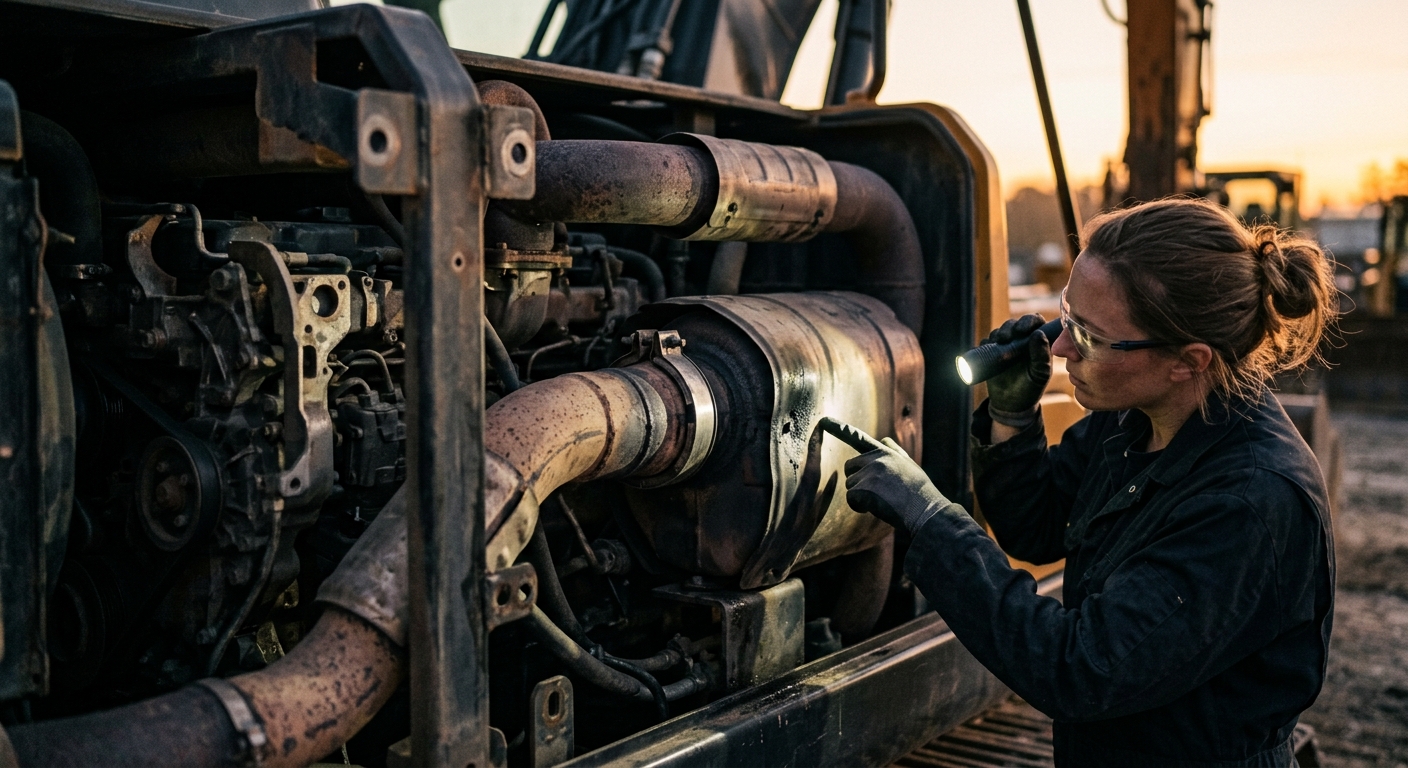
How to Inspect Cutting Edges and End Bits
Good inspections are boring, consistent, and measured. That is exactly why they work.
1. Look at edge thickness, not just appearance
Rounded edges fool people. The part can still look substantial from five feet away while being too thin to protect the base edge. Use calipers, an ultrasonic thickness gauge, or a simple wear chart with baseline measurements from a new part.
2. Check for uneven wear left to right
If one side is wearing much faster, investigate:
- Operator habits
- Crown or slope on the jobsite
- Blade pitch or machine setup
- Loose mounting hardware
- Worn pins, tilt components, or frame alignment issues
3. Inspect the bolt heads and bolt seats
If the wear surface is approaching the bolt heads, you are late. If bolt heads are already damaged or recessed unevenly, replacement becomes much uglier. Seized bolts are a time thief.
4. Look behind the edge
Pull debris away and inspect the parent edge or moldboard. You are looking for:
- Cracks around bolt holes
- Elongated bolt holes
- Scalloping or washout behind the wear part
- Distortion along the mounting face
5. Compare end bits to the center edge
End bits often disappear faster because they take corner loading and abrasion when operators angle into piles or ride one side of the blade. If the corner profile is gone, the remaining edge can start wearing in a smile pattern that wrecks finish quality.
Simple shop rule
Photograph the edge straight-on every PM and keep one reference image from when the parts were new. Side-by-side comparison catches uneven wear faster than memory ever will.
When to Rotate, Flip or Replace
Some cutting edges are reversible. Some are not. Some end bits can be swapped side to side. The trick is knowing when that move adds value and when it is already too late.
Rotate or flip when:
- The edge still has enough thickness to reuse safely
- Wear is even enough that the second side will seat correctly
- Bolt holes and mounting faces are still in good shape
- You can do the job during planned downtime instead of after failure
Replace outright when:
- The edge is worn near or past the bolt heads
- The part is cracked, bent, or heat checked
- Uneven wear means a flip will not sit flat
- The base edge has already started to wear through
- The time to salvage the part is higher than the value left in it
Flipping Early
Pros:
- Gets full value from reversible edges
- Preserves clean bolt removal
- Keeps machine cutting consistently
Cons:
- Requires planning instead of procrastination
- Ties up labor during scheduled service
- Needs wear measurements, not guesswork
Waiting Too Long
Pros:
- Avoids one scheduled maintenance event right now
- Feels cheaper for about five minutes
Cons:
- Higher risk of seized bolts and torch work
- Parent metal damage starts sooner
- Poorer production and worse fuel economy
For most fleets, the sweet spot is flipping reversible edges when roughly 40-60% of usable wear is gone, then replacing before the second side gets near the hardware or base metal. That timing will vary by material, but the principle holds.
Bolt-On vs Weld-On Edges
Bolt-on edges are easier to replace, easier to inventory, and easier to manage predictively. Weld-on edges can make sense in severe applications or on older equipment, but they demand better fabrication practices and can hide damage underneath.
Bolt-on edges are best when:
- You want fast field replacement
- Equipment downtime is expensive
- You need repeatable wear tracking
- You have multiple machines using standard part families
Weld-on edges are best when:
- The application is highly abusive
- The component design does not support bolt-on systems well
- You have strong welding capability in-house
- You accept that replacement becomes a fabrication task
If your current program is chaotic, bolt-on systems are usually the cleaner operational answer. They are easier to inspect, swap, and track in software.
Common Wear Patterns and What They Mean
Wear tells a story. Read it instead of just buying another edge.
Center worn faster than corners
Usually points to repeated straight-on loading in abrasive material or incorrect blade pitch. On loaders, it can also mean the operator is curling aggressively to force fill.
Corners or end bits disappearing first
Common in angled pushing, side loading, or frequent contact with curbs, rocks, or trench edges. If one end bit is consistently worse, look at operator approach and machine alignment.
Scalloped or wavy wear
Often tied to loose hardware, poor mounting surface contact, or a structural issue behind the edge. Replacing the edge alone may only hide the problem briefly.
Rapid bolt damage
Means the replacement trigger is too late or the wrong edge style is being used. Once bolt heads are exposed, you are flirting with a miserable repair day.
Use wear patterns as diagnostics
A good wear-part program does more than order steel. It exposes operating habits, setup issues, and hidden mechanical problems before they spread to the rest of the machine.
Replacement Planning and Inventory Strategy
The best time to order cutting edges is before the current ones are an emergency. Revolutionary stuff, I know.
Set minimum stock levels for high-hour machines and standardize measurements in your PM workflow. A simple program should include:
- New-part baseline thickness
- Wear measurements by machine and date
- Expected life by material type and application
- Lead times for replacement parts
- Labor time for flip vs full replacement
If your fleet runs multiple loaders or dozers, keep one ready-to-install set for the most critical machines. Waiting on freight while a production machine sits dead because someone tried to squeeze another week from a paper-thin edge is clown behavior.
Field Example: One Loader, Two Very Different Outcomes
Scenario A: Planned replacement
A quarry loader crew measures the bucket edge monthly, flips the reversible edge at mid-life, and replaces the set during a scheduled Saturday service window. Total cost: parts, a few labor hours, no production loss on Monday.
Scenario B: Delayed replacement
Another crew waits until the bolt heads wear thin and one end bit cracks. Two bolts spin in elongated holes, one must be air-arc gouged out, and the parent edge needs weld buildup before the new parts fit correctly. Total cost: higher labor, extra shop materials, and a machine down during peak loading hours.
Same machine family. Same basic wear parts. Completely different bill because one crew treated inspection like a system instead of a suggestion.
A Field Example: Cheap Wear Parts vs Expensive Downtime
Take a mid-size dozer working on mixed clay with occasional shot rock. A full set of cutting edges and end bits might cost $1,200 to $2,000 depending on configuration. Replace them on time and the machine keeps grade well, pushes cleanly, and protects the blade structure.
Delay too long and the dozer starts losing corner shape. Operators make extra cleanup passes. Fuel consumption inches up. One corner starts wearing into the base edge, and now the next replacement includes:
- Edge kit
- New hardware
- Shop welding
- Grind and fit labor
- Extra downtime
That “cheap” decision can snowball into a repair event several times larger than the cost of the wear parts you avoided buying.
This is the kind of maintenance category that looks minor in isolation but punches above its weight in the real world. Cutting edges do not fail like engines. They fail like habits.
Track Wear Parts With FieldFix
FieldFix helps fleets stop managing wear parts by memory and operator vibes. You can log edge measurements, record flips and replacements, attach photos from inspections, and build machine-specific service history that actually tells you when wear accelerates.
That matters because cutting edges and end bits do not wear on a universal schedule. A dozer in sandy fill will live a different life than a loader in crushed concrete. Tracking the data by machine, material, and site conditions lets you predict replacements before the machine starts costing you production.
Stop Guessing on Wear Parts
If your crew is replacing cutting edges only after they are obviously smoked, you are almost certainly overspending on fuel, labor, and structural repairs. FieldFix makes it easy to log inspections, set replacement triggers, and keep photo-backed wear history for every machine in the fleet.