Light Tower Maintenance Guide: Prevent Night Shift Breakdowns and Costly Downtime
Learn how to maintain portable light towers with practical checks for engines, mast systems, trailer components, lights, and electrical parts.
Key Takeaways:
- Portable light towers fail most often from neglected basics: dirty fuel, weak batteries, bad trailer tires, and mast cable wear
- A 10-minute weekly inspection prevents the kind of no-light breakdown that can stop paving, utility, and emergency work cold
- The light head, generator, mast, outriggers, and trailer all need separate inspection routines
- Tracking service intervals by hours instead of guesswork helps crews catch problems before the next night shift
- Standardized logs matter because light towers often get treated like “small equipment” until they create a big problem
Portable light towers get abused because they sit in the weird middle ground between fleet equipment and disposable jobsite gear. They are towed around, parked in mud, run for long hours, lent between crews, and expected to work every single time the sun goes down. Then when they fail, everyone acts surprised.
That mindset is expensive.
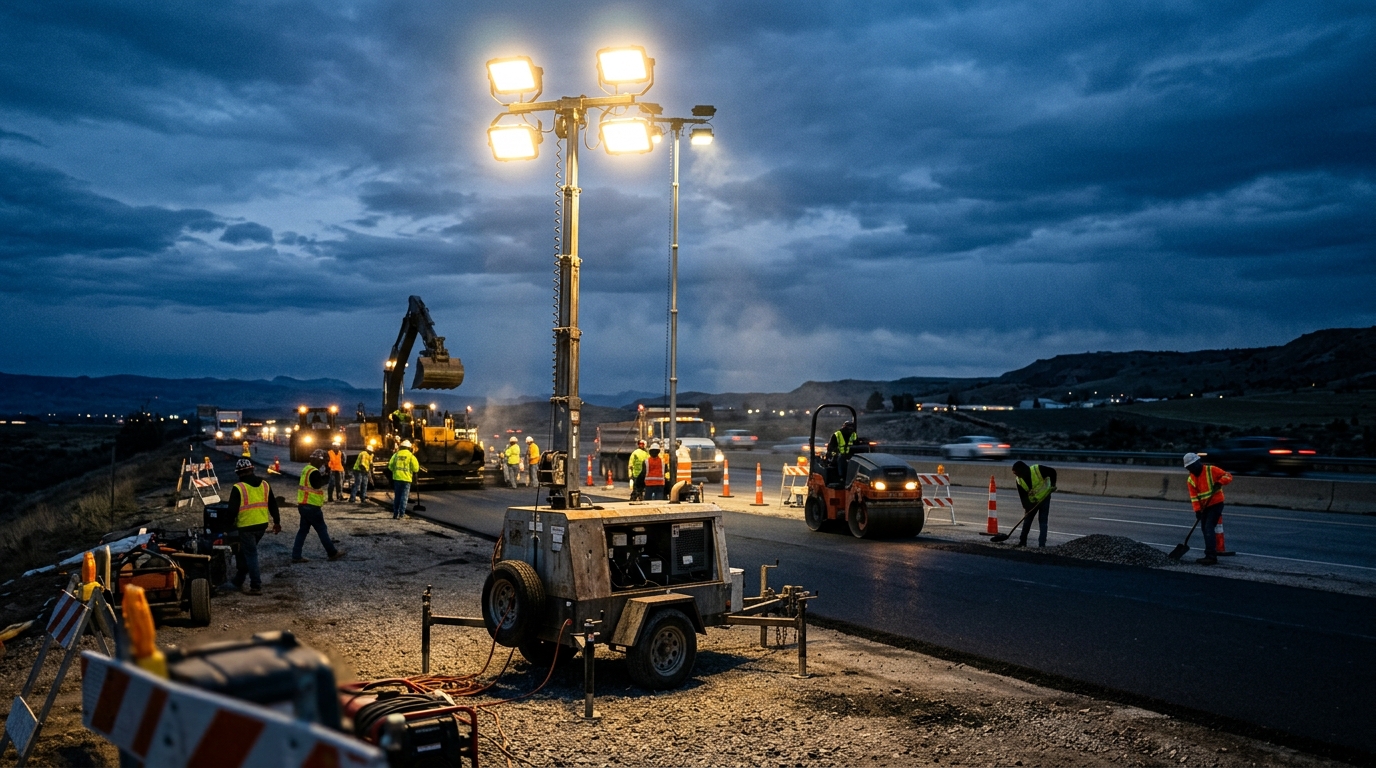
If a skid steer goes down, everyone sees it. If a light tower fails on a paving crew, bridge repair team, utility contractor, or emergency response job, the whole operation slows down or stops. People wait, safety risk goes up, and the crew loses productive hours fast. A “cheap little light tower” can create a very expensive night.
The good news is that light tower maintenance is not complicated. It is mostly discipline. The problem is that discipline usually disappears when equipment is shared across crews and nobody owns the inspection routine.
This guide breaks down a practical maintenance system for portable light towers so they stay reliable, safe, and ready for the next overnight shift.
Why Light Tower Maintenance Gets Ignored
Light towers often get the worst of both worlds:
- They are not large enough to get the attention of a loader or excavator
- They are complex enough to fail in multiple ways at once
- They move between jobs, so accountability gets fuzzy
- Crews notice output problems only after dark, when it is already too late
Unlike a larger machine, a light tower can appear fine in daylight while hiding bad bulbs, corroded connectors, a weak battery, contaminated fuel, or a mast cable ready to fray. If your team only checks whether it starts, you are not inspecting it. You are gambling.
Warning: Light tower failures are not just productivity issues. Poor illumination creates direct safety exposure around trenches, paving operations, traffic control, and moving equipment. A maintenance shortcut becomes a liability problem fast.
What Actually Fails on Portable Light Towers
Most breakdowns come from a handful of predictable trouble spots:
- Fuel quality problems after long idle storage
- Battery neglect between jobs
- Damaged mast cables, winches, or locking hardware
- Broken trailer wiring, tires, hubs, or couplers
- Burned-out lamps, corroded sockets, or loose electrical connections
- Missed oil and air filter intervals on the small diesel engine
Case Study: The “It Ran Fine Last Month” Failure
A contractor parked three light towers over spring, then pulled one out for a weekend utility repair. It started, ran rough for 20 minutes, and shut down repeatedly under load. The problem was stale fuel plus a partially clogged fuel filter. The direct repair was cheap. The expensive part was the crew delay, extra service trip, and overtime while they waited for replacement lighting.
The lesson is simple: small equipment does not fail because it is mysterious. It fails because nobody bothered to make the routine boring and repeatable.
Daily Pre-Shift Inspection Checklist
Before towing or operating a light tower, crews should run a short walk-around. This is especially important when equipment changes hands between jobs.
Daily checks:
- Inspect the hitch, coupler latch, safety chains, jack, and trailer plug
- Check tire condition and inflation visually, then confirm pressure on a scheduled basis
- Look for fluid leaks under the engine, tank, and hydraulic or winch areas
- Verify fuel level and inspect cap seal condition
- Check battery terminals for looseness or corrosion
- Inspect mast sections, pins, cable, pulleys, and lock points
- Confirm outriggers deploy and retract correctly
- Test all light heads for output and aim adjustment
- Listen for abnormal engine noise once running
- Confirm gauges, warning lights, and automatic shutdowns behave normally
Pro Tip: Put the checklist on the machine, not in a binder nobody opens. A laminated tag, QR code, or mobile form tied to the asset will get used. A dusty clipboard in the shop will not.
If the tower is heading onto a roadway or between jobs, add brake lights, turn signals, lug nut visual check, and wheel bearing heat check after the first few miles.
Engine and Generator Maintenance Basics
Most portable light towers use small diesel engines coupled to generators. That means they inherit the same core maintenance rules as larger equipment, just with shorter oil capacities and less margin for neglect.
Watch the basics:
- Engine oil level and change interval
- Air filter restriction
- Fuel filter condition
- Coolant level if liquid-cooled
- Belt condition where applicable
- Mounting bolts and vibration isolation
These units often run long steady shifts, which sounds easy, but steady runtime still builds heat, vibration, soot, and contamination. Miss a service interval and the punishment comes quick because small engines have limited oil volume.
Hour-Based Service vs “We Service It When We Remember”
Hour-Based Service
- ✅ Predictable
- ✅ Easier to standardize across crews
- ✅ Better for warranty and resale documentation
- ❌ Requires hour meter tracking discipline
Memory-Based Service
- ✅ Feels easier in the moment
- ❌ Leads to missed intervals
- ❌ Causes duplicate service or no service at all
- ❌ Falls apart when multiple crews share equipment
Good Rule: If your light tower has an hour meter, use it. If the hour meter is broken, fix it. Running maintenance by vague memory is how you end up changing oil after 600 hours because everyone assumed someone else handled it.
Common warning signs include hard starting, smoky exhaust, voltage fluctuation under load, unusual vibration, and frequent nuisance shutdowns. Do not keep restarting and hoping. That habit turns minor maintenance into major repair.
Mast, Winch, and Cable Inspection
The mast system is where safety issues get serious.
Portable light towers rely on telescoping mast sections, a winch or hydraulic raising mechanism, steel cable or chain, locking pins, and fixture brackets. When one of those parts wears out, the risk is not just poor lighting. It is dropped components, unstable equipment, and injury.
Inspect these points closely:
- Frayed cable strands
- Kinks, flattening, or bird-caging in the cable
- Worn pulleys or sheaves
- Loose mast hardware and cracked welds
- Bent or damaged fixture bars
- Missing retention pins and mast locks
- Winch brake function and handle condition
Danger: A frayed mast cable is not a “watch it and see” item. Pull the unit from service until the cable is replaced and the raising system is inspected. If the mast drops under load, you have a real chance of equipment damage or someone getting hurt.
Train crews to lower masts fully before transport, confirm lock engagement, and avoid raising the tower on soft or sloped ground without full outrigger support. A lot of mast damage starts with bad setup, not bad parts.
Electrical System and Light Fixture Checks
A light tower can start perfectly and still fail its actual job if the electrical side is neglected.
Check:
- Lamp output consistency
- Lens condition and moisture intrusion
- Socket and connector corrosion
- Cracked wiring insulation
- Ground integrity
- Breakers, switches, timers, and photocell functions where equipped
LED light towers reduce lamp replacement frequency, but they do not eliminate electrical maintenance. Corrosion, vibration, bad connectors, and water intrusion still kill performance.
Case Study: “One Head Keeps Cutting Out”
Crews blamed a bad fixture because one side of the tower kept flickering during a road project. The real issue was a loose connector inside the light bar that vibrated open when the mast was fully extended. Ten minutes of proper troubleshooting beat replacing an expensive assembly that was never the problem.
When diagnosing electrical issues, resist the urge to start replacing parts blindly. Verify voltage, inspect grounds, and check connectors first. Small wiring faults create a lot of fake “component failure.”
Trailer, Tires, and Towing Safety
A light tower is also a trailer, which means a neglected running gear problem can strand the unit before it ever reaches the job.
Focus on:
- Tire age, cracking, tread, and inflation
- Hub and bearing condition
- Coupler wear and latch function
- Safety chain attachment points
- Trailer jack operation
- Wiring harness damage
- Brake system if equipped
Many light towers rack up very few road miles but spend lots of time parked. That is brutal on tires and bearings. Sun exposure, moisture, and long static loads age components even when the trailer barely moves.
If crews tow light towers at highway speed, bearing service and tire replacement schedules should be treated seriously, not casually. A cheap dry-rotted tire can turn into roadside downtime and a hazard for everyone nearby.
Storage, Fuel, and Weather Protection
Storage is where portable light towers quietly deteriorate.
If you know a unit will sit:
- Fill or treat fuel according to your storage policy
- Disconnect or maintain the battery
- Lower and secure the mast fully
- Chock wheels and protect tires from prolonged direct sun when possible
- Cover connectors and inspect for rodent activity
- Run the unit on schedule if long-term idle storage is common
Water intrusion is a repeat offender. Once moisture gets into fixtures, plugs, control boxes, or the generator section, intermittent failures start showing up when you least want them.
Best Practice: Assign one storage reactivation checklist for every light tower coming out of idle. Fresh fuel verification, battery state, tire pressure, mast inspection, and a full lighting test should happen before dispatch, not on-site at dusk.
Repair vs Replace Decisions
Not every issue deserves a full rebuild. But not every cheap repair is smart either.
Use this logic:
- Replace consumables and safety-critical wear parts early
- Repair wiring, connectors, switches, and hardware when the fix is stable and documented
- Replace the asset when recurring failures, structural damage, or poor output make uptime unreliable
Keep Repairing the Tower
- ✅ Lower immediate cash spend
- ✅ Useful if failures are isolated and parts are available
- ❌ Can become a labor trap
- ❌ Old towers often develop repeat electrical and mast issues
Replace the Tower
- ✅ Better reliability and lighting performance
- ✅ Less labor spent on recurring nuisance fixes
- ✅ Opportunity to standardize LEDs and controls
- ❌ Higher upfront cost
If the crew no longer trusts the unit, that matters. Equipment with low confidence gets bypassed, double-checked constantly, or dispatched last. That hidden friction costs time every week.
A Real-World PM Schedule for Light Towers
Here is a practical schedule for most contractor fleets:
Daily or before each use
- Visual inspection
- Fuel, battery, leaks, and lighting test
- Hitch and trailer safety check
Weekly
- Clean fixtures and inspect wiring
- Check tire pressure
- Inspect mast cable, pulleys, locks, and outriggers
- Verify battery condition and terminal tightness
Every 250 hours or manufacturer interval
- Change engine oil and filter
- Inspect or replace air and fuel filters as required
- Check belts, mounts, and cooling components
- Test generator output stability under load
Quarterly
- Wheel bearing and hub inspection
- Trailer wiring and connector check
- Full structural hardware inspection
- Corrosion control and paint touch-up where needed
Before seasonal storage or after long idle
- Fuel quality check
- Battery service
- Full run test under load
- Mast, lamp, and trailer recommissioning inspection
Why Tracking Small Equipment Matters
Portable light towers are exactly the kind of asset that slips through the cracks. They are not flashy. They do not always have a dedicated operator. They are easy to forget until they fail. That is why they belong in the same maintenance system as everything else.
When you track inspections, service history, photos, hour-based maintenance, and recurring issues, patterns show up fast. Maybe one crew keeps returning towers with dead batteries. Maybe one unit has become a repeat electrical headache. Maybe a mast cable keeps getting flagged and ignored. Those are management problems, not mystery problems.
Keep Your Night Work Moving
FieldFix helps contractors track maintenance, log inspections, store photos, and catch repeat issues before a light tower fails on site. If your “small equipment” keeps creating big downtime, it is time to manage it like it matters.
Light towers are not complicated, but they are unforgiving when ignored. Treat them like critical jobsite equipment, because that is exactly what they are. The crew working after dark will notice the difference immediately.