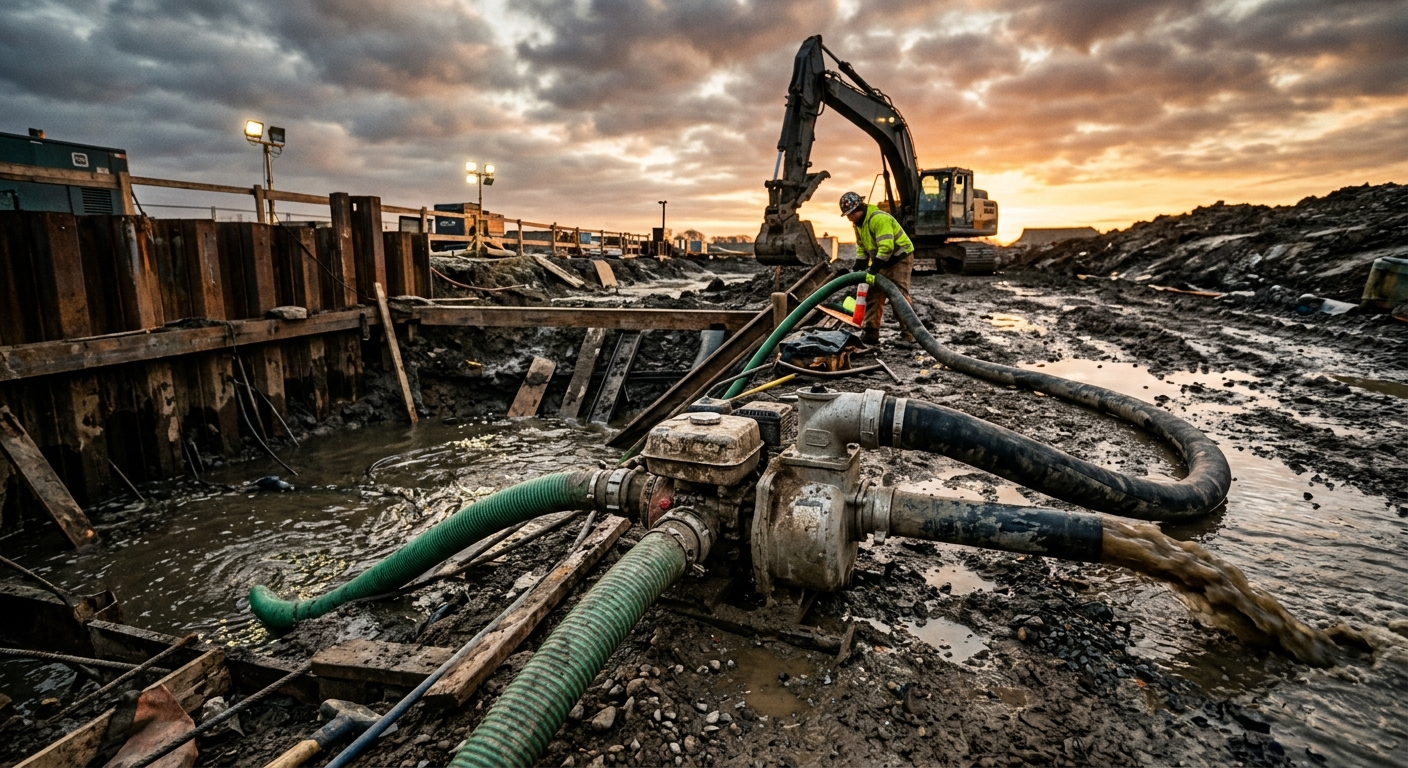
Trash Pump Maintenance Guide for Contractors: Keep Dewatering Jobs Moving
Learn how to maintain trash pumps for reliable dewatering, faster jobsite recovery, and fewer breakdowns caused by clogs, seal wear, bad fuel, and neglect.
Key Takeaways
- Trash pumps fail from basic neglect more often than from dramatic mechanical defects.
- Daily checks on suction hoses, strainers, seals, fuel, and impeller condition prevent most no-flow and low-flow problems.
- Running a pump dry, sucking air, or feeding it abrasive slurry too long is a fast track to seal and impeller damage.
- Small pumps create big schedule damage because crews often notice the problem only after water has already slowed the job.
- Tracking service intervals and repeat issues in FieldFix helps contractors stop treating dewatering equipment like disposable tools.
Trash pumps are one of those machines people remember only when the hole fills back up with water.
That is a terrible maintenance strategy.
On many jobs, a pump is the little piece of equipment protecting the expensive piece of equipment. If the trench floods, the excavator waits. If the foundation cut fills, the crew waits. If the washout recovery job loses dewatering capacity, the whole site gets weird in a hurry. A pump that costs a fraction of a skid steer can still create a full-day production hit.
This guide covers how contractors should inspect, maintain, and troubleshoot trash pumps before they become the reason the schedule slips.
Why trash pump maintenance gets ignored
Trash pumps live in the same category as generators, light towers, and compressors: important enough to matter, small enough to get neglected.
They are often shared across crews, stored dirty, fueled inconsistently, and dragged from one ugly site to the next. Nobody wants to be the owner of the pump. Then when it fails, everyone swears it was working fine last time.
Typical daily check time for pump, hoses, and strainer
Can cut flow hard enough to stall dewatering progress
Common range for avoidable seal, hose, and impeller repairs
Created by one pump that loses prime in the middle of the day
The expensive part is not usually the pump itself. It is the lost production around it. Dewatering is support work, but support work controls whether the real work can happen.
Warning: If your crews treat the pump as a tool that can just be “rinsed off and thrown on the trailer,” you are building repeat failures into the schedule.
What actually kills trash pumps
Most trash pump failures are not mysterious. They come from the same predictable habits over and over.
Common failure causes
Dirty or restricted suction setup
- ✅ Easy to prevent with strainer cleaning and hose inspection
- ❌ Causes poor flow, cavitation, and priming headaches
Running dry
- ✅ Totally avoidable with better setup and monitoring
- ❌ Burns seals and creates heat damage fast
Abrasive slurry abuse
- ✅ Some solids are expected; endless sand and grit are not
- ❌ Eats impellers, volutes, and wear surfaces
Bad fuel and neglected engine service
- ✅ Cheap to manage with normal small-engine discipline
- ❌ Creates hard starts, surging, and shutdowns at the worst time
Crushed, cracked, or leaking hoses
- ✅ Visible during a basic walk-around
- ❌ Air leaks on suction side wreck performance even when the engine sounds fine
The sneaky part is that many of these problems look like “the pump is weak” when the real issue is setup, contamination, or neglected wear parts. Crews will sometimes blame the engine when the pump has simply lost prime, the strainer is half buried, or a suction connection is leaking air.
Important: Trash pumps are designed for water with debris, not for endless punishment from thick abrasive sludge. If your job regularly moves highly sandy, gritty, or corrosive material, match the pump and service interval to that reality instead of pretending every site is the same.
Daily trash pump inspection checklist
Before the first pull-start or key turn, crews should do a fast but disciplined inspection.
- Check engine oil level and condition before startup.
- Inspect fuel quality and tank cap seal so you are not feeding it contaminated fuel.
- Verify pump housing and priming chamber are filled if required by the design.
- Inspect suction hose for cracks, soft spots, collapsed sections, and loose clamps.
- Check the suction strainer for blockage, damage, or burial in mud.
- Inspect discharge hose routing for kinks, sharp bends, or crushed sections.
- Look for leaks around seals, gaskets, and fittings.
- Confirm mounting hardware and frame condition after transport.
- Start the unit and verify prime, steady flow, and normal engine sound.
Pro tip: Make operators record one photo of the pump setup in the field. It helps prove whether the strainer was submerged correctly, whether the discharge path was restricted, and whether the equipment was sitting in a position that made priming harder than it needed to be.
How to protect flow, suction, and priming performance
Trash pump maintenance is really about protecting flow. If suction conditions are bad, everything downstream gets worse.
The suction side deserves most of your attention because air leaks there do not always drip water the way discharge leaks do. A cracked suction hose, a worn gasket, or a loose clamp can make a perfectly decent pump act lazy, inconsistent, or impossible to prime.
Here is what good setup looks like:
- Keep the suction hose as short and straight as practical.
- Use the correct hose type. A soft discharge hose used on suction duty is asking to collapse.
- Keep the strainer off the bottom so it does not ingest mud, rocks, and junk nonstop.
- Avoid unnecessary lift if you can move the pump closer to the water source safely.
- Watch for flow loss during the job instead of assuming “still running” means “still working.”
The engine runs smoothly, so the crew assumes the pump is fine. In reality the strainer is half packed with debris and the suction connection is pulling air. The trench level drops too slowly, the excavator waits, and everyone blames the machine operator instead of the support equipment.
If a pump loses prime repeatedly, stop guessing. Check for air leaks, blocked strainers, worn impeller clearance, bad gaskets, or a setup with too much suction lift before condemning the whole unit.
Fuel, engine, and seal maintenance basics
Most contractor trash pumps use simple gas or diesel powerplants. That does not mean the engine can live on neglect.
Dirty fuel, stale gasoline, clogged air filters, and skipped oil changes create the exact kind of intermittent failure that wastes half a morning. The pump starts, surges, loads up poorly, then dies right when the crew thinks they are back in business.
Seal health matters just as much. Mechanical seals hate dry running, abrasive contamination, and heat. Once the seal starts failing, water can reach places it should not, bearings suffer, and the repair bill stops being cute.
What helps seal and engine life
Good habits
- ✅ Fresh fuel and proper stabilization for stored units
- ✅ Clean air filter and cooling fins
- ✅ Oil changes on time
- ✅ Priming correctly before heavy use
- ✅ Flushing after dirty or abrasive jobs
Bad habits
- ❌ Running dry “for just a minute”
- ❌ Letting mud bake onto the pump housing
- ❌ Storing fuel for months and hoping for the best
- ❌ Ignoring vibration, squeal, or leaking around the seal area
- ❌ Tossing the pump in the yard still full of dirty water
Danger: A pump that suddenly gets louder, hotter, or more vibration-prone is not being dramatic. That is often the warning stage before seal, bearing, or impeller damage gets expensive.
Repair now vs replace later
Contractors get into trouble when they treat every pump problem like a “run it till winter” issue.
Repair it now if you see:
- Suction hose leaks or collapse
- Persistent loss of prime
- Seal leakage
- Impeller contact or grinding noise
- Frame cracks or transport damage
- Abnormal vibration
Schedule it soon, but not necessarily today, if you see:
- Cosmetic rust
- Faded labels
- Minor paint loss
- Light residue from old spills that is not active leakage
The dividing line is simple. If the issue affects flow, cooling, sealing, safety, or reliability on an active job, it is a now problem.
Replacing a cracked suction hose and gasket set might cost less than dinner for the crew. Ignoring it can turn into a flooded excavation, idle labor, a rental replacement pump, and a customer wondering why the site is still underwater.
A simple maintenance schedule contractors can follow
You do not need a heroic maintenance program. You need a repeatable one.
Daily or before each use
- Check oil, fuel, hoses, clamps, and strainer
- Confirm priming setup
- Listen for unusual noise and watch actual discharge flow
- Clean off heavy mud and debris after use
Every 25 to 50 hours
- Change engine oil per manufacturer interval
- Clean or replace air filter as needed
- Inspect impeller area and wear plate if access design allows
- Re-torque accessible hardware after rough transport use
Every 100 hours or seasonally
- Inspect seals, gaskets, recoil or electric starting system, and vibration mounts
- Flush the pump thoroughly after dirty-service periods
- Replace worn hoses, clamps, and strainers before they fail in the field
- Test the unit under load, not just at idle in the yard
Before long-term storage
- Drain or stabilize fuel
- Flush dirty water and solids from the housing
- Clean exterior thoroughly
- Store under cover with hoses organized instead of tangled in the trailer corner
Best practice: Tag pumps by ID and log hours or at least usage days. Small equipment disappears into fleet blind spots when nobody can answer basic questions like who used it last, when the oil was changed, or whether it has been losing prime for two weeks already.
Real-world downtime example
A small site crew used the same trash pump for trench work, storm cleanup, and occasional foundation dewatering. The engine still started easily, so everyone assumed it was healthy.
What nobody caught:
- The suction hose had a hairline split near the cuff
- The strainer was bent and sat crooked in silty water
- The oil service interval had drifted way past due
- The crew had twice run the pump dry while relocating hoses
On a wet commercial job, the pump could not keep up. The trench stayed muddy, pipe work slowed, and the excavator spent part of the morning waiting instead of producing. The repair was not catastrophic: hose, seal, service items, and cleanup. The downtime cost more than the parts by a wide margin.
That is the pattern with small support equipment. The repair invoice stings a little. The schedule damage stings a lot.
How FieldFix helps manage small equipment maintenance
Trash pumps rarely get their own clean maintenance history in a contractor business. They get remembered through text messages, half-finished shop conversations, and “I think we serviced that already.”
That is nonsense, and it gets expensive.
FieldFix helps crews track service dates, log repeat issues, attach photos, and build maintenance history for the small equipment that quietly protects the rest of the operation. When one pump keeps clogging, one hose setup fails repeatedly, or one unit is always hard to prime, that pattern should be visible.
Keep Your Support Equipment From Becoming The Bottleneck
FieldFix helps contractors track maintenance, inspections, photos, and repair history across pumps, compressors, generators, attachments, and heavy equipment in one place. If your dewatering gear keeps creating surprise downtime, stop relying on memory and start logging the work.
Related Articles

September 4, 2026
Heavy Equipment Fall Service Planning Guide: How to Prevent Winter Downtime

September 3, 2026
Horizontal Directional Drill Maintenance: The Complete HDD Service Guide for Contractors
September 2, 2026